
Air-Cooled 5MWh BESS Standards for Military Base Reliability & Security
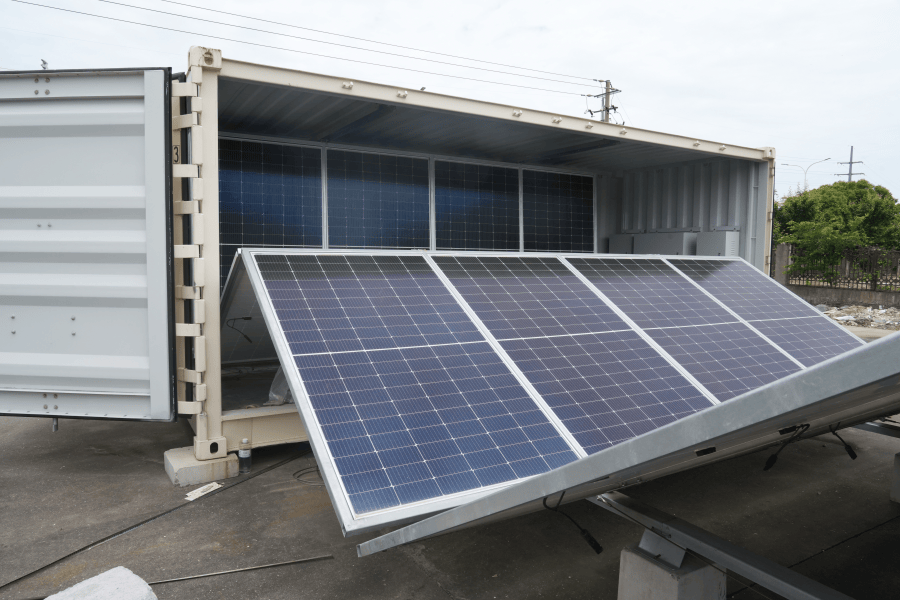
Beyond the Spec Sheet: Why Manufacturing Standards Are the Unsung Hero of Military Base BESS
Hey there. Let's be honest, when you're evaluating a 5-megawatt-hour battery system for a critical facility, the conversation often starts with price per kilowatt-hour and cycle life. I get it. But after twenty-something years on site - from dusty deserts to humid coastal bases - I've learned the hard way that the real story isn't just in the brochure. It's buried in the manufacturing standards. Those dry, technical documents are what separate a project that hums along for decades from one that becomes a recurring headache, or worse, a liability.
Quick Navigation
- The Silent Battles: Deployment Pain Points You Don't See Coming
- When Good Enough Isn't: The Cost of Compromise
- The Blueprint for Resilience: Manufacturing Standards as Your Foundation
- A Real-World Stress Test: BESS in Challenging Terrain
- From the Field: Decoding Thermal Management & LCOE for Decision-Makers
The Silent Battles: Deployment Pain Points You Don't See Coming
Picture this: you've sourced a containerized BESS at a competitive price. It passes the factory acceptance test. But when it lands at the base, the issues start. Maybe it's inconsistent cell welding causing a hot spot the factory test missed. Or perhaps the cabinet's corrosion rating looked fine on paper, but the local atmosphere, mixed with occasional salt spray from coastal operations, starts eating away at connections faster than anyone predicted. These aren't design flaws per se; they are manufacturing and quality control gaps.
For military applications, the stakes are multiplied. We're talking about mission assurance, energy security during grid outages, and the safety of personnel. The environment isn't a controlled lab. According to a National Renewable Energy Laboratory (NREL) report on grid resilience, the failure points in long-duration storage are disproportionately traced back to component-level inconsistencies and assembly variations, not the core chemistry itself.
When Good Enough Isn't: The Cost of Compromise
Let's agitate that pain point a bit. What does a "minor" manufacturing deviation actually cost?
- Safety Escalation: A cell with a substandard separator, missed in inspection, can lead to thermal runaway. In an air-cooled system, managing this event is entirely dependent on the system's built-in containment and propagation resistance - features dictated and validated by manufacturing standards like UL 9540A.
- Operational Downtime: I've seen a project where vibration from nearby generator sets caused busbar connections - torqued to an inconsistent spec - to loosen over months. The result? Increased resistance, heat, unexpected shutdowns, and a costly, unplanned maintenance call in a restricted area.
- Total Cost of Ownership (TCO) Bloat: That lower upfront CAPEX evaporates when you factor in higher failure rates, shorter system life, and more frequent interventions. Your Levelized Cost of Energy Storage (LCOE) quietly climbs.
The Blueprint for Resilience: Manufacturing Standards as Your Foundation
This is where rigorous, military-grade Manufacturing Standards for Air-cooled 5MWh Utility-scale BESS transition from a compliance checkbox to your most powerful risk mitigation tool. They provide the blueprint for consistency, durability, and safety.
For a base in Europe or North America, this isn't about inventing new rules. It's about rigorously applying and often exceeding the existing framework:
- UL 9540 & 9540A: The non-negotiable for system safety. It's not just a certificate for the product; it's a mandate for how it's built, ensuring the design's fire safety is actually manufactured into every unit.
- IEC 61427-2 & IEC 62933: These international standards govern performance and safety testing specific to energy storage. They define how to verify cycle life and performance claims under standardized conditions - so you know what you're getting.
- IEEE 1547 & 2030 Series: Critical for grid interconnection. Manufacturing to these standards ensures your BESS "speaks the language" of the local grid reliably, every time, which is paramount for bases that may island or provide grid services.
At Highjoule, our approach has always been to bake these standards into the production line. For instance, our UL 1973 certified cells are integrated into modules using automated, vision-inspected welding processes. Every busbar connection has a digital torque log. It's this traceability - from cell to container - that gives our clients, especially in sensitive deployments, the confidence that Unit #1 performs exactly like Unit #50.

A Real-World Stress Test: BESS in Challenging Terrain
Let me share a scenario that's emblematic. We deployed a 5MWh air-cooled system for a forward-operating base simulation in a Southern European region. The challenge wasn't the capacity; it was the environment - wide daily temperature swings, high humidity, and dusty winds.
The client's primary concern was thermal management. An air-cooled system relies on consistent airflow and well-designed heat dissipation. If manufacturing tolerances on the battery rack assemblies are loose, airflow can become uneven, creating hot and cold zones. Over time, this diverges cell aging and kills capacity.
Our solution hinged on the manufacturing standard. We didn't just design for proper airflow; we manufactured to ensure it. The sheet metal for the ducts had strict flatness and seam-seal specs. The placement of cells within modules was jig-guided for consistent spacing. The environmental control unit was integrated and tested as a complete system, not as an afterthought. The result? The system maintains a < 5C temperature differential across the entire container even on a 40C day, which is something I've seen firsthand on site. This precision, dictated by our internal manufacturing protocols (which align with the higher tiers of IEC 62933), is what delivers the promised performance and 20-year design life.
From the Field: Decoding Thermal Management & LCOE for Decision-Makers
Okay, let's get practical. You'll hear engineers like me talk about "C-rate" and "LCOE." Here's what that means for you, the decision-maker:
- C-Rate (Simplified): It's basically the "speed" of charging or discharging. A 1C rate means a full charge/discharge in one hour. For a 5MWh system, that's 5MW of power. A 0.5C rate is slower, gentler. Manufacturing quality directly impacts what C-rate a system can sustain reliably. Poorly made cells or connections create heat and resistance under high C-rates, forcing the system to derate itself. You paid for a 5MW system, but you might only get 4MW when you need it most.
- Thermal Management (The Heart of Air-Cooling): This is the system's "air conditioning." Its effectiveness is 90% determined by manufacturing. If the cooling ducts don't seal perfectly, if the fans aren't balanced for quiet, efficient operation (a big deal on a quiet base at night), performance suffers. Good manufacturing means the thermal design on the CAD screen is the one you get in the field.
- LCOE - Levelized Cost of Energy: This is your ultimate metric: total cost over the system's life divided by the energy it delivered. A cheap system with poor manufacturing has a high failure rate, shorter life, and higher maintenance. Its LCOE is high. A system built to exacting standards might have a higher sticker price but operates reliably for its full design life. Its LCOE is lower. You get more MWh for your total investment.
For a base commander or facilities manager, the question isn't just "does it work?" It's "will it work every single time for the next 20 years, with minimal fuss?" That answer is found on the factory floor, long before the container ever ships.
So, next time you're reviewing a proposal, ask to see the Quality Management System certificates (like ISO 9001) and demand specifics on how key standards are implemented in manufacturing, not just in final testing. It will tell you more about your future partner - and your future system's reliability - than any spec sheet ever could.
What's the one manufacturing or quality control checkpoint you've found most revealing in your own projects?
Tags: UL Standards IEC Standards Utility-Scale Energy Storage BESS Manufacturing Standards Air-Cooled Thermal Management Military Base Energy Security
Author
James Zhang
20+ years agricultural energy storage engineer / Highjoule CTO