
Manufacturing Standards for Black Start BESS for Agricultural Irrigation
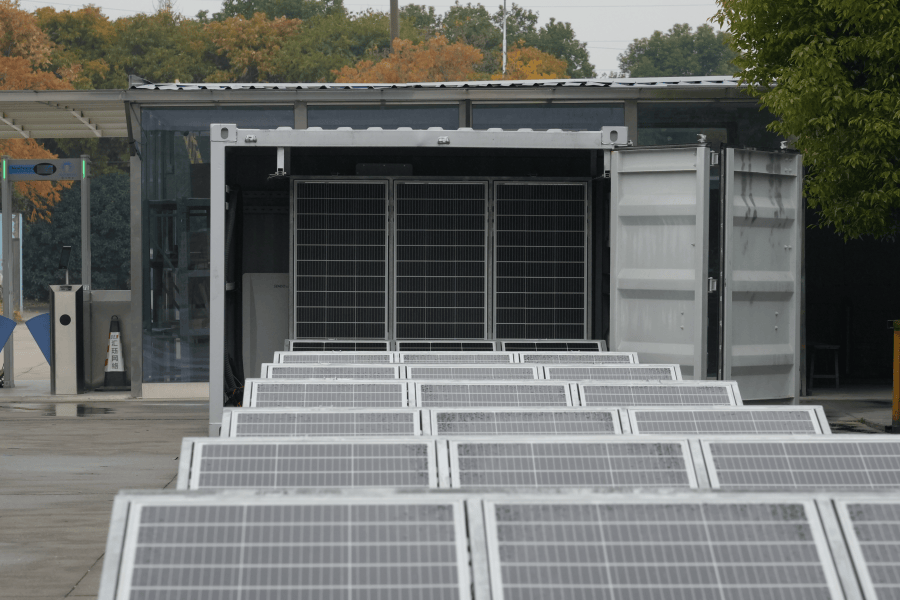
Let's Talk About Keeping Your Farm's Power On: Why Your Irrigation BESS Needs More Than Just a Box
Honestly, over my 20-plus years in this field, I've seen a lot of containerized battery energy storage systems (BESS) roll off production lines. Many are good, solid units. But when we start talking about the specific, tough-as-nails needs of agricultural irrigation C especially the ability to "black start" or self-recover after a complete grid outage C the conversation changes. It's not just about energy density anymore; it's about manufacturing integrity. It's about building a system you can trust to wake up alone in the middle of the night, in a remote field, after a storm, and bring your critical water pumps back online without a hiccup. That trust isn't born from marketing; it's forged in the rigorous, often unglamorous details of Manufacturing Standards for Black Start Capable Lithium Battery Storage Container for Agricultural Irrigation.
In This Article
- The Silent Problem: When "Off-the-Shelf" Fails the Farm
- Beyond the Battery Cell: The System-Level Standards That Matter
- A Case in Point: The California Almond Orchard
- Building Trust Into Every Weld and Wire
- What This Means for Your Bottom Line
The Silent Problem: When "Off-the-Shelf" Fails the Farm
Here's the common phenomenon: a farm invests in solar and adds a standard BESS container to shift energy and save costs. It works great... until a widespread grid failure. The system shuts down safely as designed. But when the sun comes up, the solar panels are producing, and the grid is still dead, the system struggles or fails to restart. Why? Because its manufacturing DNA was never coded for true islanded black start capability. The inverter's controls, the sequencing of auxiliary loads (like cooling), the DC bus stability C they were validated for grid-tied operation, not for the brutal task of creating a stable "grid" from zero, under load, with variable solar input.
I've seen this firsthand on site. The aggravation isn't just operational; it's financial. According to a National Renewable Energy Laboratory (NREL) analysis on agricultural resilience, a single multi-day outage during a critical irrigation window can impact crop yield by 15-30% for the season. That's a direct hit to revenue. The problem is amplified because many procurement decisions focus on $/kWh and basic certifications, missing the deeper, system-level manufacturing standards that guarantee black start performance.
Beyond the Battery Cell: The System-Level Standards That Matter
So, what separates a standard container from a black-start-ready power asset? It's a holistic manufacturing philosophy. Let's break down the key areas:
- Structural & Environmental Integrity (The "Container" Part): This isn't just sheet metal. Manufacturing must follow strict protocols for corrosion resistance (think fertilizer dust, irrigation mist), ingress protection (IP54 minimum, ideally IP55), and structural rigidity for uneven terrain. Standards like IEC 61427-2 for off-grid applications and specific aspects of UL 9540 for overall system safety provide the blueprint. The welding, sealing, and material specs matter immensely for long-term reliability.
- Power Conversion & Control Systems (The "Brain" and "Muscle"): This is the core of black start. The manufacturing of the power conversion system (PCS) and its controls must be validated to IEEE 1547-2018 for islanded functionality and, crucially, UL 1741 SB (Supplement B). UL 1741 SB isn't a suggestion; it's a rigorous test standard for grid-forming inverters, ensuring they can establish and maintain voltage and frequency from a dead start. The factory acceptance test (FAT) procedures for such a system are vastly more comprehensive.
- Thermal Management (The "Climate Control"): A black start sequence puts a unique load on the system. Manufacturing standards must ensure the HVAC system is not only sized for peak ambient temperature but also for the heat rejection profile during a full-power black start event. The integration, ducting, and control logic are built and tested as a unified subsystem, not just as an add-on.

A Case in Point: The California Almond Orchard
Let me share a project from California's Central Valley. A large almond grower had a microgrid with solar and a BESS. Their old system failed to black start reliably, risking thousands of acres during heatwaves and grid "flex alerts." The challenge wasn't more battery capacity; it was guaranteed autonomous recovery.
Our solution at Highjoule was a container built from the ground up to the standards we're discussing. The manufacturing process included:
- Pre-production design reviews focused on IEEE 1547 and UL 1741 SB compliance.
- In-factory, full-system black start testing under simulated 100% pump load before shipment.
- Strict documentation and traceability for every major component, from the UL-certified battery racks to the IEC 60947-compliant switchgear.
The result? The system has executed multiple flawless black starts during subsequent PSPS (Public Safety Power Shutoff) events. The farm maintained irrigation, protecting a multi-million dollar crop. The Levelized Cost of Energy (LCOE) for their microgrid actually improved because the system's reliability eliminated the need for a redundant diesel generator they used to keep on standby.
Building Trust Into Every Weld and Wire: The Expert's View
From an engineer's perspective, here's the insight: true black start capability is a system property, not a component feature. You can't buy a black start battery and plug it into a standard container. The manufacturing standards ensure this property is "baked in."
Think about C-rate. For black start, the initial surge to energize transformers and motors requires a high discharge capability (a high C-rate). But the manufacturing standard ensures the battery modules, busbars, and electrical connections are all rated and assembled to handle that surge continuously during the start-up sequence, without hotspots or voltage sag. Similarly, the thermal management system's manufacturing spec ensures it can handle the heat from that high-power burst while also managing the ambient conditions. It's this integration, governed by standards, that creates a resilient whole greater than the sum of its parts.
What This Means for Your Bottom Line
Insisting on transparent, verifiable adherence to these manufacturing standards isn't an academic exercise. It's a direct investment in:
- Risk Mitigation: It transforms your BESS from a cost-saving tool into a proven risk mitigation asset.
- Total Cost of Ownership (TCO): Higher upfront manufacturing rigor drastically reduces lifetime operational issues and downtime.
- Financing & Insurance: Banks and insurers look favorably on assets built to recognized, stringent standards, often leading to better terms.
At Highjoule, this philosophy is embedded in our process. Every container destined for a remote agricultural application is built with these black-start and ruggedization standards as the non-negotiable baseline. Our local deployment teams then focus on seamless integration, and our remote O&M monitoring is calibrated to watch for the specific signatures that predict a healthy black start capability.
The question I leave you with is this: When you're evaluating a storage solution for your irrigation needs, will you look past the brochure's kWh number and ask to see the manufacturing test protocols that prove its black start promise? The resilience of your next harvest may depend on that single decision.
Tags: UL Standard BESS Energy Storage Black Start Agricultural Irrigation Microgrid IEEE Standards Lithium Battery
Author
James Zhang
20+ years agricultural energy storage engineer / Highjoule CTO