
High-Altitude BESS Deployment: Challenges & Solutions for Tier 1 Battery Systems
Deploying Energy Storage Where the Air is Thin: The High-Altitude Challenge for BESS
Hey there. Let's grab a virtual coffee. Over my 20-plus years on sites from the Alps to the Andes, one conversation keeps coming up with project developers and asset owners: "We've got this incredible renewable resource, but the site... it's up there." We're talking about high-altitude locations C above 1500 meters, often way above. The solar potential is fantastic, but deploying a Battery Energy Storage System (BESS) there? That's a whole different ball game. Honestly, I've seen too many projects where the storage system was an afterthought, a standard unit plopped onto a non-standard site, leading to headaches, underperformance, and safety concerns. Today, I want to walk you through why high-altitude BESS is a specialized beast and what a truly robust solution looks like.
Quick Navigation
- The Problem: Why Altitude Isn't Just a Number
- The Real Impact on Your Project's Bottom Line
- The Solution: Engineering for the Edge of the Map
- Case in Point: A Mountain Microgrid That Works
- Key Specs That Matter (Beyond the Datasheet)

The Problem: Why Altitude Isn't Just a Number
You wouldn't use a standard sedan for an off-road rally. Similarly, a BESS designed for sea-level conditions is not built for the mountains. The core issue is the environment. As altitude increases, air pressure and density drop. According to the National Renewable Energy Laboratory (NREL), this has a cascading effect on two critical BESS functions: thermal management and electrical safety.
First, cooling. Most containerized BESS units rely on air-cooling systems. Thinner air carries less heat away. I've been on site where a system, running the same load as its lowland counterpart, saw its cells consistently running 10-15C hotter. That's a direct path to accelerated degradation and a shortened lifespan. Second, electrical insulation. Lower air pressure reduces the dielectric strength of air. This increases the risk of electrical arcing, a serious fire hazard. Standard components certified for UL or IEC standards at sea level may not hold up. It's a silent, invisible risk that keeps engineers and insurers up at night.
The Real Impact on Your Project's Bottom Line
Let's agitate this a bit. What does this mean for you, the decision-maker?
- Capital Costs (CAPEX): You might face costly, last-minute retrofits C upgrading cooling systems, adding special insulation, or derating the entire system's power output (C-rate) to keep temperatures in check. That "cost-effective" standard unit just got expensive.
- Operational Costs (OPEX) & LCOE: Higher operating temperatures degrade Tier 1 battery cells faster. A 20% faster degradation rate over the project's life dramatically increases the Levelized Cost of Storage (LCOS). You're replacing batteries sooner, hurting your ROI.
- Safety & Compliance: This is the big one. If a system isn't explicitly designed and certified for high-altitude operation, you're assuming liability. Insurance premiums can skyrocket, or coverage may be denied. Local authorities, especially in Europe and North America, are increasingly scrutinizing this. A generic system can fail an inspection, causing massive delays.
In short, using an off-the-shelf BESS at high altitude isn't saving money; it's risking your entire asset's viability.
The Solution: Engineering for the Edge of the Map
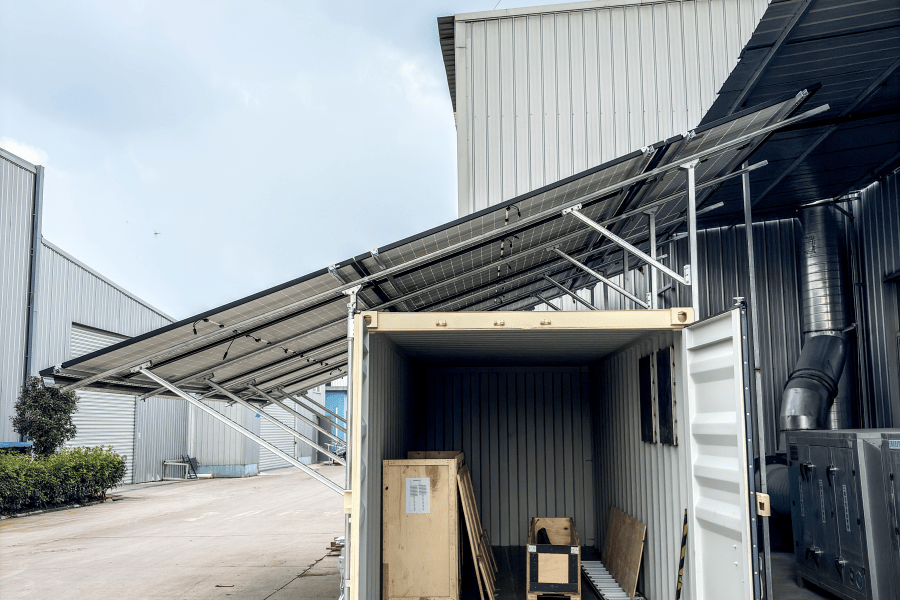
So, what's the answer? It's not a minor tweak; it's a fundamental redesign from the cell up. This is where the concept of a Technical Specification of Tier 1 Battery Cell Pre-integrated PV Container for High-altitude Regions comes into play. It's a mouthful, but it simply means a system born for the mountains.
At Highjoule, we don't adapt. We engineer for the condition from day one. Our approach is integrated: we start with Tier 1 battery cells known for their stable chemistry and robust data history. Then, we house them in a containerized platform where every subsystem C thermal management, HVAC, electrical insulation, fire suppression C is specified for the target altitude range (e.g., 1500m to 3000m+).
The magic is in the pre-integration. The power conversion, controls, and safety systems are all calibrated and tested as a single unit under simulated high-altitude conditions. This eliminates the interface risks you get with a piecemeal approach. We get the full system certified to the relevant altitude-adjusted standards (like UL 9540 with altitude considerations or specific IEC/IEEE guidelines), so you have a stamped, approved solution from the get-go.
Case in Point: A Mountain Microgrid That Works
Let me give you a real-world example from a project we completed last year. A remote mining operation in the Rocky Mountains, USA, sitting at 2,400 meters. They needed to reduce diesel reliance and stabilize their microgrid with solar-plus-storage.
Challenge: Extreme temperature swings (-25C to +30C), low air pressure, and a requirement for flawless reliability. A competitor's standard BESS proposal was quietly derated by 30% to manage heat, which blew their economics.
Our Solution: We deployed a pre-integrated Highjoule container designed for 2500m operation.
- We used a liquid-cooled thermal system (more efficient in thin air than air-cooling) with a pressurized coolant loop.
- All switchgear and busbars were specified with increased creepage and clearance distances to prevent arcing.
- The HVAC system was oversized with altitude-compensating fans.
Outcome: The system operates at its nameplate C-rate with cell temperatures within a perfect 25C 3C band. It passed the local authority's inspection on the first try because we had the pre-certification reports ready. The client's LCOE target was met, and they're now planning a second phase. The lesson? Front-loading the engineering saves years of operational pain.

Key Specs That Matter (Beyond the Datasheet)
When evaluating a high-altitude BESS, don't just look at kWh and MW. Dig into these specifics with your supplier:
- Altitude Rating: It must be explicitly stated (e.g., "Certified for operation up to 3000m ASL"). Not "suitable for" or "can be adapted to." Certified for.
- Thermal Management at Rating: Ask: "What is the maximum cell temperature delta at my site's worst-case ambient temperature and full C-rate, at my altitude?" A good system will have this simulation data.
- Component Derating Documentation: Inverters, transformers, and fans have altitude derating curves. A proper supplier will show you how these are accounted for in the system's overall performance guarantee.
- Safety System Certification: Is the fire suppression gas quantity adjusted for lower air density? Are the arc-flash studies done for the specific altitude?
My on-site insight? The difference between a good and a great high-altitude BESS is how it handles the 1% extremes C the hottest day with the lowest grid voltage and highest load. That's where the pre-integrated, altitude-native design proves its worth.
Look, the frontier of renewable energy is often in challenging environments. The promise of clean, reliable power in the mountains is real, but it demands the right tools. The question isn't really if you can deploy storage there, but how you can do it with confidence, safety, and the economics that make sense for the long haul. What's the biggest altitude-related hurdle your current project is facing?
Tags: UL Standard BESS Energy Storage Solutions PV Container Tier 1 Battery Grid Stability High-altitude Energy Storage
Author
James Zhang
20+ years agricultural energy storage engineer / Highjoule CTO