
Why Manufacturing Standards for LFP Mobile Power Containers are Non-Negotiable for Data Center Backup
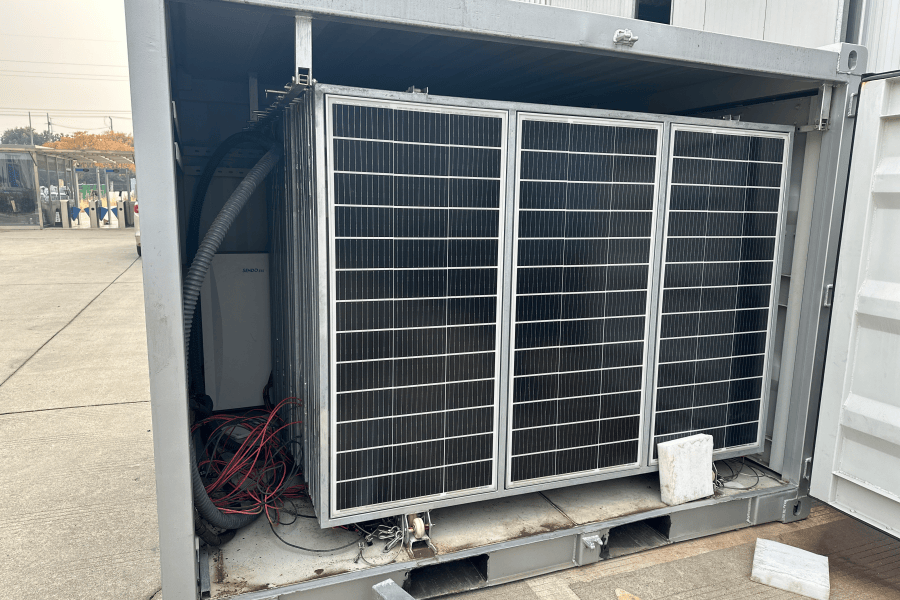
Beyond the Spec Sheet: The Real-World Weight of Manufacturing Standards for Your Data Center's LFP Power Container
Honestly, over two decades of deploying BESS across three continents, I've learned one thing: when the grid goes down and your data center's backup system needs to fire up, no one cares about the marketing brochure. They care about what actually happens inside that container sitting in your parking lot or utility yard. The difference between a seamless transition and a costly, dangerous failure often boils down to something invisible during procurement: the depth and integrity of the manufacturing standards that built it.
For data center operators in North America and Europe, the move to Lithium Iron Phosphate (LFP) mobile power containers is a no-brainer for backup power. Safer chemistry, longer lifespan, faster response. But here's the kicker I've seen firsthand on site: not all "containers" are created equal. You can source top-tier LFP cells, but if the assembly, integration, and testing protocols - the manufacturing standards - are an afterthought, you're building risk into your most critical infrastructure.
Table of Contents
- The Silent Problem: When "Containerized" Just Means "Crammed In"
- The Real Cost of Cutting Corners
- The Solution is in the Standard: A Framework, Not a Checklist
- A Case in Point: The Texas Heat Wave Test
- Expert Insight: Thermal Management & C-Rate - The Dynamic Duo
- Looking Beyond the Unit: What This Means for Your Project
The Silent Problem: When "Containerized" Just Means "Crammed In"
The industry phenomenon I'm seeing is the "repackaging race." With demand soaring, some suppliers are taking off-the-shelf LFP modules, stacking them into a shipping container shell with a basic HVAC unit, and calling it a "turnkey solution." It looks the part. But this approach completely misses the point of a true, engineered Mobile Power Container for Data Center Backup Power.
The core problem? This method treats manufacturing as mere assembly, not as a holistic, standards-driven engineering discipline. It ignores how thermal hotspots develop in a confined space during a 2C-rate discharge at 95F ambient temperature. It doesn't account for vibration during transport across state lines to your site. It often lacks rigorous factory acceptance testing (FAT) that simulates real grid failure scenarios. You end up with a box of excellent batteries that, as a system, is fragile.
The Real Cost of Cutting Corners
Why should this keep you up at night? Let's agitate that pain point a bit.
- Safety & Insurance Nightmares: A container not built to UL 9540 (Energy Storage Systems and Equipment) and UL 1973 (Batteries for Stationary Use) isn't just non-compliant; it's a liability. I've been called to sites where poor busbar design and inadequate fault isolation led to cascading thermal events. Insurance providers are now savvy; they demand certified standards compliance, or premiums skyrocket - if coverage is offered at all.
- Hidden OpEx & Failed Audits: A system with subpar thermal management will degrade faster. The NREL estimates that improper thermal control can accelerate LFP capacity fade by up to 30% over time. That means your Levelized Cost of Storage (LCOS) goes up. Furthermore, enterprise and colocation clients increasingly audit backup systems. A lack of traceable compliance to IEC 62933 (Electrical Energy Storage) or IEEE 2030.2 (Guide for Dispatched Storage) can jeopardize contracts.
- Deployment Delays: Local Authorities Having Jurisdiction (AHJs) in places like California or Germany are stringent. If your system's manufacturing documentation doesn't clearly trace every component and assembly step back to a recognized standard, permitting grinds to a halt. I've seen projects delayed 6 months waiting for documentation reviews.
The Solution is in the Standard: A Framework, Not a Checklist
This is where rigorous, transparent Manufacturing Standards for LFP (LiFePO4) Mobile Power Container for Data Center Backup Power become your single most important filter during vendor selection. It's the solution that de-risks everything.
At Highjoule, we don't view standards as a checklist to be signed off at the end. They are the living blueprint for our entire manufacturing process. This means:
- Design for Compliance from Day 1: Our containers are designed around the requirements of UL 9540A (Fire Test) and IEC 62485 (Safety Requirements). The electrical one-line diagram, the spacing between racks for airflow, the choice of fire suppression gel - all are predetermined by the standard.
- Process Control, Not Just Product Inspection: Every torque on a busbar connection, the sequence of wiring harness installation, the protocol for filling and sealing the liquid cooling loop (if applicable) - each has a documented, trained procedure. This ensures every unit that leaves our facility, whether bound for Ohio or North Rhine-Westphalia, has the same predictable, high-integrity build quality.
- Traceability & Documentation: Every major component, down to the string fuses and contactors, is logged with its batch number and certification. When we provide the compliance pack for your AHJ, it's a comprehensive story of the unit's creation, not a pile of unrelated certificates.

A Case in Point: The Texas Heat Wave Test
Let me give you a real example. We deployed a 2 MW/4 MWh LFP mobile container for a colocation data center in Dallas. The challenge wasn't just backup; it was reliable backup during extended, grid-stress-induced heat waves where ambient temperatures could stay above 100F for days.
The client's previous lead-acid system struggled with cooling. Our solution's value wasn't just the LFP chemistry. It was the manufacturing standard that dictated: 1) An N+1 redundant cooling system with sensors placed at 12 critical points (not just 2 or 3), as guided by thermal modeling standards. 2) The use of specific, UL-recognized, high-temp wire insulation throughout. 3) A full-load factory test where we simulated 105F ambient air intake while discharging at maximum C-rate for the required backup duration.
During a grid outage last summer, the system performed flawlessly. The thermal gradient across the battery racks was within 3C, ensuring no single module was stressed. That's the peace of mind proper standards deliver.
Expert Insight: Thermal Management & C-Rate - The Dynamic Duo
Let's get technical for a moment, but I'll keep it simple. Two concepts are crucial: C-Rate and Thermal Management.
The C-Rate (like 1C, 2C) simply tells you how fast you're draining the battery. A 2C rate empties it in half an hour. For data center backup, you need a high C-rate for that sudden, large load. But here's the insider detail: a high C-rate generates immense heat inside the cell. If your container's manufacturing standard used generic, undersized cooling, the system will throttle power to protect itself right when you need it most.
True manufacturing for backup power means designing the thermal system - the ductwork, fan placement, coolant flow - specifically for the maximum continuous C-rate required, at the worst-case ambient temperature. We size everything based on that peak thermal load, not an average. That's a specific line item in our internal manufacturing protocols, and it makes all the difference when the pressure is on.
Looking Beyond the Unit: What This Means for Your Project
So, what should you do? When evaluating a Mobile Power Container for Data Center Backup Power, drill into the how as much as the what.
Ask your vendor: "Walk me through your manufacturing quality control gates. Show me how UL 9540 informed your cabinet design. Can I see the FAT procedure that tests thermal performance under load?" Their answers will tell you everything.
For us at Highjoule, this standards-first philosophy extends to our service. Our local deployment teams are trained on the same standardized procedures for commissioning, and our remote monitoring is calibrated to the performance baselines established during those rigorous factory tests. It creates a seamless thread of reliability from our factory floor to your site.
The bottom line? In the critical world of data center backup, the manufacturing standard isn't just a document. It's the DNA of your system's reliability. The right standards don't just help you pass inspection; they ensure your system passes the test when the lights go out.
What's the one compliance or performance worry keeping you up at night regarding your current or planned backup power strategy?
Tags: UL Standard BESS Energy Storage LFP Battery Data Center Backup Manufacturing Standards
Author
James Zhang
20+ years agricultural energy storage engineer / Highjoule CTO