
Manufacturing Standards for Rapid Deployment Energy Storage for EV Charging: A Site Engineer's View
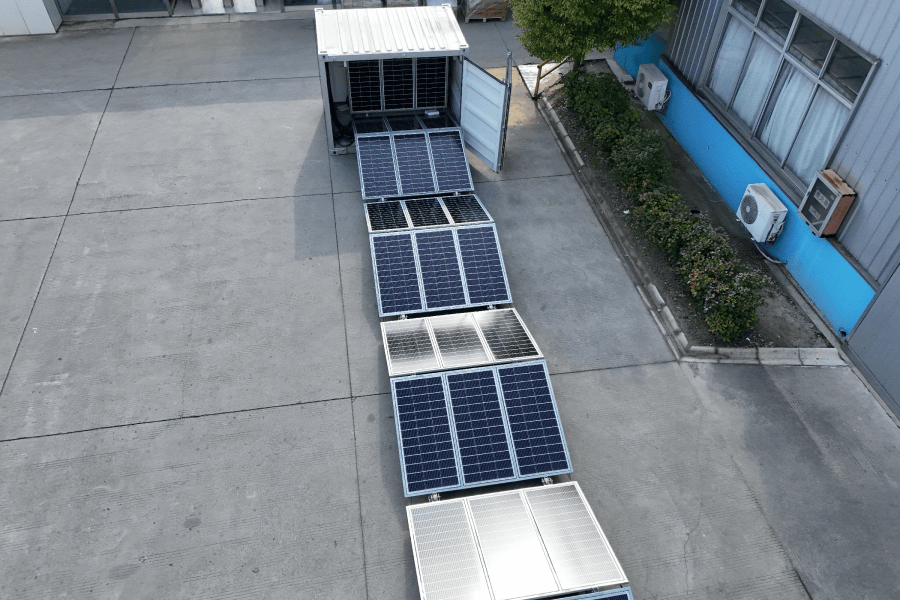
Table of Contents
- The Real Problem: It's Not Just About Batteries
- The Hidden Cost of Haste
- The Standards Solution: More Than a Checklist
- A Case in Point: California's Grid Relief
- Key Standards Decoded for the Non-Engineer
- Thinking Beyond the Container
The Real Problem: It's Not Just About Batteries
Let's be honest. If you're looking at deploying energy storage for EV charging, you're probably feeling the squeeze from two sides. On one hand, the demand for fast, reliable charging is exploding C I've seen queues at public stations become a real deterrent for EV adoption. On the other, the local grid infrastructure often just wasn't built for this kind of concentrated, high-power demand. The knee-jerk reaction? "Get a battery container, quick!"
But here's what I've seen firsthand on site: that rush leads to a fundamental mistake. People focus on the battery cells' specs (which are important, sure) but treat the container itself C the housing, the safety systems, the thermal management C as a simple metal box. They go for the cheapest, fastest-to-ship option. And that, my friends, is where the real headaches begin.
The Hidden Cost of Haste
Agitating this problem a bit, what does this rush really cost? It's not just dollars. A container that doesn't adhere to rigorous manufacturing standards becomes a liability. I've been called to sites where "rapid deployment" turned into a months-long delay because the local authority having jurisdiction (AHJ) C the fire marshal or electrical inspector C took one look at the system and asked for the UL or IEC certification reports. If the manufacturing process wasn't documented to those standards, you're stuck. No approval, no operation.
Then there's safety. A poorly manufactured enclosure can compromise the entire fire suppression system. Ineffective thermal management, often an afterthought in non-standard builds, doesn't just reduce battery life C it significantly increases the risk of thermal runaway. According to a National Renewable Energy Laboratory (NREL) report, consistent, manufacturer-proven thermal management is the single biggest factor in long-term BESS safety and performance. The financial risk? Immense. The operational risk? Even greater.
Finally, total cost of ownership. A container built to last, with corrosion-resistant materials and proper IP ratings for its locale (coastal vs. desert), will have a much lower lifetime cost. But without standards guiding the manufacturing, you're rolling the dice on durability.
The Standards Solution: More Than a Checklist
This is where Manufacturing Standards for Rapid Deployment Energy Storage Container for EV Charging Stations stop being bureaucratic red tape and start being your best friend. Think of them not as a barrier, but as a pre-flight checklist developed from decades of collective engineering wisdom. They codify exactly how to build a system that is safe, interoperable, and reliable from the ground up.
For us at Highjoule, this isn't theoretical. Our rapid-deployment EcoCube line is built from day one to meet and exceed UL 9540 (the standard for energy storage systems), UL 1973 (for batteries), and the relevant IEC equivalents like IEC 62933. This means every weld, every cable gland, every ventilation louver is part of a certified design. When we say "rapid deployment," we mean rapid and approved deployment. The manufacturing standard ensures the AHJ sees a known, trusted entity, not a mystery box.
A Case in Point: California's Grid Relief
Let me give you a real example. We worked with a charging station operator in Southern California. Their site had the land, the demand, but the grid upgrade quote was astronomical and would take 18 months. They needed a 2 MWh buffer to support ultra-fast chargers, and they needed it in a single quarter.
The challenge wasn't sourcing batteries; it was getting a complete, site-ready system that would pass the notoriously strict CalFire and local utility review. Our solution was two pre-fabricated EcoCube units. Because their manufacturing is governed by UL standards, the key components C the battery racks, power conversion system (PCS), and climate control C were all pre-certified as a unified system.

The on-site work was essentially foundation, electrical interconnection, and commissioning. The AHJ review was streamlined because we provided the full certification pack. From contract to commissioning? Just under 14 weeks. That project isn't just storing energy; it's printing money for the operator by enabling high-margin fast charging that the grid alone couldn't support.
Key Standards Decoded for the Non-Engineer
Let's break down a few key terms you'll hear, in plain English:
- UL 9540/IEC 62933: This is the system-level standard. It asks: "Does the whole container, as a unit, operate safely under normal and fault conditions?" It covers everything from electrical safety to fire propagation. A container built to this standard has been tested as a complete ecosystem.
- Thermal Management: This is the climate control for your batteries. Proper manufacturing standards dictate not just the AC unit's size, but the design of the air ducts, sensor placement, and control logic to ensure no "hot spots." This directly impacts your system's C-rate (how fast you can charge/discharge safely) and long-term degradation. Good thermal design means you can consistently hit high power when a dozen EVs plug in simultaneously.
- LCOE (Levelized Cost of Energy): This is your ultimate metric. A poorly manufactured system has a higher LCOE C it might fail sooner, need more maintenance, or waste energy cooling itself. Standards-compliant manufacturing optimizes for low LCOE by design, ensuring every component works efficiently together for 15+ years.
At Highjoule, we bake this thinking into our manufacturing. Our modules are designed for optimal airflow, our BMS algorithms are tuned for the specific thermal profile of the container, all to drive down your LCOE from day one.
Thinking Beyond the Container
Finally, true rapid deployment isn't just about the physical asset. It's about the service wrapper. A container built to international standards is inherently more modular and easier for local technicians to service. We ensure our documentation, from wiring diagrams to safety protocols, is part of the deliverable C because a system that can't be efficiently maintained isn't rapid, it's a future bottleneck.
The next time you evaluate a "rapid deployment" BESS for your EV charging project, ask the vendor not just about the battery brand, but how the container itself was built. Ask for the certification reports. Ask about the design philosophy behind the thermal system. The right manufacturing standards are the invisible foundation that turns a promising project into a resilient, profitable, and safe asset for decades.
What's the biggest hurdle you've faced with local approvals for your energy projects?
Tags: UL Standard BESS EV Charging Infrastructure Rapid Deployment Energy Storage Grid Stability IEC Standard Manufacturing Standards
Author
James Zhang
20+ years agricultural energy storage engineer / Highjoule CTO