
Manufacturing Standards for Scalable Modular BESS in Remote Island Microgrids
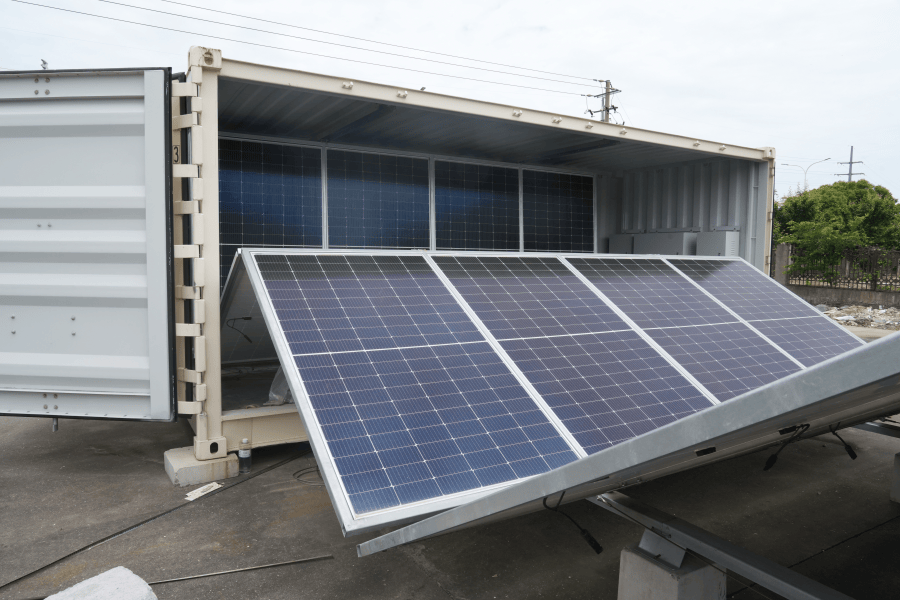
Table of Contents
- The Island Challenge: More Than Just a Pretty View
- The Real Cost of Getting It Wrong
- The Modular Standard: Your Blueprint for Resilience
- Beyond the Spec Sheet: What We've Learned On Site
- A Framework, Not Just a Product
The Island Challenge: More Than Just a Pretty View
Let's be honest. When most people think of deploying battery storage on a remote island, the postcard image comes to mind. But for those of us who've been on the ground - unloading containers in a tight port, coordinating with a local utility that's never seen a BESS before, or troubleshooting a communication hiccup from thousands of miles away - the reality is a different beast. The core challenge isn't just storing energy; it's deploying a system that can survive, thrive, and be maintained in an environment that is, by definition, isolated and unforgiving.
I've seen this firsthand. A project in the Caribbean a few years back hit a massive snag because a critical control board failed. The standard lead time for a replacement was 8 weeks. Eight weeks of diesel generators running, eight weeks of budget blown, eight weeks of strained relationships. The issue wasn't the battery chemistry; it was a manufacturing and design philosophy that treated every system as a one-off, not as a scalable, serviceable asset for hard-to-reach places.
This is where the conversation about Manufacturing Standards for Scalable Modular BESS becomes non-negotiable. For remote island microgrids, these standards aren't bureaucratic red tape; they're your first and most critical line of defense.
The Real Cost of Getting It Wrong
In the continental U.S. or Western Europe, a service call might be a few hours' drive. On an island, it's a flight, a ferry, specialized logistics, and often, a wait for the right weather window. The Levelized Cost of Storage (LCOS) skyrockets when operational simplicity and reliability aren't baked into the manufacturing DNA.
The pain points are universal:
- Safety as a Non-Starter: A remote community cannot afford a thermal event. Period. Local fire crews aren't trained for lithium-ion battery fires. Standards like UL 9540 (Energy Storage Systems) and UL 1973 (Batteries for Stationary Use) aren't just checkboxes; they are validated, third-party proof that a system's design has been stress-tested for failure modes.
- The "Black Box" Problem: Proprietary, monolithic systems that require the OEM's specific technician for every minor update or diagnostic create massive operational risk. I've sat with island utility managers who dread this vendor lock-in more than a hurricane.
- Scalability Guesswork: A community grows, tourism expands, a new desalination plant comes online. How do you add capacity? Without modular standards, it's often a costly, custom engineering project all over again, defeating the purpose of a "scalable" solution.
According to a National Renewable Energy Laboratory (NREL) analysis, standardization and modularity in BESS design could reduce balance-of-system costs by up to 30% for remote applications. That's not just hardware; that's the cost of confidence.

The Modular Standard: Your Blueprint for Resilience
So, what does a robust manufacturing standard for this environment look like? It's a holistic framework that touches every aspect of the system's life.
At Highjoule, when we build for island microgrids, we don't start with a megawatt-hour number. We start with a rulebook anchored by UL, IEC, and IEEE standards, and then go a step further for the island context.
- Modularity by Design (IEC 62897): True modularity means standardized interfaces - mechanical, electrical, and digital. Think standardized battery racks, power conversion shelves, and controller housings. If one 100kW module has an issue, you can isolate it and replace it with a spare unit kept on-site, while the rest of the system operates. This is a game-changer for maintenance.
- Environmental Hardening (IEC 60721): It's not just about salt spray corrosion. It's about withstanding constant high humidity, wide ambient temperature swings, and yes, the occasional seismic event. Our manufacturing specs call for testing far beyond the baseline, because an island in the Pacific or the Mediterranean demands it.
- Grid-Forming Capability (IEEE 1547-2018): Many island grids are weak or have high penetration of renewables. A BESS must be able to "form" the grid voltage and frequency, not just follow it. Manufacturing standards that enforce strict performance and communication protocols for grid-forming inverters are critical for stability.
Case in Point: A Community in the Scottish Isles
We deployed a modular BESS for a wind-heavy microgrid a few years back. The challenge was rapid wind ramps causing frequency instability. The local team needed to be able to manage it. Because the system was built to a strict modular standard, the local technicians were trained on a single cabinet type. When they needed to expand capacity two years later to support electric ferry charging, it was a matter of adding four identical, pre-configured cabinets. No re-engineering, no months-long shutdown. The UL and IEC certification paperwork for the expansion was straightforward because the base design was already certified. That's the power of a standard.
Beyond the Spec Sheet: What We've Learned On Site
Standards on paper are one thing. Their translation into real-world reliability is another. Let me break down two technical aspects where manufacturing rigor makes all the difference.
Thermal Management: Honestly, this is where cheap systems fail. A high C-rate (charge/discharge speed) is great for stabilizing the grid during a generator outage, but it generates heat. In a tropical climate, the cooling system isn't a luxury; it's the heart of the system. Our approach is to design for the worst-case ambient temperature plus a margin, using redundant cooling loops and components rated for continuous duty. The manufacturing standard specifies the fans, pumps, and sensors, ensuring they are industrial-grade, not commercial-off-the-shelf parts that will fail in 18 months.
Communications & Cybersecurity (IEEE 2030.5): Remote monitoring is your eyes and ears. But a secure, standardized data pipeline is crucial. We insist on open, standards-based protocols from the manufacturing floor. This allows the island's energy manager to integrate our BESS data seamlessly into their SCADA system, and more importantly, it allows for secure remote support from our team without creating a vulnerable backdoor into their grid.

A Framework, Not Just a Product
Choosing a BESS for a remote island microgrid isn't a simple procurement. It's selecting a long-term partner and a technological framework. The Manufacturing Standards for Scalable Modular BESS are the foundation of that partnership.
At Highjoule, this philosophy shapes everything. It means our containers arrive site-ready, with pre-wired, pre-tested modules that significantly cut down on commissioning time and risk. It means our local partners from California to Greece to the North Sea can be trained on a common platform. And it means that when you're making a multi-decade investment to energy-independence for your community, you're not betting on a black box, but on a proven, open, and resilient architecture.
The question for any project developer or utility manager isn't "Do we need a battery?" It's "What is the standard that will ensure this battery is still a vital, operable asset 15 years from now, on this island?" Getting that answer right changes the entire economics - and security - of your energy future.
Tags: UL Standard BESS Modular Energy Storage IEC Standard Manufacturing Standards Island Grid Remote Microgrid
Author
James Zhang
20+ years agricultural energy storage engineer / Highjoule CTO