
Smart BESS Standards for Telecom: Solving Grid & Cost Challenges
Contents
- The Silent Problem in Remote Telecom
- Why This Hurts Your Bottom Line & Reliability
- The Solution Is in the Build: Smart BMS & Hybrid Standards
- A Case from Texas: From Diesel Dependence to Solar-BESS Resilience
- Key Things to Look For in Your System's Standards
The Silent Problem in Remote Telecom
Let's be honest. When we talk about powering remote telecom base stations, the conversation often jumps straight to the shiny tech - solar panel efficiency, battery chemistry, smart inverters. But I've been on enough sites, from the deserts of Arizona to the highlands of Scotland, to know the real make-or-break factor often happens long before the container is delivered. It's in the manufacturing standards that govern how that entire hybrid solar-diesel-battery system is built and integrated.
You see, a telecom hybrid system isn't just a solar array, a diesel genset, and a battery bank thrown together. It's a complex, constantly talking ecosystem. The Smart Battery Management System (BMS) is the brain, but if the body - the physical integration, the wiring, the safety protocols - isn't built to a rigorous, holistic standard, you're asking for trouble. I've seen firsthand on site the "Frankenstein" systems: components from different vendors, wired with mismatched specs, and a BMS that's basically flying blind because it can't reliably communicate with all parts. The result? Unplanned downtime, safety risks, and a total cost of ownership that spirals.
Why This Hurts Your Bottom Line & Reliability
So why does this matter so much for operators in Europe and North America? The pain points are universal but amplified by local realities.
First, safety and compliance. In the US, authorities having jurisdiction (AHJs) and insurers are increasingly scrutinizing energy systems. A component with a UL listing is good, but an entire integrated power system built and tested to a recognized UL or IEC standard for system-level safety is a different league. It addresses arc flash risks, thermal runaway propagation, and proper grounding in a way that piecemeal certification doesn't. A non-compliant system isn't just a regulatory headache; it's a liability.
Second, Levelized Cost of Energy (LCOE). This is the metric that keeps CFOs up at night. The International Renewable Energy Agency (IRENA) notes that system integration and balance-of-plant costs are a significant portion of a project's LCOE. Poor integration, leading to inefficient cycling between diesel, solar, and battery, directly inflates this cost. A diesel genset kicking in too early because the BMS can't accurately gauge battery state-of-charge? That's burning cash.
Finally, grid services and future-proofing. In markets like California or Germany, your BESS isn't just for backup; it's a potential revenue stream through frequency regulation or capacity markets. To participate, the system must respond predictably and meet stringent grid codes. This traceability and performance reliability start on the factory floor, with standards that ensure communication latency, response time, and cycling endurance are designed in from day one.
The Solution Is in the Build: Smart BMS & Hybrid Standards
This is where comprehensive Manufacturing Standards for Smart BMS Monitored Hybrid Solar-Diesel Systems come in. Think of them as the master blueprint that ensures the brain (Smart BMS) and the body (the physical plant) are built as one cohesive unit. It's the difference between buying a high-performance engine versus a race car that's been tuned, tested, and proven to win.
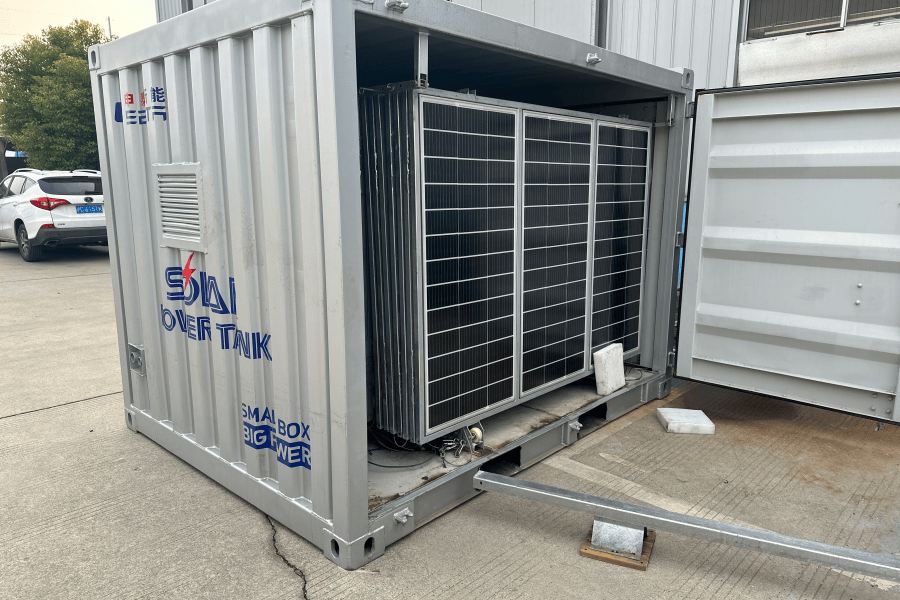
For us at Highjoule, this philosophy is core. When we build a containerized BESS for a telecom hybrid application, we're not just assembling certified parts. We're following an internal manufacturing standard that exceeds baseline requirements, focusing on:
- System-Level UL/IEC Certification: The entire enclosure, with all its subsystems, is tested and certified as a single unit. This gives our clients in the US and EU one less thing to worry about during permitting.
- LCOE-Optimized Integration: Our standards dictate how the BMS interfaces with the genset controller and solar inverter. This allows for algorithms that minimize diesel runtime, maximize solar self-consumption, and extend battery life - directly attacking the LCOE.
- Thermal Management by Design: A battery's worst enemy is heat. Our standards specify not just the HVAC capacity, but the airflow design, sensor placement, and the BMS's logic for proactive thermal management. This prevents hot spots and maintains optimal C-rate (charge/discharge rate) performance without degradation.
A Case from Texas: From Diesel Dependence to Solar-BESS Resilience
Let me give you a real example. We worked with a regional telecom operator in West Texas. Their challenge was classic: remote sites, high diesel costs (especially during summer peaks), and a grid connection that was, let's say, "fragile."
The goal was a solar-diesel-battery hybrid to cut fuel costs and ensure uptime. The initial bid from a competitor was low, but their "standard" was essentially a kit of parts. Our solution, while initially a higher capex, was built as a unified system to our stringent manufacturing standards.
The key differentiator played out during a heatwave. The ambient temperature hit 45C (113F). In a poorly integrated system, the battery's internal temperature can spike under load, forcing the BMS to derate power or shut down to protect itself - right when you need it most. Because our manufacturing standard enforces a redundant, proactive cooling loop and precise BMS-sensor integration, our system maintained full output. The smart BMS, with its guaranteed communication to the genset controller, kept the diesel off for 14 extra hours that week compared to the projected runtime of a basic system. That's fuel savings, reduced maintenance, and proven reliability all in one.

Honestly, the client's site manager later told me the peace of mind was worth the investment. They knew exactly how the system would behave under stress because it was built and tested to behave that way.
Key Things to Look For in Your System's Standards
When you're evaluating a hybrid system provider, don't just look at the component datasheets. Ask about the manufacturing and integration standards. Here are a few practical, non-technical questions to ask:
- "Can you provide a single system-level safety certification (like UL 9540 or IEC 62933) for the entire integrated unit, not just for the battery rack?"
- "How does your manufacturing process ensure the Smart BMS has deterministic communication with the diesel genset controller and solar inverter? Is this validated in factory acceptance tests?"
- "How are thermal management and safety systems tested under worst-case scenario loads and ambient conditions?"
- "What is the projected impact on my site's LCOE based on your system's control logic and integration quality?"
After two decades in this field, I can tell you that the cheapest system on paper often becomes the most expensive one in the field. Investing in a solution built from the ground up to rigorous, smart BMS-monitored hybrid standards isn't just a technical detail - it's a business decision for long-term resilience and profitability. What's the one reliability or cost challenge at your remote sites that keeps you up at night?
Tags: BESS UL Standards Smart BMS Manufacturing Standards Solar-Diesel Hybrid Systems Telecom
Author
James Zhang
20+ years agricultural energy storage engineer / Highjoule CTO