
Smart BESS Manufacturing Standards for Reliable Agricultural Irrigation
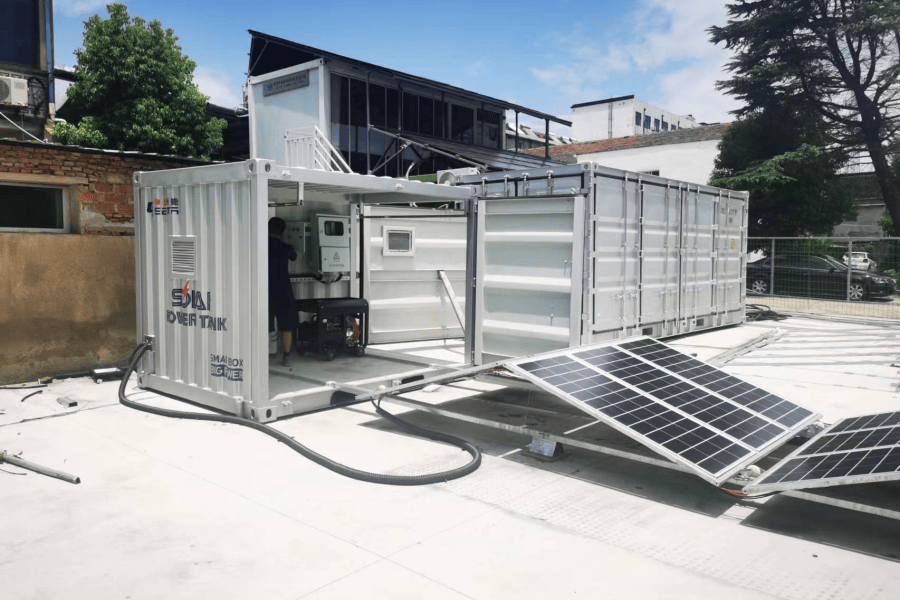
Beyond the Spec Sheet: Why Your Farm's BESS Container is More Than Just a Big Battery
Hey there. If you're looking into energy storage for your agricultural operation - whether it's a massive pivot irrigation system in California's Central Valley or powering a remote pumping station in rural Spain - you've probably been bombarded with specs. Cycle life, megawatt-hours, round-trip efficiency. All crucial, no doubt. But let's have a coffee chat about something that often gets buried in the fine print, yet is arguably the single biggest factor determining whether your project is a 20-year asset or a very expensive, rusting headache: the manufacturing standards for the smart BMS-monitored industrial ESS container itself.
I've spent over two decades on sites, from commissioning massive utility-scale banks to troubleshooting a failed module in a container that's baking in the Arizona sun. And honestly, the difference between a project that hums along for decades and one that faces constant downtime and safety scares? It's rarely the chemistry inside the cells. It's almost always about the box that holds them - how it's built, how it's protected, and how every single component is integrated and monitored from the ground up.
Quick Navigation
- The Unseen Problem: Your Farm Isn't a Data Center
- When "Good Enough" Isn't: The Real Cost of Compromised Standards
- The Blueprint for Resilience: Deconstructing Smart Manufacturing Standards
- From Blueprint to Barn: A Real-World Application
- The Expert's Corner: Thermal Management & LCOE - It's All Connected
The Unseen Problem: Your Farm Isn't a Data Center
Here's the core issue many face. A lot of early containerized BESS units were designed with a fairly benign environment in mind - think a flat, paved lot next to a substation. But an agricultural setting? It's one of the harshest industrial environments out there.
We're talking about constant exposure to:
- Corrosive Agents: Fertilizer dust, pesticides, and high ammonia concentrations from livestock operations. These don't just settle on the roof; they seep in, attacking electrical contacts, busbars, and even battery terminals.
- Particulate Onslaught: Fine soil, sand, and organic chaff. This isn't just a cleanliness issue. It clogs cooling fans, coats heat sinks, and creates thermal insulation where you need dissipation.
- Wild Temperature Swings & Humidity: From freezing nights to 45C (113F) midday heat, coupled with morning dew or irrigation spray. This thermal cycling stresses every weld, seal, and electronic component.
The International Energy Agency (IEA) highlights the growing role of renewables in agriculture, but notes that "durability of supporting infrastructure in remote locations remains a key cost challenge." That's a polite way of saying if the box can't handle the environment, your entire investment is at risk.
When "Good Enough" Isn't: The Real Cost of Compromised Standards
I've seen this firsthand. A project in the Midwest US opted for a "standard" ISO-container-turned-BESS for a corn irrigation system. On paper, it met basic codes. Within 18 months? The internal ambient humidity was consistently above 85%, leading to widespread corrosion on the Battery Management System (BMS) communication boards. False alarms crippled the system daily during peak irrigation season. The downtime cost in lost yield dwarfed the upfront savings from choosing the lower-spec container.
This is the agitation point. Compromising on manufacturing standards doesn't just mean a shorter lifespan. It directly hits your:
- Operational Reliability: Your irrigation window is non-negotiable. A system fault during a critical dry spell is catastrophic.
- Safety Margins: A poorly sealed container letting in dust can create a fire risk. A substandard thermal management system can lead to cell overheating.
- Total Cost of Ownership (TCO): Frequent maintenance, premature component replacement, and energy losses from inefficient cooling all inflate your Levelized Cost of Energy Storage (LCOE).
The Blueprint for Resilience: Deconstructing Smart Manufacturing Standards
So, what does a robust set of manufacturing standards for a smart BMS-monitored industrial ESS container for agricultural irrigation actually look like? It's a holistic philosophy, not a checklist. At Highjoule, our approach is built on three pillars, all aligning with stringent UL (like UL 9540 and UL 9540A) and IEC (e.g., IEC 62933) frameworks that the US and European markets demand.
1. The Foundation: Environmental Fortification
This starts with the shell. It's not just about thicker steel. It's about:
- IP Rating Integrity: A minimum of IP54, but truly designed for IP65 at all access points (doors, conduits, vents). This isn't just spray-testing; it's ensuring gaskets are marine-grade and door mechanisms maintain pressure over 10,000+ cycles.
- Corrosion Protection: A multi-stage process - zinc-rich primer, epoxy intermediate, polyurethane topcoat - specifically tested against chemical corrosion common in agri-zones.
- Pressurization System: A slight positive pressure inside the container, fed by filtered air, to actively keep dust and corrosive gases out.
2. The Nervous System: Smart BMS Integration from the Ground Up
The term "smart BMS monitored" is key. It shouldn't be an afterthought. The standard must dictate that the BMS isn't just reading cell voltages, but is the integrated brain of the container.
- Sensor Saturation: Dozens of additional sensors for internal ambient temperature (at multiple heights), humidity, particulate count, gas detection (for off-gassing), and door seal status.
- Predictive Analytics: The BMS correlates this environmental data with battery performance. A gradual rise in internal humidity might predict a failing condenser in the HVAC before it causes a shutdown.
- Remote, Granular Visibility: You should be able to see not just "Battery State of Charge," but "North-East Corner Ambient Temp" or "Air Filter Differential Pressure." This is the data that prevents surprises.

3. The Life Support: Thermal Management Designed for Duty Cycle
Agricultural irrigation is a brutal duty cycle. It's not a steady draw. It's a massive, high-power surge when those pumps kick on. This demands a high C-rate (the rate at which a battery is charged or discharged relative to its capacity) from the battery, which generates intense, concentrated heat.
The manufacturing standard must specify a cooling system with:
- Oversized Capacity & Redundancy: Designed for peak load plus a 20-30% margin, with critical fans or pumps in an N+1 redundant configuration.
- Sealed, Indirect Liquid Cooling: For high-power applications, this is becoming the gold standard. It isolates the internal air from external contaminants and is vastly more efficient at managing the heat from high C-rate discharges than air conditioning alone.
- Climate-Adaptive Control Logic: The system should operate differently in Nevada's dry heat versus Georgia's humid heat to prevent condensation.
From Blueprint to Barn: A Real-World Application
Let me give you a concrete example from our work in Southern Spain. A large olive farm was relying on expensive diesel generators to power deep-well pumps. They wanted to shift to solar + storage.
The Challenge: Extremely dusty conditions, water scarcity (so no water-cooling), and temperatures regularly exceeding 40C (104F). Reliability was non-negotiable for the harvest irrigation period.
The Highjoule Solution: We delivered a 2 MWh containerized BESS built to the enhanced standards we've discussed. Key???? (implementation details) included:
- A container with our proprietary "DryCool" indirect air-to-liquid cooling system, keeping the internal battery air completely isolated from the dusty outside air.
- An enhanced smart BMS with laser dust sensors at each air intake. When dust levels rose, the system would slightly increase internal pressure and log a maintenance alert for filter inspection - all before any performance impact.
- All internal steelwork used stainless steel fasteners and copper busbars with anti-corrosion coating, exceeding standard UL/IEC material requirements for the environment.
The system has now operated for three full irrigation seasons with 99.8% availability, and the farm has cut its diesel costs by over 90%. The upfront cost was marginally higher than a base model, but the LCOE is already lower due to zero unplanned downtime.
The Expert's Corner: Thermal Management & LCOE - It's All Connected
Here's a piece of insight from the field that doesn't always make it to the sales brochure. People focus on battery degradation from cycling. But in my experience, thermal mismanagement is a silent killer of project economics.
Every 10C above a battery's ideal temperature range can roughly double its rate of degradation. So, a container with a weak cooling system that lets internal temps spike to 50C during a 4-hour irrigation pump cycle is baking its own assets.
This directly destroys your LCOE. You're not just losing energy to run the AC harder; you're literally burning through the battery's useful life years faster. A manufacturing standard that enforces a robust, integrated thermal system isn't an extra cost - it's the most effective capital expenditure you can make to protect the lifetime value of your storage asset. It ensures the high C-rate performance you need for pumping doesn't come at the cost of killing your batteries in five years.
So, when you're evaluating proposals, don't just look at the battery warranty. Ask to see the design specs for the container's cooling under your specific site's peak load and ambient conditions. Ask how the BMS will proactively manage it. That's where you'll see the difference between a commodity box and a precision-engineered asset.
What's the one environmental challenge at your site that keeps you up at night when thinking about equipment longevity? Is it dust, salinity, or something else entirely? Let's talk about how the right foundation can address it from day one.
Tags: UL Standard Agricultural Irrigation Smart BMS BESS Manufacturing Standards Industrial ESS Container
Author
James Zhang
20+ years agricultural energy storage engineer / Highjoule CTO