
1MWh Solar Storage Container for EV Charging: A Real-World Case Study
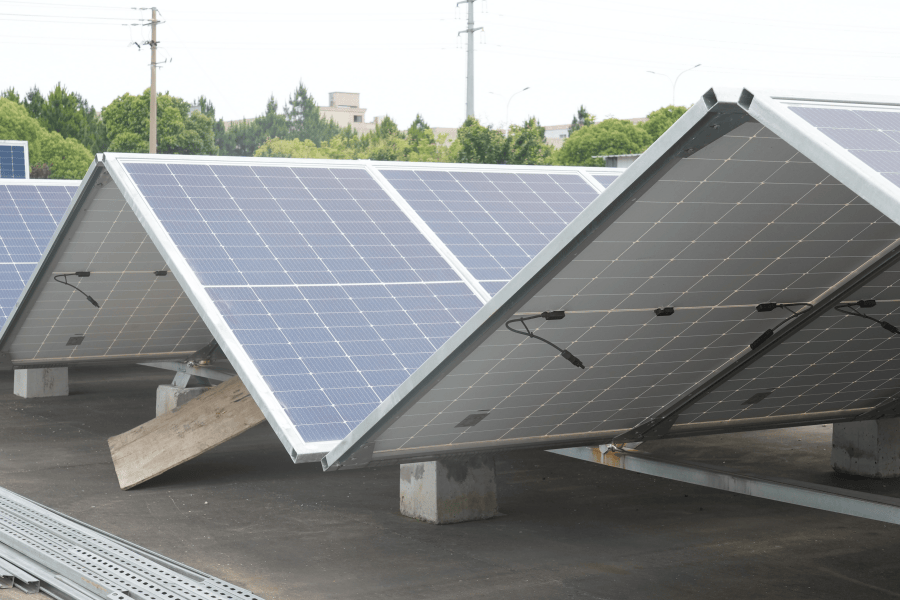
Table of Contents
- The Grid Isn't Ready for Your EV Fleet Ambitions
- When Costs Spike and Reputation Risks Loom
- The All-in-One Answer: A 20ft High Cube with Brains
- Case Study: A California Logistics Hub's Turnaround
- Why This Container Actually Works On Site
- What's Next for Your Site?
The Grid Isn't Ready for Your EV Fleet Ambitions
Let's be honest. If you're planning a fleet electrification project or a public EV charging hub in the US or Europe, you've already run into the grid issue. The local utility tells you the transformer is at capacity, or the upgrade cost and timeline are... let's just say, discouraging. I've seen this firsthand on site. A client in Ohio had a perfect location for a truck charging depot, but the grid connection quote came back at over $1.2 million and a 3-year wait. It's a common story.
This isn't just an inconvenience. According to the National Renewable Energy Laboratory (NREL), widespread EV adoption could increase electricity demand by up to 38% in some regions by 2050. The existing infrastructure wasn't built for this simultaneous, high-power draw. So, you're stuck: your sustainability goals are pushing you forward, but the physical grid is holding you back.
When Costs Spike and Reputation Risks Loom
Okay, maybe your grid connection is feasible. But then you get your first utility bill after installing a few DC fast chargers. The demand charges hit you like a ton of bricks. For our non-engineer friends, a demand charge is a fee based on the highest power draw you hit in a month, even if it's just for 15 minutes. A cluster of EVs charging at once can create a massive, expensive spike.
This turns your EV charging from a revenue stream into a cost center real fast. And there's another, softer cost. Imagine a customer pulls in, plugs their car into your brand-new, shiny charger, and the power throttles or fails because the local grid is strained. That's a terrible customer experience that directly hurts your brand's green credentials. You promised reliable, clean energy, but delivered frustration.
The All-in-One Answer: A 20ft High Cube with Brains
This is where the real-world case of the 20ft High Cube 1MWh solar storage container comes in. It's not a magic bullet, but it's the closest thing we've got to a plug-and-play solution for this specific pain point. Think of it as a power bank for your entire charging station, but one that's the size of a shipping container, packed with intelligence, and can be fed by solar panels on your roof or canopy.
The logic is beautifully simple. During the day, solar panels (or off-peak grid power) fill up the battery. When EVs plug in, the energy comes primarily from the container, not the grid. It shaves off those catastrophic demand spikes and provides backup during outages. It turns a grid-dependent liability into a self-managed, resilient asset. Honestly, the economics now often pencil out faster than waiting for a grid upgrade.

Case Study: A California Logistics Hub's Turnaround
Let me give you a concrete example. We worked with a large logistics company in the Inland Empire, California. They have a fleet of 50 medium-duty electric trucks and wanted to offer public charging. Their challenge was classic: limited grid capacity and punishing Southern California Edison demand rates.
We deployed a single 20ft High Cube container with 1MWh of storage, coupled with a 250kW solar canopy over the parking lot. The system was designed to UL 9540 and IEC 62485 standards C non-negotiables for fire safety and commissioning in the US market. The container's energy management system was the real star. It didn't just dump power; it dynamically balanced solar production, battery state-of-charge, real-time utility rates, and the charging schedule of the trucks.
The result? They deferred a $800k grid upgrade indefinitely. Their monthly demand charges were reduced by over 60% in the first year. The solar + storage combo now provides over 80% of the energy for their daily fleet operations and public charging. The project had a payback period under 5 years, which for infrastructure like this, is a compelling number. The local utility even sees them as a model for managing localized grid stress.
Why This Container Actually Works On Site
You might hear specs like "1MWh" and "C-rate," but what do they mean on a Tuesday afternoon when it's 100F outside? Let me break down the key things we, as engineers, look for in a real deployment.
First, Thermal Management. This isn't just about cooling; it's about consistent temperature control for longevity and safety. A cheap system will cycle its cooling fans wildly, wasting energy. Our approach uses a liquid-cooled system that keeps the battery cells within a 2-3C range of each other. This prevents hot spots and dramatically extends the system's life, directly improving your LCOE (Levelized Cost of Energy) C the total cost of ownership per kWh stored and discharged over the system's life.
Second, the C-rate. Simply put, it's how fast you can charge or discharge the battery. A 1MWh battery with a 1C rating can deliver 1MW of power. For EV charging with multiple stalls, you need a high C-rate (like 0.5C to 1C) to support simultaneous fast charging without needing a massive, over-sized battery. The container in our case study uses a chemistry and design that supports sustained high-power output without degrading prematurely.
Finally, it's about localized intelligence and service. The system needs to operate autonomously but be overseen by experts who understand local codes from California's Title 24 to Germany's VDE-AR-E 2510-50. At Highjoule, our containers come with a remote monitoring platform, but more importantly, they come with a partnership. We have local technicians who can interpret alerts and provide support, because a system that's down is costing you money. The goal is to make this complex piece of technology feel like a reliable, silent partner on your team.

What's Next for Your Site?
The conversation is shifting. It's no longer "Should we add storage?" but "How do we integrate it smartly?" The 20ft container format is becoming a standard for a reason: it's modular, scalable, and simplifies permitting and installation. Whether you're looking at a logistics park in Texas, a municipal fleet depot in Germany, or a retail charging plaza, the core challenges are remarkably similar.
The real question for you is, what's the single biggest barrier your next electrification project is facing? Is it the CapEx shock of a grid upgrade, the operational nightmare of volatile energy costs, or the risk of disappointing your customers or fleet drivers? I'd love to hear what you're seeing on the ground C my coffee is always on for a chat about real-world solutions.
Tags: Energy Storage Container UL Standard BESS LCOE US Market Europe Market Solar Storage EV Charging
Author
James Zhang
20+ years agricultural energy storage engineer / Highjoule CTO