
Smart BMS Monitored Energy Storage Containers for Industrial Parks: Benefits and Drawbacks
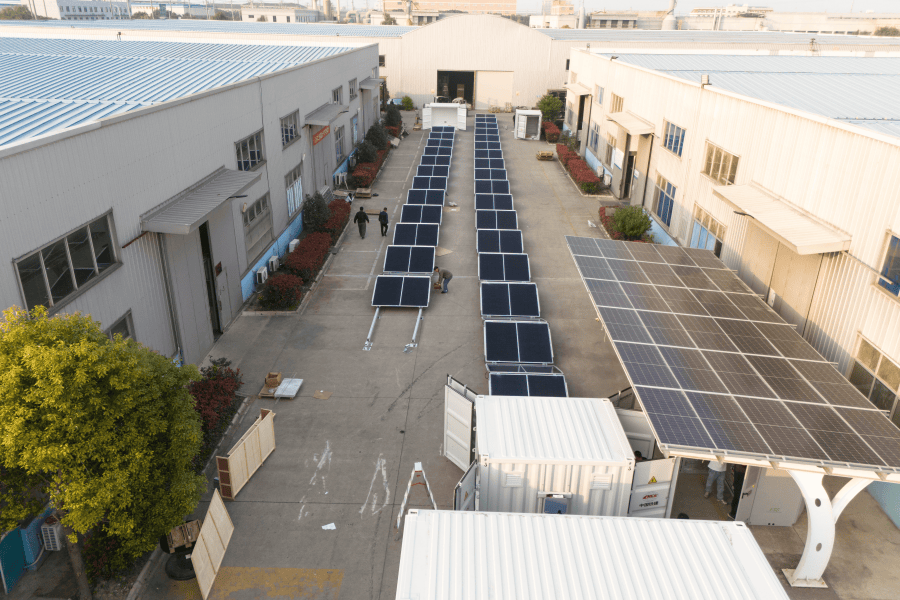
The Good, The Bad, and The Smart: Unpacking BMS-Monitored Storage for Industrial Sites
Hey there. If you're managing an industrial park or a large facility in the US or Europe, you've probably had more than one conversation about energy storage. The promise is huge: lower bills, backup power, maybe even some grid services revenue. But honestly, when you dig into the specs and the vendor pitches, it can feel a bit like a black box. What are you really getting into? Having spent the last two decades knee-deep in BESS deployments from California to North Rhine-Westphalia, I want to have a straightforward chat about one specific approach: the smart BMS-monitored energy storage container. Let's look past the marketing and talk about the real benefits, the not-so-obvious drawbacks, and what it means for your bottom line and peace of mind.
Quick Navigation
- The Silent Problem: More Than Just Backup Power
- Why It Hurts: When "Set-and-Forget" Becomes a Liability
- The Smart Container Solution: It's All About the Brain
- The Drawbacks: Real Talk from the Field
- A Case in Point: Learning from Texas
- Making the Right Call: Your Next Step
The Silent Problem: More Than Just Backup Power
Most industrial clients I meet start with a simple goal: "I need to reduce my peak demand charges" or "I need backup for my critical processes." That's valid. But the problem often isn't just installing a battery. It's managing a complex, living asset. A standard container is just a steel box with batteries inside. Without deep, real-time insight into every cell, you're flying blind. You might save money initially, but you could be sitting on a ticking time bomb of degraded performance or, worse, a safety risk. The International Energy Agency (IEA) points out that system performance and safety are the top two concerns for large-scale BESS adoption. This isn't theoretical.
Why It Hurts: When "Set-and-Forget" Becomes a Liability
Let me agitate this a bit. I've seen this firsthand on site. A facility installs a storage system to capitalize on time-of-use rates. For the first year, savings are great. Then, slowly, the performance dips. Maybe a few battery modules start to behave differently, but the basic monitoring doesn't flag it. The thermal management system works harder to compensate, driving up auxiliary power use. Before you know it, your projected 7-year payback stretches to 10, and your Levelized Cost of Storage (LCOS) goes up. Even scarier, undetected cell-level anomalies can lead to thermal runaway. Standards like UL 9540 and IEC 62619 are there for a reason, but compliance is a starting point, not a guarantee of long-term health. The real cost isn't just the capital expense; it's the unknown operational risk.
The Smart Container Solution: It's All About the Brain
So, what's the answer? This is where the smart BMS-monitored container comes in. Think of it not as a battery box, but as a self-aware energy asset. The container is the body, but the advanced Battery Management System (BMS) is the central nervous system. It goes far beyond basic voltage and temperature monitoring. We're talking about granular, cell-level data acquisition, state-of-health (SOH) algorithms that predict degradation, and active balancing that ensures uniformity across thousands of cells. This intelligence is what transforms a passive asset into a responsive, optimized, and safe component of your energy infrastructure.

The Benefits Unpacked: What You Actually Gain
Let's break down the tangible benefits you get with a properly implemented smart system:
- Predictable Performance & Lower LCOE: The smart BMS actively manages charge/discharge rates (C-rate) based on real-time cell conditions. This prevents abusive cycles that degrade batteries. By maximizing cycle life and efficiency, you directly improve your Levelized Cost of Energy (LCOE) C the single most important financial metric. It's the difference between a system that dies early and one that outlives its warranty.
- Proactive Safety as a Standard: Safety isn't reactive. An advanced BMS with distributed sensors can detect a micro-short or a temperature gradient anomaly long before it becomes an event. It can initiate targeted cooling, isolate a module, and alert operators - all automatically. This aligns perfectly with the failure prevention ethos of UL and IEC standards. It's safety by design, not just by certification.
- Operational Simplicity & Uptime: For your team, this means one dashboard. You see the state of the entire system, get predictive maintenance alerts ("Module 7 in Rack 3 may need service in 90 days"), and have clear data to guide decisions. This drastically reduces unplanned downtime. I've seen sites where this visibility cut diagnostic time for a fault from 8 hours to 30 minutes.
- Grid Service Readiness: Want to participate in frequency regulation or demand response programs? Grid operators require precise, reliable control. A smart BMS provides the data fidelity and response speed needed to meet these contracts, turning your storage from a cost-saver into a revenue generator.
The Drawbacks: Real Talk from the Field
Now, let's be balanced. No technology is a silver bullet. Here are the drawbacks you need to plan for:
- Higher Upfront Cost: Yes, the initial capex is higher. You're paying for sophisticated hardware, more sensors, and the software intelligence. This can be a hurdle for budgets focused solely on shortest payback.
- Complexity & Integration Headaches: A smarter system has more points of potential integration failure - with your SCADA, your energy management system, the grid operator's platform. Not all vendors have robust, open APIs. A poorly executed integration can leave you with a smart box that doesn't talk to anyone, negating the benefits.
- Data Overload & Skills Gap: You get a firehose of data. Without the internal expertise or a trusted partner to interpret it, it's just noise. You need a plan for who owns this data, how it's analyzed, and who acts on the insights. This is often an overlooked operational cost.
- Vendor Lock-in Risk: The BMS software is often proprietary. You might be tied to the original manufacturer for all software updates, advanced features, and sometimes even replacement parts. This can limit future flexibility.
A Case in Point: Learning from Texas
Let me give you a real example. We worked with a manufacturing park in Texas facing brutal demand charges and occasional grid curtailment warnings. Their goal was peak shaving and basic backup. We deployed a 2 MWh Highjoule container system with a focus on our smart BMS platform. The benefit was immediate: automated peak shaving saved them over $15,000 in the first month. But the real value came later. The BMS flagged a slight inconsistency in the state-of-charge (SOC) between two battery strings. Our remote monitoring team diagnosed it as a calibration drift in a sub-controller, not a hardware fault. We pushed a firmware update and recalibrated - all remotely. The alternative? A truck roll, a site visit, and potentially days of the system running sub-optimally. The smart system paid for its extra cost by preventing a slow, money-draining performance decay.

Expert Insight: It's Not Magic, It's Physics
People get hung up on the term "smart." At its core, this is about applied physics and chemistry. The BMS is constantly solving a simple equation: how to get the most energy in and out (kWh) with the least wear and tear (degradation) and heat (waste energy). Thermal management isn't just running fans; it's about using cell data to direct cooling precisely where it's needed, which can reduce auxiliary power use by 20% or more. When we talk about optimizing LCOE, we're literally tweaking these physical parameters every second of the day. That's the "smart" part - it's a continuous, automated optimization engine for your battery's health.
Making the Right Call: Your Next Step
So, is a smart BMS-monitored container right for your industrial park? If your project is purely a capital expenditure play with a bare-minimum functionality requirement, maybe not. But if you view energy storage as a 10-15 year strategic asset critical to your operational resilience and financial performance, then the benefits overwhelmingly justify the approach. The key is partnership. Look for a provider whose expertise goes beyond hardware delivery - someone who understands local codes (like the latest IEEE 1547 updates for interconnection), offers clear ongoing support, and treats the BMS data as a tool for you, not a walled garden for them.
At Highjoule, we've built our container solutions around this principle. Our safety architecture is baked into the BMS logic, not just the enclosure. We focus on LCOE from day one, because that's what matters to your CFO. And we stick around for the operational phase, because that's when the real work begins. What's the one operational risk around energy that keeps you up at night?
Tags: Energy Storage Container UL Standard BESS Microgrid Smart BMS Industrial Energy IEEE
Author
James Zhang
20+ years agricultural energy storage engineer / Highjoule CTO