
Real-world Case Study: 20ft 5MWh BESS Powers Construction Sites, Cuts Grid Reliance
From the Field: How a 20ft, 5MWh Battery Pack Is Quietly Powering the Future of Construction
Hey there. Grab your coffee. Let's talk about something I see all the time on job sites: the constant hum of diesel generators. It's the soundtrack to major construction, but honestly, it's a soundtrack filled with budget overruns, emissions headaches, and logistical nightmares. Today, I want to walk you through a real, boots-on-the-ground story about how a single 20-foot shipping container - packed with 5 megawatt-hours of smart battery storage - is changing that tune for good. This isn't theory; this is what's happening right now.
Quick Navigation
- The Real Problem: More Than Just Noise and Fumes
- Why This Pain Point Is Getting Sharper
- The Solution Unpacked: A 20ft Powerhouse
- Case Study: A Texas Megasite Gets Smart Power
- Expert Deep Dive: The "How" Behind the High Performance
- Looking Beyond the Box: What This Means for Your Projects
The Real Problem: More Than Just Noise and Fumes
We all know diesel gensets are noisy and dirty. But when you're managing a multi-year, utility-scale construction project - think a new data center campus or a manufacturing plant - the problems go much deeper. The core issue is unpredictable and incredibly expensive temporary power.
First, fuel logistics are a beast. Securing reliable deliveries, on-site storage, and handling price volatility eats up time and contingency funds. Second, connecting to the utility grid for temporary power? That's often a non-starter. The process can take 12-18 months for a permanent connection, and a temporary one might still require massive infrastructure upgrades you'd have to pay for. I've seen projects where the "temporary power" bill ran into the millions before a single foundation was poured.
Why This Pain Point Is Getting Sharper
This isn't getting easier. With the push for decarbonization, many municipalities in places like California and the EU are tightening regulations on emissions from construction sites. Simultaneously, grid capacity is getting tighter. A recent NREL report highlights the increasing interconnection queues and delays for new loads, even temporary ones.
So, project managers are stuck between a rock and a hard place: meet aggressive sustainability and timeline goals while managing a wildly unpredictable and costly power budget. The financial risk is real. The traditional approach just isn't cutting it anymore.
The Solution Unpacked: A 20ft Powerhouse
This is where the Real-world Case Study of 20ft High Cube 5MWh Utility-scale BESS for Construction Site Power comes into sharp focus. The concept is elegantly simple: deploy a pre-integrated, plug-and-play battery energy storage system (BESS) in a standard shipping container format to act as the primary power source for the site.
Think of it as a giant, silent, zero-emission power bank that you can drop on-site in a matter of days. It's charged either from a smaller, optimized grid connection (avoiding costly upgrades) or paired with a modest-sized solar array. Then, it dispatches power on demand to run everything from cranes and welders to site offices and lighting. The 20ft High Cube dimension is key - it's globally transportable, road-shippable, and requires minimal site prep.

Why This Specific Configuration Hits the Sweet Spot
- Capacity & Power (5MWh): This scale is perfect for most large industrial and commercial construction phases, providing enough energy to shift loads and cover peak demands without constant cycling.
- Standardized Footprint: No custom foundations. It sits on a simple gravel pad or concrete blocks. The permitting process is often smoother because we're deploying a UL 9540 and IEC 62933 certified system, which local authorities recognize.
- Financial Clarity: You swap a variable, opaque fuel cost for a predictable, fixed cost of stored electricity. The Levelized Cost of Energy (LCOE) for the system over the project life becomes a known, manageable line item.
Case Study: A Texas Megasite Gets Smart Power
Let me give you a concrete example from last year. We worked with a developer building a large advanced manufacturing facility outside Austin. Their challenge was classic: a 24-month build, a utility connection timeline that threatened to delay Phase 1, and a corporate mandate to minimize diesel use.
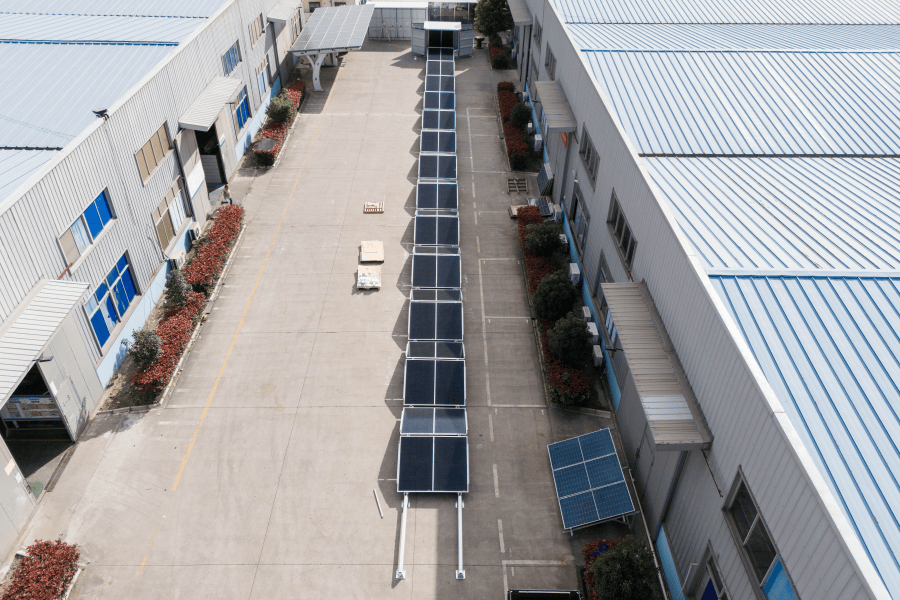
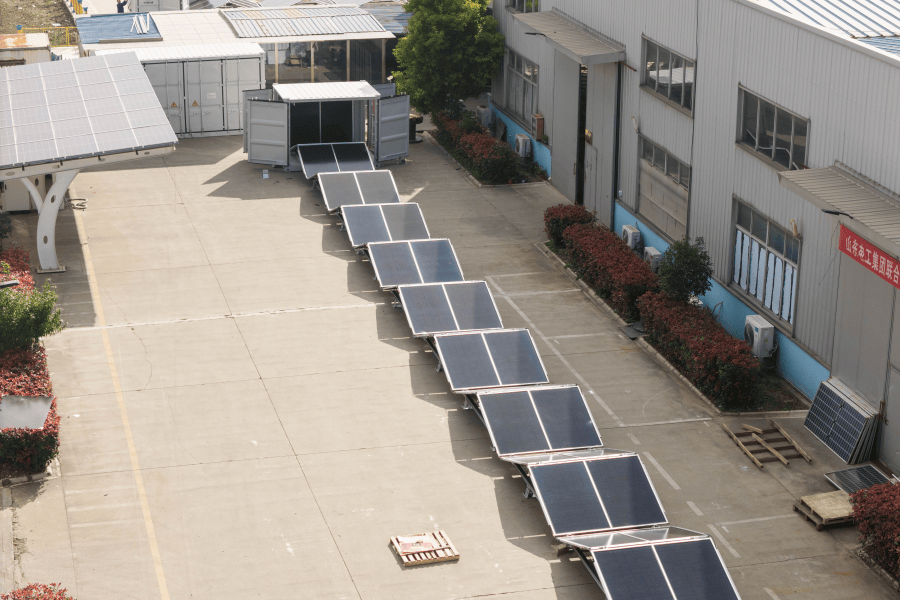
The Highjoule Solution: We deployed two of our 20ft 5MWh GridArmor containers. They were connected to a 1.5MW grid tie-in (much smaller and faster to secure than the full project load) and a 800kW on-site solar canopy built over the material staging area.
How It Worked: The system was programmed to prioritize solar charging during the day. The BESS would then discharge during high-power afternoon operations and throughout the night. A small, backup diesel generator was kept on standby but rarely kicked in - only during a period of extended cloudy weather. The system's controller automatically managed everything.
The Outcome: The project achieved a 92% reduction in diesel runtime. They avoided over $1.8M in estimated grid upgrade costs and kept to their critical path schedule. Honestly, the site manager's biggest compliment was about the noise - or lack thereof. Crews could communicate safely, and neighboring businesses stopped complaining.
Expert Deep Dive: The "How" Behind the High Performance
Okay, so it works in practice. But why? Let's geek out for a minute on two critical technical aspects that make this viable, explained without the jargon.
1. Thermal Management: The Heart of Safety and Longevity
You can't just pack thousands of battery cells into a metal box and hope for the best, especially in a Texas summer. I've seen systems fail because this was an afterthought. Our approach uses a closed-loop, liquid-cooling system. Think of it as a precise, silent air-conditioning system for each battery rack. It keeps the cells within a tight, optimal temperature range whether it's 110F or 20F outside. This does three things: it extends the system's life dramatically, maintains full power output in extreme weather, and, most importantly, is a cornerstone of our UL safety certification. Passive air systems just can't guarantee that level of control.
2. C-Rate and LCOE: The Economics of Discharge Speed
You might hear "C-rate" thrown around. Simply put, it's how fast you can pull energy out of the battery. A 1C rate means you can discharge the full 5MWh in one hour. For construction, you don't usually need that brutal, rapid discharge. Our systems are often optimized around a 0.5C to 0.75C rate. Why? Because designing for a slightly slower, "gentler" discharge reduces stress on the batteries, improves cycle life, and ultimately lowers the Levelized Cost of Energy (LCOE) - the total cost per kWh over the system's life. We're engineering for real-world duty cycles, not just a spec sheet peak. This is where true cost savings are baked in.
Looking Beyond the Box: What This Means for Your Projects
The beauty of this Real-world Case Study of 20ft High Cube 5MWh Utility-scale BESS for Construction Site Power is its ripple effect. Once the construction phase is over, that same BESS unit isn't scrap. It can be redeployed to the next site, or it can become part of the permanent facility's microgrid, providing backup power or peak shaving. The asset's value extends far beyond the initial project.
For us at Highjoule, it's not just about selling a container. It's about providing a predictable, clean, and financially sound power strategy. It's the deep service layer - helping with local permitting based on UL and IEC standards, providing remote monitoring during the project, and having local technicians available if needed - that turns a complex engineering product into a simple, reliable tool for the project team.
So, next time you're looking at a project Gantt chart and the "temporary power" line item gives you pause, think about that quiet 20ft box. What would shifting from a volatile fuel cost to a fixed, clean energy cost do for your budget and risk profile? I'd love to hear what your biggest site power challenge has been.
Tags: Construction Site Power UL Standard Renewable Energy Integration BESS LCOE Thermal Management Utility-Scale Energy Storage IEC Standard
Author
James Zhang
20+ years agricultural energy storage engineer / Highjoule CTO