
215kWh Hybrid Solar-Diesel BESS for Farm Irrigation: A Real-World Case Study
Contents
- The Quiet Crisis on the Farm: Beyond the Grid's Reach
- Beyond the Whisper: When the Diesel Gen-Set Never Stops Humming
- The 215kWh Hybrid Solution: How We Engineered Resilience
- The Texas Blueprint: A 215kWh Cabinet in Action
- Through the Expert Lens: Why the Details Make All the Difference
- Your Energy Independence Journey Starts With a Conversation
The Quiet Crisis on the Farm: Beyond the Grid's Reach
Let's be honest, when we talk about energy transition, the headlines are all about megawatt-scale grid projects and electric vehicles. But over my 20+ years on sites from California's Central Valley to rural Germany, I've seen a different, quieter challenge. It's the agricultural producer C the almond grower, the dairy farmer, the vineyard owner C who's often left in a tough spot. Their operation is vital, yet they might be at the end of a fragile grid line, or facing sky-high demand charges that eat into already thin margins. The need for reliable, affordable power for critical loads like irrigation pumps, cooling systems, and processing equipment is non-negotiable. A power failure during a critical irrigation window isn't just an inconvenience; it's a direct threat to the year's livelihood.
Beyond the Whisper: When the Diesel Gen-Set Never Stops Humming
This is where the real pain begins. The traditional backup? The diesel generator. I've stood next to enough of them to know the drill. The capital cost is one thing, but the operational cost is a constant bleed. Fuel prices are volatile C a fact the International Energy Agency (IEA) consistently highlights in their reports on energy security. Maintenance is relentless. And let's not forget the noise, the emissions (increasingly a concern for community relations and regulations), and the sheer inefficiency of running a large gen-set for a partial load.
I've seen firsthand on site a farm in North Rhine-Westphalia, Germany, running their 80kW irrigation pump solely on a diesel generator for 8-10 hours a day during summer. The fuel bill was staggering, and the carbon footprint was at odds with their sustainability goals for their produce. They had solar panels on the barn roof, but without storage, that energy was wasted when the pump didn't need to run. The system was disconnected, literally and figuratively. This story repeats itself across the US and EU. The problem isn't a lack of desire for cleaner energy; it's the lack of a smart, integrated bridge between the existing diesel workhorse and the potential of solar.
The 215kWh Hybrid Solution: How We Engineered Resilience
This is precisely where the hybrid solar-diesel system with a cabinetized Battery Energy Storage System (BESS) shines. It's not about ripping and replacing. It's about intelligent integration. Think of it as giving your existing energy assets a brain and a buffer. The 215kWh capacity is a sweet spot we've identified for many mid-sized agricultural operations C enough to shift several hours of pump operation, manage peak loads, and provide seamless backup.
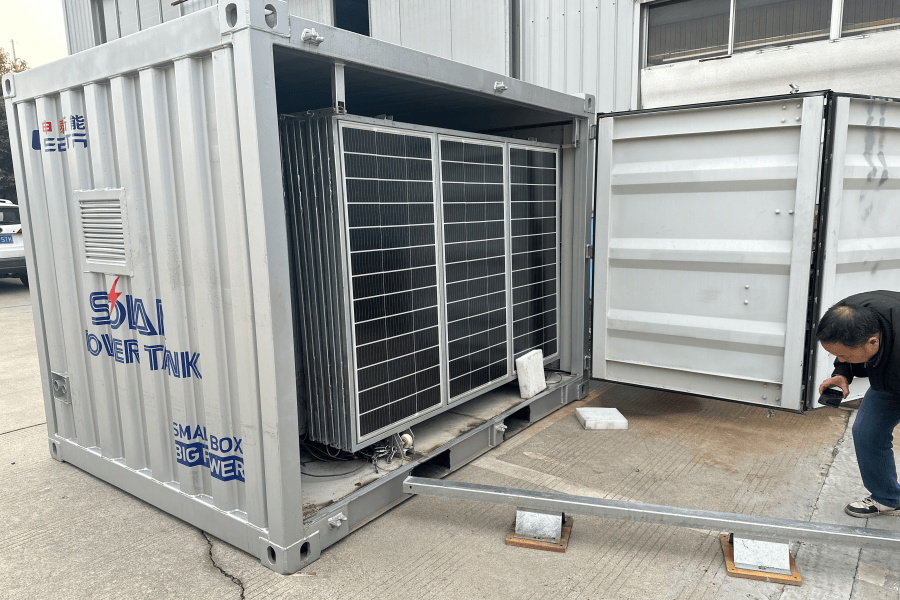
The core solution is an all-in-one cabinet system. It houses the battery racks, the battery management system (BMS), the hybrid inverter, and the thermal management system in a single, robust enclosure. This isn't a science project assembled on site; it's a pre-engineered, pre-tested power plant in a box. For us at Highjoule, designing this meant building every unit from the ground up to meet and exceed the safety benchmarks our clients demand: UL 9540 for the energy storage system, UL 1973 for the batteries, and IEC 62443 for cybersecurity in the control systems. This compliance isn't just a sticker; it's the foundation of risk mitigation for the farm owner and the insurer.

The Texas Blueprint: A 215kWh Cabinet in Action
Let me walk you through a real deployment. We partnered with a pecan orchard in West Texas. Their challenge was classic: a 75HP submersible irrigation pump, unreliable grid power during peak summer storms, and a 150kW diesel generator that was their lifeline. Their goals were clear: reduce diesel runtime, ensure zero interruption during irrigation cycles, and hedge against future electricity rate hikes.
We deployed a single 215kWh lithium iron phosphate (LFP) battery cabinet alongside a new 120kW solar array and a advanced hybrid controller. Here's how it works now:
- Primary Power: During the day, the solar array directly powers the pump, with excess energy charging the battery cabinet.
- Peak Shaving & Backup: When the pump starts (a huge inrush current), the battery instantly supplements power, preventing a "peak" on the grid meter or requiring the generator to spool up. If the grid fails, the system transitions to battery power so fast the pump motor doesn't even stumble.
- Diesel Optimization: Only when the battery is depleted does the diesel generator start. And here's the key C it runs at its optimal, fuel-efficient load to both power the load and recharge the battery quickly, then shuts off. The generator runtime was cut by over 70%.
The result? A predictable energy cost, vastly improved reliability, and a rapid ROI based mainly on displaced diesel fuel. The farmer now views his energy system as a strategic asset, not a cost center.
Through the Expert Lens: Why the Details Make All the Difference
Anyone can sell a battery box. Making it work for 20+ years in a dusty field is different. Here's what we've learned matters most:
- C-rate Isn't Just a Spec: For irrigation, you need high power (a high C-rate) to start those big motors. Our 215kWh cabinet is designed for a sustained high-power output, not just energy capacity. It's built for the job, not just sized for it.
- Thermal Management is Everything: Texas heat, German cold. Battery life and safety hinge on a stable temperature. Our cabinets use a closed-loop liquid cooling system that's far more effective and reliable than simple air fans, especially in dusty agricultural environments. This directly impacts the system's Levelized Cost of Energy (LCOE) C keeping the battery healthy for more cycles, longer.
- The Intelligence Layer: The real magic is in the software. The system learns the load patterns, weather forecasts, and fuel prices to automatically choose the most economical and reliable operating mode. Is a heatwave coming? It will conserve battery capacity. Is diesel cheap today? Maybe it will do a strategic recharge.
Our service model extends this intelligence. We provide remote monitoring and proactive maintenance alerts. It's peace of mind, knowing experts are keeping an eye on your system's health, just like you watch your crops.

Your Energy Independence Journey Starts With a Conversation
The path to energy resilience for your agricultural operation doesn't have to be a leap into the unknown. It's a calculated step, based on proven, cabinetized technology that integrates with what you already have. The question isn't really if a hybrid system makes sense, but how to tailor it to the specific rhythm of your water needs, your crop cycles, and your financial goals.
What's the one critical load on your farm that keeps you up at night when the weather turns? Let's start there.
Tags: UL Standard BESS Microgrid Hybrid Solar-Diesel Agricultural Energy
Author
James Zhang
20+ years agricultural energy storage engineer / Highjoule CTO