
Liquid-Cooled Off-Grid Solar Generator Cost for Telecom Base Stations
Contents
- The Real Problem Isn't Just "Cost Per kWh"
- The Hidden Costs That Keep Site Managers Awake
- Why Liquid Cooling Changes the Math for Off-Grid Telecom
- Breaking Down the Cost: A Real-World Framework
- A Quick Look at a Mountainous European Deployment
- Thinking Beyond the Price Tag: Total Cost of Ownership
- Making the Decision: What to Ask Your Vendor
The Real Problem Isn't Just "Cost Per kWh"
Honestly, when a telecom infrastructure manager asks "How much does it cost for a liquid-cooled off-grid solar generator for our base stations?", I know they're looking for a simple number. But after 20+ years on sites from the Arizona desert to the Scottish Highlands, I can tell you that giving just a dollar-per-kilowatt-hour figure would be a disservice. The real question buried underneath is: "What's the cost of reliable, compliant, and hassle-free power for my remote site over the next 15 years?" That's a very different, and much more important, calculation.
The Hidden Costs That Keep Site Managers Awake
Let's talk about the standard air-cooled containerized BESS. On paper, the CAPEX looks attractive. But the operational aggravation? I've seen this firsthand. In a California desert deployment for a major carrier, ambient temperatures hit 45C (113F). The air-conditioning units on those BESS containers were running non-stop, chewing through 8-10% of the stored solar energy just to keep the battery packs from thermal runaway. That's energy that should be powering radios, not cooling fans. According to a NREL analysis, poor thermal management can accelerate battery degradation by up to 200% in harsh climates. That means your "10-year" battery might need replacement in 5, a capex shock no one budgets for.
Then there's safety and compliance. In the US, you're looking at UL 9540 for the system and UL 1973 for the cells. In Europe, it's IEC 62619 and IEC 62933. An air-cooled system pushing its limits in a hot enclosure might struggle to meet the stringent thermal propagation tests these standards require. The cost of non-compliance? Failed inspections, delayed deployments, and massive liability risks.

Why Liquid Cooling Changes the Math for Off-Grid Telecom
This is where the conversation shifts from mere cost to value. Liquid-cooled BESS, like the systems we engineer at Highjoule, directly attack those hidden costs. Think of it like a precision cooling system for a high-performance engine, versus a box fan in a garage. The liquid coolant circulates directly to each cell, maintaining an even temperature spread. This isn't a luxury; it's a game-changer for longevity and safety.
From a technical standpoint, it allows us to safely use higher C-rate cells (meaning faster charge/discharge from your solar array and to your load) without the thermal stress. It slashes that auxiliary power consumption for cooling to near 2-3%. Honestly, on an off-grid site where every watt-hour from your solar panels is precious, that 7% savings goes straight to your uptime. The system runs quieter, has a smaller footprint (no massive air ducts), and its consistent temperature control is what gives us the confidence to back our systems with robust performance warranties that actually mean something.
Breaking Down the Cost: A Real-World Framework
So, to the numbers. A liquid-cooled off-grid solar BESS for a telecom site is a custom solution, but here's a realistic framework for a 100kW/400kWh system designed to UL/IEC standards:
- Core BESS (Liquid-Cooled Container): This includes the battery racks, liquid cooling plate system, pumps, and thermal management controls. It's a premium over air-cooled, typically 15-25% higher in upfront component cost. But you're buying a fundamentally more robust and efficient machine.
- Power Conversion System (PCS): The bi-directional inverter. For telecom, we often spec units with high ingress protection (IP65) for outdoor placement and wide input voltage ranges to handle the solar array.
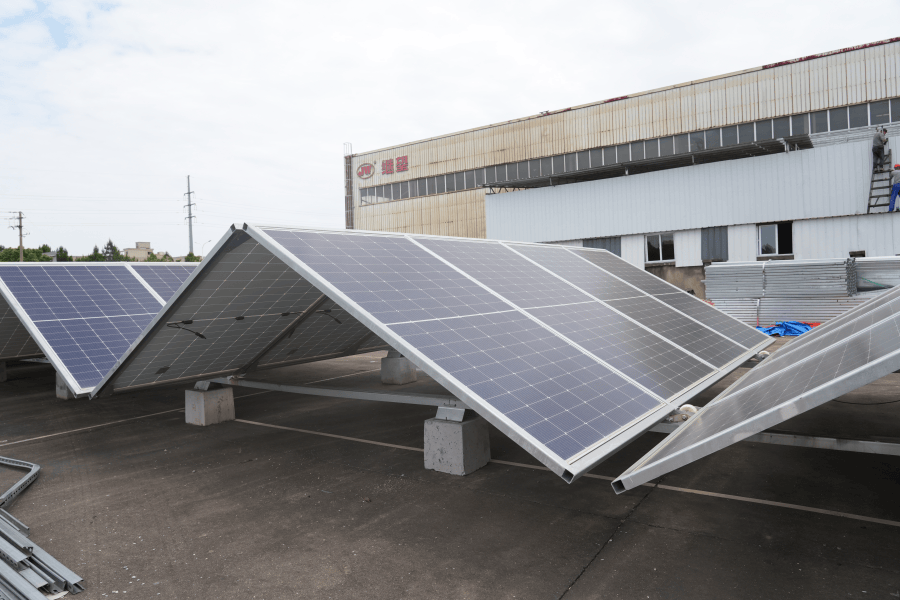
- Solar PV Array: The cost here is separate but integral. We size it not just for daily load, but for seasonal lows and battery charging efficiency.
- Balance of Plant & Integration: Civil works, cabling, grid-forming controls for true off-grid "black start" capability, and most critically, the system integration and software that ties solar, battery, and diesel genset (if present) into a seamless, automated microgrid.
- Soft Costs: Engineering, permitting, compliance testing (UL/IEC certification is a process, not a checkbox), and commissioning. With our local teams in the US and EU, we navigate this for clients to avoid costly delays.
The total turnkey project cost for a system of this class can range from $400,000 to $700,000+. The variation comes from site accessibility, local labor rates, specific compliance hurdles, and the level of grid-forming sophistication required.
A Quick Look at a Mountainous European Deployment
We deployed a liquid-cooled system for a carrier in the Alps. The challenge: power a new 5G repeater site unreachable by grid, with -30C winters, heavy snow load, and zero on-site maintenance for months. An air-cooled system would have been a thermal and reliability nightmare. Our solution used the liquid cooling loop not just to cool, but to warm the batteries in extreme cold using integrated heaters, all powered by the excess solar. The system maintains optimal cell temperature year-round with minimal energy waste. The upfront cost was higher, but the alternative was monthly helicopter visits for maintenance or a complete site failure. The Levelized Cost of Energy (LCOE) - the true measure over 15 years - was significantly lower.
Thinking Beyond the Price Tag: Total Cost of Ownership
This is the expert insight I share over coffee with clients. You must model the TCO:
- Lower Degradation: A 20% longer lifespan (conservatively) defers a massive capex replacement cycle.
- Higher Efficiency: 5-7% more usable energy from your solar PV directly reduces the size (and cost) of the solar array needed.
- Reduced O&M: Fewer moving parts than forced-air systems, sealed environments against dust (a killer for telecom electronics), and remote monitoring mean fewer truck rolls.
- Warranty & Risk Mitigation: A system designed from the cell up for thermal stability carries better warranty terms and lowers the risk of catastrophic failure and its associated revenue/regulatory penalties.
Making the Decision: What to Ask Your Vendor
So, when you're evaluating proposals, don't just compare the bottom-line quote. Drill down. Ask: "What is the guaranteed auxiliary power consumption for thermal management at 40C ambient?" "Can you show me the third-party test report for thermal propagation per UL 9540A?" "What is the projected capacity fade at year 10 under my specific cycling profile?"
At Highjoule, we build these conversations into our design process. Because the right system - the one with a truly competitive TCO - isn't just a commodity purchase. It's a critical infrastructure investment. Your off-grid site's revenue depends on it. What's the cost of a day of downtime for your newest 5G site? That's the number you should really have in mind when you start this journey.
Ready to model the TCO for your specific sites? Let's start with your location, load profile, and reliability targets.
Tags: UL Standard BESS LCOE Liquid Cooling Off-grid Solar IEEE Standards Telecom Power
Author
James Zhang
20+ years agricultural energy storage engineer / Highjoule CTO