
Hybrid Solar-Diesel BESS for EV Charging: A 215kWh Case Study & Cost Solution
Contents
- The Silent Roadblock to Fleet Electrification
- Beyond the Obvious: The Real Cost of "Simple" Solutions
- A Practical Blueprint: The 215kWh Hybrid Cabinet System
- Decoding the Tech: Why the Details Make All the Difference
- Your Next Step: From Concept to Reliable Operation
The Silent Roadblock to Fleet Electrification
Honestly, if I had a dollar for every time a logistics manager or a commercial property owner told me their EV charging plans were stuck because of "the grid issue," I'd probably be retired by now. We're seeing this all across the U.S. and Europe C ambitious targets for electric fleets, but a sobering reality when it comes to power infrastructure. The local substation is at capacity, a transformer upgrade is a 12-month wait and a six-figure quote, or the demand charges from a pure grid-tied fast charger would obliterate any operational savings. It's the number one conversation starter at industry events.
The data backs up the chatter. The International Energy Agency (IEA) highlights that global electricity demand from EVs is set to skyrocket, putting immense pressure on local distribution networks. For a depot planning to charge even a modest fleet of 10-20 vehicles simultaneously, the required power draw can be equivalent to a small shopping center. The grid, in many areas, simply wasn't built for this.
Beyond the Obvious: The Real Cost of "Simple" Solutions
So, what happens? I've seen this firsthand on site. The first instinct is often to go for a diesel generator C "get it done fast." But then you're locked into volatile fuel prices, constant maintenance, noise, emissions (which defeats the green goal), and you still have a single point of failure. The other route is to apply for a grid upgrade. In a recent project in Northern Germany, the client was quoted an 18-month lead time and over ?200,000 just for the grid connection reinforcement. Their entire electrification timeline was on hold.
Let's agitate that pain point a bit more. It's not just about getting power; it's about the cost of that power over 10-15 years C what we call the Levelized Cost of Energy (LCOE). A pure diesel solution has a terrible LCOE. A pure grid solution in a region with high Time-of-Use rates or demand charges isn't much better. And a solar-only system? For 24/7 fleet operations, you need power at night and on cloudy days, so you'd need a massive, expensive solar array and an even more massive battery to cover the gaps. It doesn't pencil out.

A Practical Blueprint: The 215kWh Hybrid Cabinet System
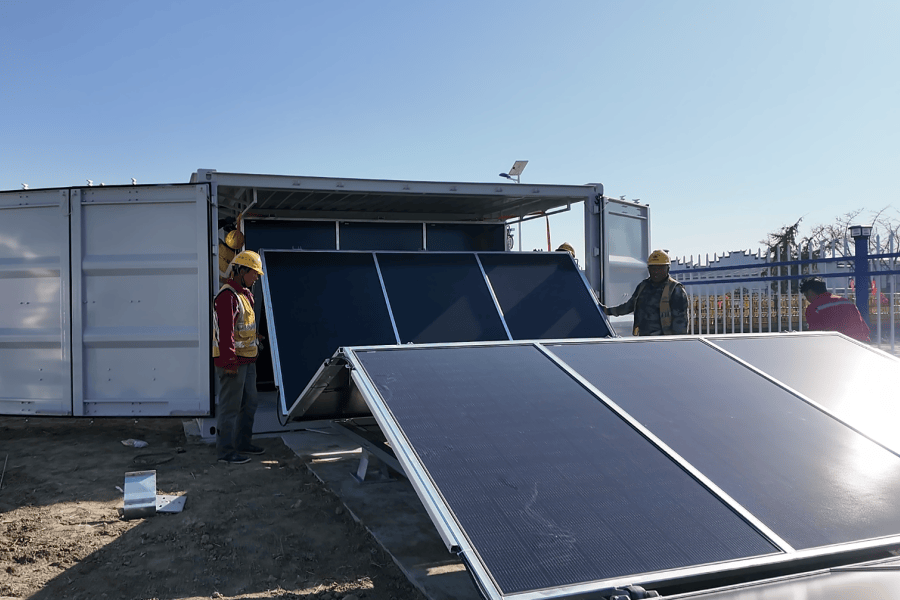
This is where the real-world case of a 215kWh cabinet-based hybrid solar-diesel system becomes so compelling. It's not a theoretical concept; it's a pragmatic, deployed solution. We worked with a regional delivery fleet operator in Texas who faced all the above issues. Their challenge: charge 15 electric vans overnight without a grid upgrade, keep energy costs predictable, and maintain 99.9% uptime for their critical dispatch schedule.
The solution we architected with them was elegant in its practicality:
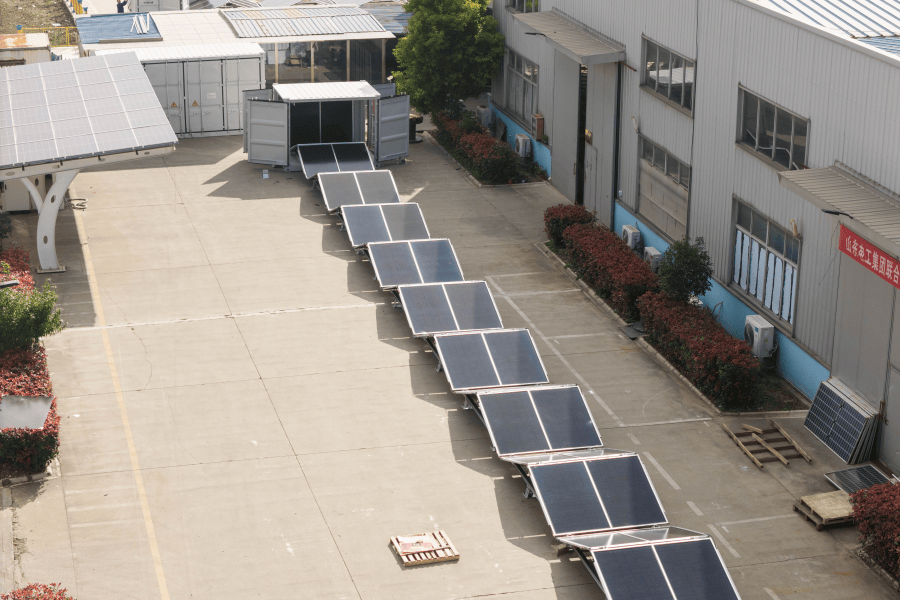
- Solar Array: A rooftop PV system sized to offset daytime facility load and opportunistically charge the battery.
- 215kWh Battery Cabinet: The heart of the system. This UL 9540-certified battery energy storage system (BESS) acts as the primary buffer. It gets topped up by solar when available and is programmed to draw from the grid only during the absolute cheapest off-peak windows.
- Diesel Generator: Integrated not as the main source, but as a backup and peak-shaving asset. Its controller communicates with the BESS. If the battery is depleted and the grid is expensive or unavailable, the generator kicks in at an efficient load point to recharge the battery or support direct load.
The outcome? The grid connection requirement was reduced by over 60%. Demand charges were slashed. The generator runs less than 100 hours a year instead of thousands, saving a fortune in fuel and maintenance. The system paid for itself in under 4 years based on energy arbitrage and demand charge avoidance alone. Most importantly, the vans are charged reliably every single night.
Decoding the Tech: Why the Details Make All the Difference
You might hear "215kWh battery" and think it's a commodity. In my two decades, I can tell you the magic is in the engineering details. Let's break down two critical ones:
1. C-rate and Thermal Management: The "C-rate" is basically how fast you can charge or discharge the battery. For EV charging, you need a high discharge C-rate to deliver lots of power quickly. But pushing a battery hard generates heat. Poor thermal management is the fastest way to degrade battery life and create safety risks. Our cabinet systems use an active liquid cooling system that's become the industry standard for high-power applications. It maintains an even cell temperature, which is why we can confidently offer a longer performance warranty. It's like comparing a Formula 1 car's cooling system to a family sedan's C both have engines, but one is built for sustained high performance.
2. The Intelligence Layer: The hardware is one thing, but the software that orchestrates it is everything. The system's controller is constantly making decisions: "Is solar production high? Charge the battery. Is it 2 AM and grid power is $0.03/kWh? Charge the battery. Is it 5 PM, peak grid rates, and the battery is at 40%? Maybe run the generator for an hour at optimal efficiency to top up to 80%, avoiding a $500 demand charge." This algorithmic optimization is what drives down the LCOE and delivers the ROI.
Your Next Step: From Concept to Reliable Operation
At Highjoule, we've built our reputation not just on supplying IEC 62619 and UL 9540 compliant cabinets, but on deploying them in complex, real-world environments where they have to work day in, day out. Our value is in taking this blueprint and adapting it to your specific site conditions, local utility tariffs (like California's SGIP or Germanys BEW), and operational rhythms.
The real question isn't whether a hybrid system makes technical sense C this case study proves it does. The question is, how do you translate it into a resilient, cost-effective asset for your specific operation? What's the one constraint C grid, cost, uptime C that's currently holding your electrification plans back?
Tags: UL Standard BESS LCOE Europe US Market EV Charging Infrastructure Hybrid Energy Systems Commercial Solar Storage
Author
James Zhang
20+ years agricultural energy storage engineer / Highjoule CTO