
Hybrid Solar-Diesel BESS for Military Bases: A 215kWh Case Study on Resilience & LCOE
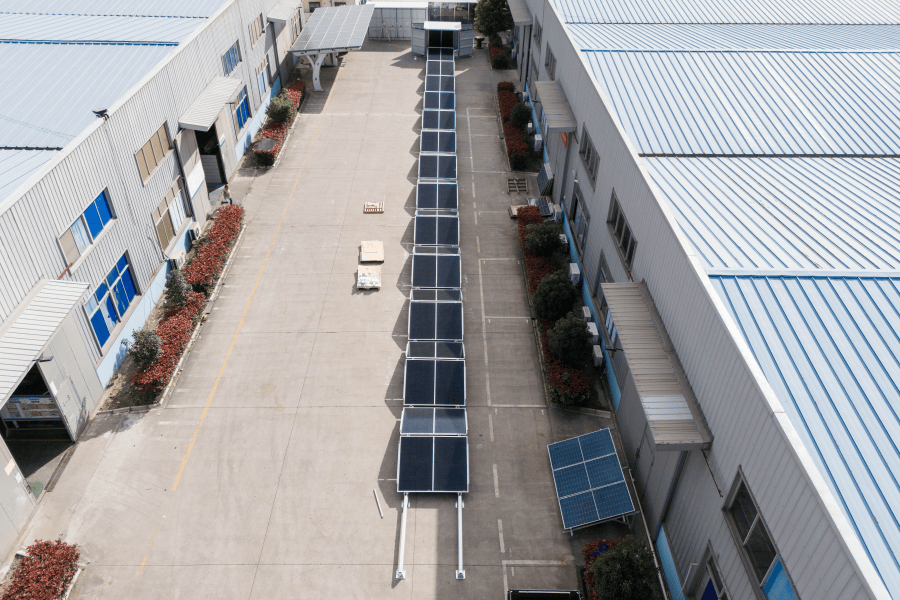
Table of Contents
- The Silent Problem: More Than Just Fuel Bills
- Why It Hurts: Cost, Carbon, and Critical Security Gaps
- A Real-World Answer: The 215kWh Cabinet Hybrid System
- Beyond the Spec Sheet: The Nuts and Bolts That Matter
- Making It Work Anywhere: Standards and Smarts
- What's Your Power Resilience Equation?
The Silent Problem: More Than Just Fuel Bills
Let's be honest, when we talk about energy for remote or secure facilities - military bases, communication hubs, critical infrastructure - the conversation has been pretty one-note for decades: diesel generators. They're the reliable, loud, and thirsty backbone of off-grid and backup power. I've been on sites where the hum of a diesel gen-set is just background noise, a constant expense line item everyone accepts as a "cost of doing business." But here's the phenomenon I'm seeing shift, especially in North America and Europe: that acceptance is turning into scrutiny. It's not just about the fuel bill anymore; it's about the entire vulnerability package that comes with a fuel-only strategy.
Why It Hurts: Cost, Carbon, and Critical Security Gaps
Let's agitate that pain point a bit. Relying solely on diesel creates a triple bind. First, the financial volatility. Fuel logistics are a nightmare - I've seen firsthand on site how a delayed tanker or a spike in crude prices can blow an operations budget. The International Energy Agency (IEA) consistently highlights energy security as a top concern for governments and industries, and being tethered to a volatile commodity is the opposite of secure.
Second, and let's not mince words, the carbon footprint. Operational mandates, especially for public sector and forward-thinking corporations in the EU and US, are pushing hard for emission reductions. Running generators 24/7 for base load, even inefficiently at low load, is a sustainability dead end.
Third, and most critical for a military context, is the security gap. A generator farm is a single point of failure. It's a large, noisy, thermally obvious target. Its runtime is limited by your on-site fuel storage, creating a ticking clock during any prolonged disruption. The modern threat landscape demands a dispersed, resilient, and silent energy architecture.
A Quick Case in Point: Learning from California
Look at the evolution of microgrids in California. A project I studied closely involved a telecom data center that used to run on diesel backup. During wildfire-related Public Safety Power Shutoffs (PSPS), they'd burn through fuel reserves in days, facing costly mobile refueling and emission penalties. Their shift to a solar-plus-storage hybrid system didn't just cut fuel use by over 70%; it created a "black start" capability, allowing silent, instantaneous power that kept critical comms online without broadcasting their operational status. The lesson? Resilience is now measured in weeks, not hours.
A Real-World Answer: The 215kWh Cabinet Hybrid System
This is where the solution crystallizes, and it's exactly what a recent 215kWh cabinet-based hybrid system for a military base was designed to solve. The goal wasn't to rip and replace the existing diesel infrastructure - that's often impractical. The goal was to intelligently layer and optimize it.
The core idea is elegant: pair a robust solar PV array with a high-cycle life, cabinet-enclosed Battery Energy Storage System (BESS), and let an advanced energy management system (EMS) be the conductor. The diesel generators step down from primary source to a backup and peak-shaving asset. The solar handles daytime base load and charges the batteries. The 215kWh BESS then provides silent, instantaneous power for overnight loads, critical loads during transitions, and most importantly, allows the generators to turn off completely for long stretches.

Honestly, the beauty of this "cabinet" approach is in its deployability. We're not talking about a massive container system here (though we do those too). This is a modular, pre-integrated cabinet solution that meets stringent military specs for transport, setup, and hardening. It can be deployed rapidly, interconnected, and scaled. For this base, it meant they could phase the rollout, starting with their most critical command and comms buildings, without a massive, disruptive civil works program.
Beyond the Spec Sheet: The Nuts and Bolts That Matter
As an engineer, the spec sheet is just the opening chapter. The real story is in the implementation details that dictate 10-20 years of reliable service. Let me give you a couple of insights from the trenches.
Thermal Management is Non-Negotiable: A battery's lifespan and safety are dictated by its temperature. In a desert base or a frozen northern outpost, passive cooling won't cut it. This system uses a closed-loop, liquid-cooling thermal system. Why? It maintains optimal cell temperature within a tight band (we're talking 3C of the sweet spot), which dramatically reduces degradation. I've seen air-cooled systems in Arizona struggle with hotspotting, losing capacity years ahead of schedule. Liquid cooling, while a higher upfront investment, is the single biggest lever for lowering the total Levelized Cost of Energy (LCOE) over the system's life because it preserves your battery asset.
C-Rate Isn't Just a Number: Everyone looks at energy capacity (kWh), but power (kW) and how fast you can access it (C-Rate) are crucial for resilience. This 215kWh cabinet is designed with a C-Rate that balances two needs: providing enough instantaneous "umpf" to handle the surge of starting sensitive equipment or bridging the 10-30 second gap before a generator spins up, while also being gentle enough on the batteries for daily solar-cycling duty. We didn't over-spec it for a huge 2C discharge that would stress the packs; we right-sized it for the actual load profiles. This thoughtful matching is what separates a system that lasts from one that becomes a maintenance headache.
Making It Work Anywhere: Standards and Smarts
Deploying this in the US or EU isn't just about plug-and-play. It's about certification and local intelligence. Every component in this chain, especially the BESS cabinet, is built and tested to the relevant UL (UL 9540, UL 1973) and IEC (IEC 62619) standards. This isn't a checkbox exercise. These standards govern everything from cell-level safety to system-level fire propagation and grid interaction. They give base commanders, facility managers, and insurers the confidence that this new energy asset mitigates risk, doesn't add to it.
And this is where a company's field experience pays off. At Highjoule, our approach isn't just to drop-ship a cabinet. It's about understanding the local utility interconnection rules (if any), the specific fuel quality and maintenance schedules of the existing generators, and training the on-site personnel. The EMS software isn't generic; it's configured so that the base engineers can see, in simple terms, fuel saved, carbon avoided, and system health. We've found that when the client truly owns and understands the system's logic, it gets utilized to its full potential.

The Bottom-Line Shift
The outcome for this military base project? A drastic reduction in generator runtime (projected >85% for certain loads), slashing fuel logistics and maintenance costs. A silent, emissions-free source of power for critical overnight operations. And a resilience profile that changed from "we have 48 hours of fuel" to "we have days of solar and storage, and our fuel is now a strategic reserve for truly extended events." The financials shifted from a pure operational expense (fuel) to a managed capital asset (solar+BESS) with a predictable, declining LCOE.
What's Your Power Resilience Equation?
The takeaway from this real-world case study isn't that a 215kWh hybrid system is a magic bullet. It's that the technology to redefine resilience - to make it cleaner, quieter, cheaper, and more secure - is here, proven, and deployable now. The question for any operation running on the old model of diesel dependency is this: What's the true cost of your next fuel delivery, not just in dollars, but in risk?
I'm curious, what's the one energy vulnerability in your operation that keeps you up at night? Is it fuel price volatility, emission targets, or that silent clock ticking down on your backup runtime?
Tags: UL Standard BESS LCOE Microgrid Military Energy Hybrid System Solar-Diesel Resilient Power
Author
James Zhang
20+ years agricultural energy storage engineer / Highjoule CTO