
Mobile BESS for Military & Remote Sites: A 215kWh Case Study on Resilient Power
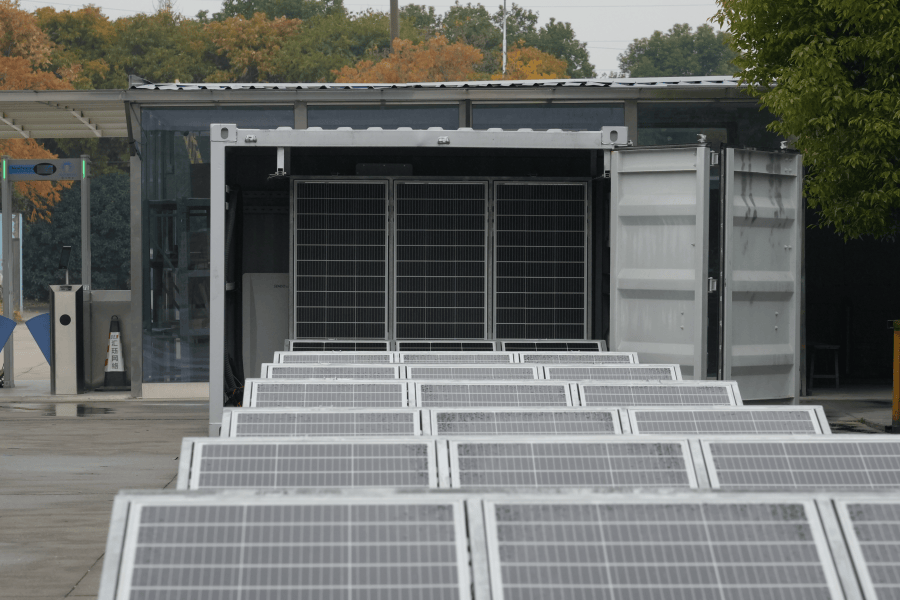
Table of Contents
- The Silent Challenge: Power Security in Remote & Critical Operations
- Why Diesel Generators Aren't the Whole Answer (And What It Really Costs)
- The Mobile Solution: More Than Just a Battery on Wheels
- Case Study Breakdown: The 215kWh Cabinet Mobile Power Container in Action
- The Tech Behind the Resilience: An Engineer's Perspective
- Is a Mobile BESS Right for Your Operation?
The Silent Challenge: Power Security in Remote & Critical Operations
Let's be honest, when we talk about energy storage, most blogs jump straight to solar pairing for homes or grid-scale projects. But having spent over two decades on sites from the Australian outback to remote industrial parks in Texas, I've seen a critical, often overlooked niche: providing reliable, resilient power for operations that cannot afford to fail. Think military forward operating bases, disaster response hubs, remote mining camps, or even critical telecom infrastructure. The problem here isn't just about saving money on electricity bills - it's about energy security.
The core challenge is twofold. First, you're often dealing with a weak or non-existent grid connection. Second, the primary backup - diesel generators - comes with a long tail of logistical and operational headaches. I've been on site where the fuel convoy itself becomes the biggest vulnerability. The U.S. Department of Defense, for instance, has highlighted fuel supply lines as a significant risk in contested environments. This isn't theoretical; it's a daily planning headache for base commanders and facilities managers.
Why Diesel Generators Aren't the Whole Answer (And What It Really Costs)
Don't get me wrong, diesel gensets are robust and have their place. But relying on them for continuous or frequent backup is where the pain amplifies. The issue isn't the upfront capital cost; it's the total cost of ownership and the operational drag.
- Fuel Logistics & Cost: Transporting, storing, and securing fuel in remote areas is incredibly expensive and risky. The U.S. Army has reported that in some conflict zones, the cost per gallon of delivered fuel can exceed $40 when you factor in convoy security. Even in peaceful settings, price volatility is a killer for budgets.
- Maintenance & Reliability: Generators need regular run-time and maintenance. If they sit idle, they fail when you need them most. I've seen a "backup" generator fail to start during a grid outage because a maintenance check was missed - a simple, human error with critical consequences.
- Noise, Heat & Signature: For military and security-sensitive sites, the acoustic and thermal signature of a running generator is a major drawback. It compromises operational security and creates a less-than-ideal environment for personnel.
This is where the industry is shifting. A report from the National Renewable Energy Laboratory (NREL) emphasizes the role of hybrid systems - combining renewables, generators, and storage - to create resilient microgrids that cut fuel use by 50-90%. The goal isn't to eliminate the generator, but to make it the last resort, not the first.
The Mobile Solution: More Than Just a Battery on Wheels
So, how do we bring advanced battery storage into these challenging environments? The answer isn't a permanent, poured-concrete BESS installation. It's a mobile power container. This is where our real-world case study of a 215kWh cabinet-style mobile system comes in. The key value proposition here is deployable resilience.
Imagine a solution that arrives on a standard flatbed truck, is commissioned in under a day, and provides instant, silent, and emissions-free power conditioning and backup. It can be paired with existing solar, a generator, or a weak grid. When the mission changes or the site is relocated, you pack it up and move it. No permanent footprint, no complex permitting for a fixed structure. Honestly, the flexibility this offers changes the entire planning calculus for mobile and temporary operations.
Case Study Breakdown: The 215kWh Cabinet Mobile Power Container in Action
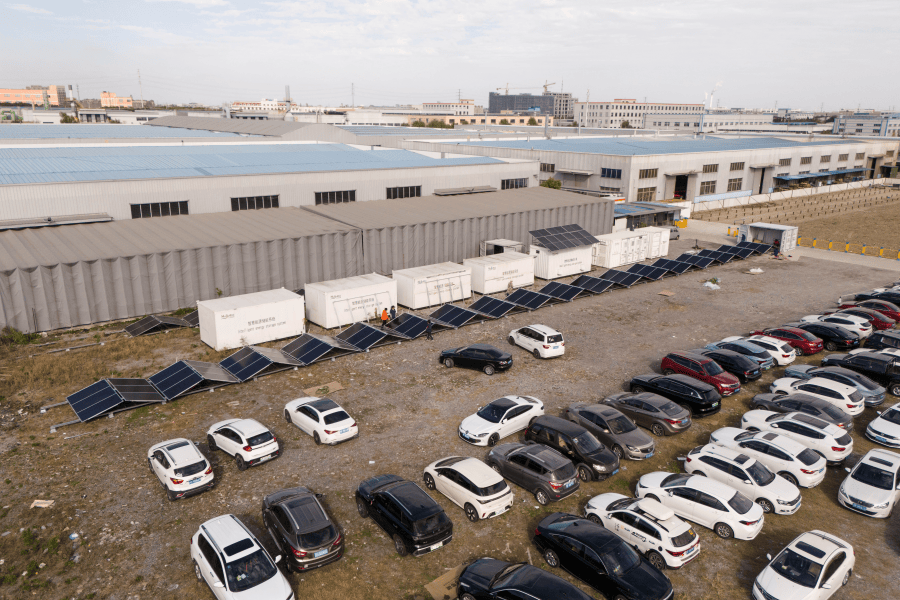
Let's talk specifics. We recently deployed a 215kWh Mobile Power Container for a military training base in Europe. The base had intermittent grid reliability and needed a reliable power source for its command-and-control (C2) trailers and communications equipment during extended field exercises. Diesel generators were too loud and created a thermal signature that interfered with certain training scenarios.

The Challenge: Provide 72+ hours of silent, resilient backup power for critical C2 loads, integrate with existing on-site solar panels on some trailers, and ensure the system met stringent military and EU safety standards (think IEC 62619, UL 9540). Everything had to be operable by non-specialist personnel.
The Highjoule Solution: We configured a 215kWh, cabinet-based lithium iron phosphate (LFP) system inside a standard 20-foot ISO container. The container was modified with military-grade connectors, a built-in power conversion system (PCS), and a climate control system designed for extreme temperatures. The beauty was in the details:
- Plug-and-Play Interface: Pre-configured cables allowed connection to the trailer park's distribution panel in under 2 hours.
- Hybrid Control Logic: The system was programmed to use solar first, then battery storage, and only call on the legacy diesel generator as a final backup. This slashed generator runtime by over 80% during the exercise.
- Compliance First: Every component, from the battery racks to the fire suppression system, was selected and assembled to comply with UL and IEC standards, which formed the basis for the client's own stringent safety protocols.
The result? A "silent watch" capability that enhanced training realism, eliminated fuel runs for days, and gave the base commander one less critical system to worry about. After the exercise, the container was disconnected, loaded, and moved to a different site for a new mission.
The Tech Behind the Resilience: An Engineer's Perspective
When I walk clients through these systems, they often ask, "What makes this different from a big power bank?" Let me give you some insider perspective on the engineering that makes it work in the real world.
1. C-rate and Real-World Discharge: The "C-rate" is basically how fast you can pull energy from the battery. For a 215kWh unit, a 0.5C rate means you can sustainably pull about 100kW of power. That's enough for several high-load trailers. We design for a moderate C-rate because, honestly, chasing extremely high power in a mobile container leads to thermal management nightmares and reduces the battery's lifespan. It's about balanced, reliable performance.
2. Thermal Management is Everything: This is where I've seen cheap systems fail. Batteries generate heat, and in a sealed container under the sun, temperatures can soar. Our systems use a dedicated, redundant cooling system that maintains the optimal 20-25C (68-77F) range year-round. This isn't just for efficiency; it's a major safety and longevity factor. Proper thermal management can double the operational life of your BESS investment.
3. The LCOE (Levelized Cost of Energy) Win: For financial decision-makers, LCOE is the key metric. It's the total lifetime cost of the system divided by the energy it produces. While a mobile BESS has a higher upfront cost than a generator, its LCOE over 10 years is often lower. Why? Near-zero "fuel" cost (sun, excess grid), minimal maintenance, and the ability to avoid costly fuel logistics and generator overhauls. When you factor in the value of mission assurance and reduced risk, the financial picture becomes compelling.
Is a Mobile BESS Right for Your Operation?
The truth is, mobile energy storage isn't for every scenario. But if your operations involve remote locations, critical backup needs, high fuel costs, or a requirement for silent, low-signature power, it's a conversation worth having.
At Highjoule, we don't just sell containers. We bring two decades of field experience to help you scope the right size, the right configuration, and - most importantly - ensure it's built and certified to the safety standards (UL, IEC, IEEE) that your risk management team demands. The goal is to give you a tool that simplifies your logistics, hardens your energy security, and just works when you need it.
What's the single biggest energy security vulnerability you're dealing with in your remote or critical operations today?
Tags: UL Standard BESS IEEE Standards Mobile Power Container Military Energy Security Remote Microgrid Case Study
Author
James Zhang
20+ years agricultural energy storage engineer / Highjoule CTO