
Air-Cooled 5MWh BESS for Remote Island Microgrids: A Real-World Case Study
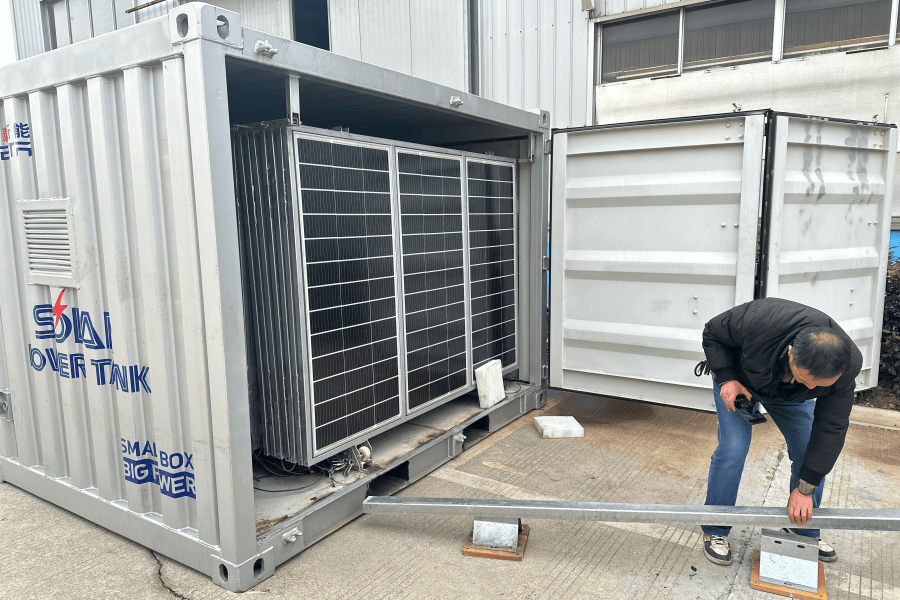
From Diesel Dependence to Clean Resilience: A 5MWh BESS Powers a Remote Island
Hey there. Let's grab a virtual coffee. If you're looking at energy storage for remote or island communities, you've probably heard a thousand promises. "It's the future!" they say. But out there, on a rocky island with a single, aging diesel generator humming away, the future feels pretty distant. The real question isn't about technology hype - it's about practical, rugged, and financially sane solutions that work when the nearest service engineer is a boat or plane ride away. I've seen this firsthand on site, from the Scottish Isles to the Caribbean. Today, I want to walk you through a real-world case study that cuts through the noise: deploying a 5MWh, air-cooled utility-scale Battery Energy Storage System (BESS) for a remote island microgrid.
Quick Navigation
- The Island Energy Dilemma: More Than Just High Bills
- Why Complexity is the Enemy of Reliability
- The 5MWh Air-Cooled BESS: A Pragmatic Blueprint
- Case Study: A North Atlantic Island's Journey
- Under the Hood: Key Tech Choices Made Simple
- Your Next Steps Towards Energy Independence
The Island Energy Dilemma: More Than Just High Bills
For decades, the equation for remote power was simple: diesel generators. But honestly, that model is breaking down. The pain points are universal. First, the fuel cost is astronomical and volatile - I've seen communities where over 70% of the electricity cost is just the diesel itself. Second, the logistics are a nightmare. A storm delays the fuel barge? Now you're rationing power. Third, those generators are loud, polluting, and high-maintenance. They're a liability, not an asset.
So, the obvious move is to add solar PV or wind. But here's the catch renewables introduce: intermittency. The sun sets, the wind drops, and if you don't have a way to store that energy, you're back to running the diesel genset - often inefficiently at low load. This isn't a theoretical problem. The International Renewable Energy Agency (IRENA) highlights that islands often face levelized costs of electricity (LCOE) that are 3 to 5 times higher than mainland grids. The goal isn't just to add solar panels; it's to create a stable, dispatchable microgrid that maximises the use of every kilowatt-hour produced.
Why Complexity is the Enemy of Reliability
This is where many well-intentioned projects stumble. In the pursuit of maximum efficiency, some solutions become overly complex. Liquid-cooled BESS units, for instance, can offer superb temperature control in dense installations. But on a remote island? They introduce additional points of failure - pumps, coolant lines, heat exchangers. If a seal fails or the coolant degrades, you need specialised parts and skills to fix it. Fast.
I remember consulting on a project in the Mediterranean where the maintenance schedule for a "high-efficiency" system became a major operational cost. Simplicity isn't just a nice-to-have in remote locations; it's the cornerstone of long-term system availability and lower LCOE. Every extra component is a future maintenance visit. The real cost isn't just the capex; it's the total cost of ownership over 15+ years.
The 5MWh Air-Cooled BESS: A Pragmatic Blueprint
So, what does a practical solution look like? It starts with choosing the right foundation. For this case study, the core is a 5MWh, containerised, air-cooled BESS. Why air-cooled? Honestly, for many utility-scale microgrid applications, it hits the sweet spot. It uses forced air circulation - robust fans and filters - to manage battery temperature. Fewer moving parts than liquid systems, easier to diagnose, and easier to maintain with locally available skills.
At Highjoule Technologies, our approach for these scenarios is rooted in this philosophy. We design systems that comply with UL 9540 and IEC 62933 standards - non-negotiable for safety and bankability in the US and EU markets - but we package them for harsh, remote environments. This means marine-grade corrosion protection on the container, advanced fire suppression that doesn't rely on constant water supply, and a design that allows for easy module replacement if ever needed. The goal is resilience by design.

Case Study: A North Atlantic Island's Journey
Let's talk specifics. Our project was on a windswept island with about 2,000 residents and a critical tourism-based economy. Their old diesel genset was at capacity, and a new one would have cost millions. They had a 3MW wind farm that was frequently curtailed (wasted) because the grid couldn't handle the variability.
The Challenge: Integrate the wind power, reduce diesel runtime by over 80%, and create a black-start capable grid - all within a tight budget and with minimal increase in operational complexity.
The Highjoule Solution: We deployed a single 40-foot container housing a 2.5MW / 5MWh air-cooled BESS. It was paired with an advanced energy management system (EMS) to act as the grid's "brain."
The Outcome:
- Diesel Displacement: The system now manages the wind farm's output, smoothing gusts and storing excess. Diesel gensets now run less than 10 hours a week, down from 24/7, slashing fuel costs and emissions.
- Grid Stability: The BESS provides instantaneous frequency response, something the slow-reacting diesel gensets couldn't do. Power quality improved noticeably.
- Deployment & Simplicity: The containerised, air-cooled system was commissioned in under three weeks. The local technical team was trained on basic diagnostics and filter maintenance - tasks they're comfortable with. No complex coolant chemistry to manage.
This mirrors successes we've seen in similar contexts, like an industrial microgrid in Texas using BESS for demand charge management and backup, proving the versatility of a robust, air-cooled design.
Under the Hood: Key Tech Choices Made Simple
Let's demystify a few technical terms that were crucial in this project's success. Don't worry, I'll keep it in plain English.
Thermal Management (Air vs. Liquid)
Batteries perform best and last longest within a specific temperature range. Thermal management is the system that keeps them there. In this island project, we chose air-cooling because the ambient temperature rarely reached extreme highs. The system uses smart, staged fans that draw in filtered air. It's less about peak efficiency and more about predictable, reliable performance with minimal OpEx. For a denser installation in Arizona, we might lean liquid-cooled, but here, air was the right tool for the job.
C-rate: The "Athlete's Pace" of a Battery
The C-rate essentially tells you how fast a battery can charge or discharge relative to its size. A 1C rate means a 5MWh battery can output 5MW for one hour. For this microgrid, we didn't need a super-high C-rate (like you might for grid frequency regulation). We needed a moderate, steady C-rate (around 0.5C) that was perfect for absorbing hours of wind energy and then discharging it over longer periods. This choice directly impacts cost and battery longevity - opting for a lower, sustained pace is often more economical for island load-shifting.
LCOE: The True North Metric
Every decision loops back to the Levelized Cost of Energy (LCOE) - the total lifetime cost divided by the energy produced. The air-cooled BESS, with its lower maintenance needs and high reliability, actively drove down the island's LCOE. It wasn't the cheapest box to buy upfront, but it was the most cost-effective over 20 years. This is the lens through which we at Highjoule evaluate every component and design choice for our clients.

Your Next Steps Towards Energy Independence
Look, the path off diesel dependency is now well-trodden. The technology is proven. The real work is in the application - matching the right system architecture to the specific geography, economics, and community needs of your site. An air-cooled, utility-scale BESS isn't the answer for every single project, but for remote and island microgrids, its blend of simplicity, robustness, and cost-effectiveness is incredibly compelling.
What's the one operational headache in your current power system that keeps you up at night? Is it fuel price volatility, generator maintenance costs, or integrating more renewables? Let's start the conversation there.
Tags: UL Standard BESS LCOE Renewable Integration Off-grid Power Remote Island Microgrid Utility-Scale Energy Storage IEC Standard Air-Cooled BESS
Author
James Zhang
20+ years agricultural energy storage engineer / Highjoule CTO