
Air-Cooled BESS for High-Altitude Renewable Energy Projects: A Real-World Case Study
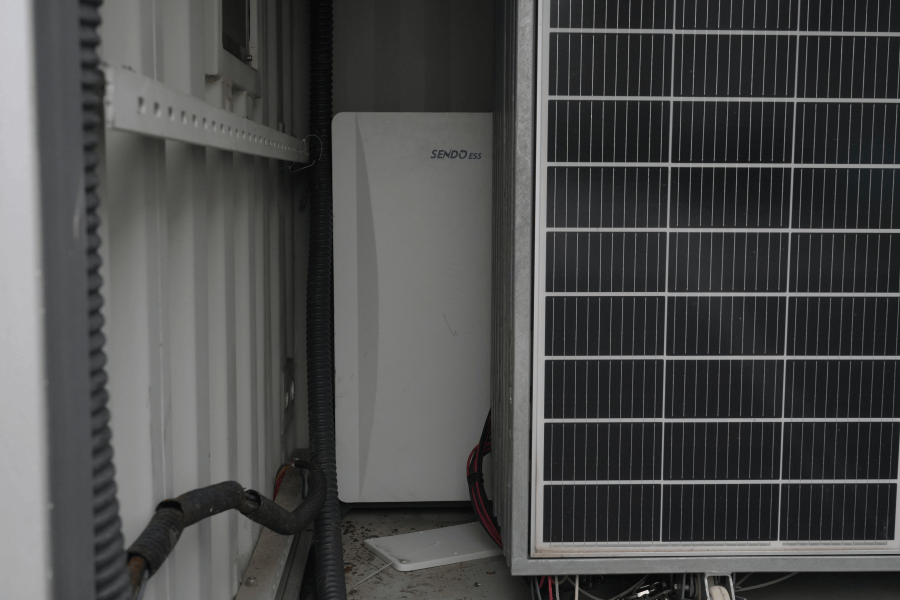
Table of Contents
- The High-Ground Problem: Why Altitude Throws a Wrench in Your BESS Plans
- Beyond the Hype: The Real Cost of Getting Thermal Management Wrong
- A Solution That Breathes (in Thin Air): The Pre-Integrated, Air-Cooled Container
- Case Study: Powering a Remote Microgrid in the Colorado Rockies
- The Devil's in the Details: An Engineer's Take on Making It Work
- Is Your Next High-Altitude Project Ready for This?
The High-Ground Problem: Why Altitude Throws a Wrench in Your BESS Plans
Let's be honest. When you're planning a solar-plus-storage project in the Alps, the Rockies, or any other breathtaking high-altitude site, the last thing on your mind is often the battery container itself. You're focused on PV yield, grid connection, permits. I've been there on site, unboxing what was supposed to be a "standard" containerized BESS, only to watch the thermal management system struggle from day one. The fans were screaming, but the battery racks in the back were still too warm. It's a silent killer for project ROI.
The core issue is simple: air gets "thinner" as you go up. At 2,500 meters (around 8,200 feet), air density is roughly 25% lower than at sea level. For a standard air-cooled battery energy storage system (BESS) designed for a German industrial park or a California valley, that's a massive problem. Thinner air means less mass for heat transfer. Your fans have to work exponentially harder to move enough air to cool the battery cells, leading to higher parasitic load (that's energy the BESS uses for itself), reduced efficiency, and accelerated wear and tear. Suddenly, your neatly calculated levelized cost of energy storage (LCOE) starts to creep up.
Beyond the Hype: The Real Cost of Getting Thermal Management Wrong
This isn't just an engineering nuance; it's a direct hit to your project's bankability. The National Renewable Energy Laboratory (NREL) has highlighted that improper thermal management can slash battery cycle life by 20% or more. Think about that. A system designed for a 15-year lifespan might need a major overhaul in 12 years. The financial implications are stark.
On top of that, safety standards like UL 9540 and IEC 62933 assume certain environmental operating conditions. Pushing a standard cooling system beyond its design limits in a low-pressure environment isn't just inefficient - it can introduce unforeseen risks. I've seen projects where the contingency budget gets eaten up by emergency HVAC retrofits and unscheduled downtime, all because the BESS wasn't built for the environment it was placed in. The agitation here is real: it's the gap between the promised performance on the spec sheet and the gritty reality on a windswept mountain plateau.
A Solution That Breathes (in Thin Air): The Pre-Integrated, Air-Cooled Container
So, what's the answer? Go liquid-cooled for every project? Not necessarily. Liquid cooling is fantastic, but it adds complexity, cost, and maintenance points. For many commercial, industrial, and microgrid applications at altitude, a properly engineered air-cooled, pre-integrated container is the sweet spot. The keyword is "properly engineered."
This isn't a standard container with bigger fans slapped on. It's a system designed from the ground up for low-atmospheric-pressure conditions. We're talking about computational fluid dynamics (CFD) modeling to optimize airflow paths with less dense air, selecting fan and filter systems rated for the specific altitude, and pre-integrating the PV combiner, inverters, and BESS with a unified thermal management logic. Everything is assembled, tested, and validated in a controlled factory environment against relevant IEEE and IEC standards for altitude. This means when it arrives on your rocky site, it's truly plug-and-play. You're not paying for on-site engineering trials with your project timeline on the clock.

Case Study: Powering a Remote Microgrid in the Colorado Rockies
Let me walk you through a project we did with Highjoule Technologies. The client was a mining operation in Colorado, sitting at about 3,000 meters. Their challenge: reduce diesel generator reliance for a remote camp and processing sensors. Grid connection was not an option. They needed a resilient solar-plus-storage microgrid.
The Challenge: Extreme temperature swings (-25C to 30C), 30% lower air pressure, and a requirement for UL 9540 certification for insurance and financing. A vendor had proposed a standard container, but our team's site assessment flagged the thermal management as a major red flag.
The Highjoule Solution: We deployed a pre-integrated PV Container solution. This wasn't just a battery box. It housed:
- Altitude-Adapted Air Cooling: Fans and ductwork sized for the lower air density, with a control system that monitored internal pressure differentials, not just temperature.
- Pre-Wired Integration: The PV string combiners and DC/AC power conversion equipment were inside, with pre-run cabling to the battery racks. This reduced on-site electrical work by 60% in that harsh environment.
- Unified Control: A single platform managed PV production, battery charge/discharge (C-rate), and cooling, prioritizing efficiency based on real-time conditions.
The Outcome: The system achieved a 22% reduction in parasitic load compared to a retrofitted standard unit. More importantly, battery temperatures stayed within a 2C band of the optimal range, ensuring cycle life and safety. The project passed UL field inspection seamlessly and has cut diesel use by over 70% in its first year. The client's CFO was happy because the predictable performance locked in their LCOE calculations.
The Devil's in the Details: An Engineer's Take on Making It Work
From two decades in the field, here's my insight on the key specs to scrutinize for high-altitude work:
- C-rate Isn't Just a Number: A battery's C-rate (how fast it charges/discharges) is intimately tied to heat generation. At altitude, you might need to derate the maximum continuous C-rate or ensure your cooling is designed for the heat load at that specific rate in thin air. Don't assume the sea-level spec holds.
- Thermal Management = Lifetime Management: Every 10C above the ideal operating temperature can double the rate of chemical degradation inside a lithium-ion cell. Proper cooling isn't a comfort feature; it's the primary determinant of your asset's financial life. Ask your vendor for the CFD reports and the design ambient pressure assumptions.
- LCOE is the Ultimate Metric: The goal is minimizing the Levelized Cost of Energy over the system's life. A slightly higher upfront cost for a purpose-built, altitude-hardened container can save you multiples in avoided downtime, longer lifespan, and higher efficiency. It turns a capex question into an opex and reliability victory.
At Highjoule, this philosophy is baked into our product development. Our containers are designed with these harsh realities in mind, and our local deployment teams are trained on the unique commissioning checks needed for high-altitude sites. It's about delivering the performance promised on the datasheet, whether you're at sea level in Rotterdam or on a plateau in Peru.

Is Your Next High-Altitude Project Ready for This?
The renewable energy frontier is increasingly in challenging environments. The old approach of deploying "standard" equipment everywhere is a fast track to underperformance and headaches. The real-world case for purpose-designed, air-cooled, pre-integrated solutions is clear: they de-risk your project, protect your investment, and ensure you get the returns you modeled.
What's the biggest environmental challenge on your upcoming project site? Is your current BESS vendor asking the right questions about altitude, or just assuming their standard design will fit?
Tags: UL Standard BESS LCOE Energy Storage Thermal Management Renewable Energy High-Altitude
Author
James Zhang
20+ years agricultural energy storage engineer / Highjoule CTO