
Real-World Case Study: All-in-One Integrated 1MWh Solar Storage for Public Utility Grids
Table of Contents
- The Grid Dilemma: More Renewables, More Problems
- Why "Modular" Sometimes Means "Messy" on Site
- The All-in-One Answer: A Real Project Unpacked
- Under the Hood: The Tech That Makes It Work (Without the Jargon)
- Beyond the Megawatt-Hour: What Utilities Really Gain
- Your Next Step: Asking the Right Questions
The Grid Dilemma: More Renewables, More Problems
Let's be honest. If you're managing a public utility grid in North America or Europe right now, you're caught in a tough spot. The mandate is clear: integrate more solar and wind. The reality, as I've seen firsthand from California to Bavaria, is that this brings a whole new set of headaches. The grid wasn't built for this kind of intermittency. One minute you have a surplus, the next you're scrambling. You're not just managing energy anymore; you're managing weather forecasts.
And the pressure isn't just from regulators. It's from your customers expecting rock-solid reliability, and from your finance team watching the cost of peak power purchases and grid stabilization services eat into the budget. The International Energy Agency (IEA) points out that grid-scale storage is key to this transition, but getting it right is the tricky part. It's not just about buying batteries; it's about deploying a system that works as one cohesive unit with your existing infrastructure.
Why "Modular" Sometimes Means "Messy" on Site
Here's where the classic approach often stumbles. The promise of a "modular" system sounds great in a boardroom. You buy the battery racks from one vendor, the power conversion system (PCS) from another, the thermal management and controls from a third. You figure you're getting best-in-class components. But on the ground, at the project site, that's when the integration challenges hit.
I've been on sites where we lost weeks because the communication protocols between the inverter and the battery management system (BMS) needed custom coding. Or where the thermal design of the container didn't quite match the heat output of the chosen cells under a high C-rate discharge, leading to derating and lost capacity on the hottest days. Each interface is a potential point of failure, a source of finger-pointing between suppliers, and a cost overrun waiting to happen. The total installed cost balloons, and the levelized cost of energy (LCOE) C the metric that really matters C takes a hit.

The Safety and Standards Maze
And let's not forget safety and compliance. In the US, you're looking at UL 9540 for the overall system and UL 1973 for the batteries. In Europe, it's IEC 62619. Getting a cobbled-together system through certification is a marathon. Each component needs its own certification, and then the entire assembly needs to be re-evaluated. It's time-consuming, expensive, and frankly, a risk no public utility should be taking lightly.
The All-in-One Answer: A Real Project Unpacked
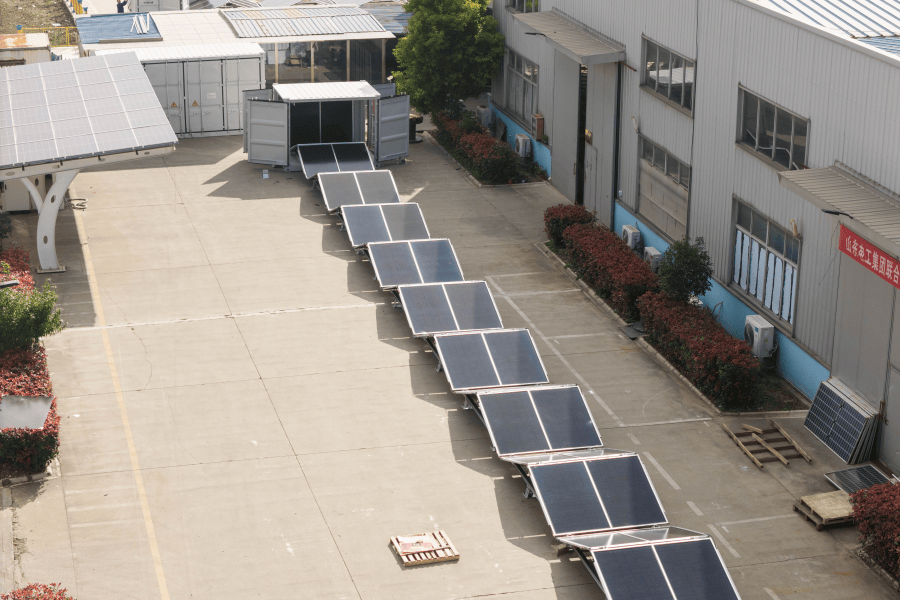
This is exactly why the all-in-one, integrated 1MWh solar storage concept is gaining such serious traction. It's not a theory; it's a field-proven solution. Let me walk you through a recent deployment we did with Highjoule for a municipal utility in the Midwest US. Their challenge was classic: they had a 5MW solar farm that was causing voltage fluctuations on their feeder line, especially during midday curtailment. They needed grid support and energy time-shift, but had limited space and a tight timeline for interconnection approval.
We proposed a 4MWh system built from four of our pre-integrated 1MWh units. Each unit is a containerized solution where the lithium-ion battery packs, the PCS, the thermal management (liquid cooling, in this case), the fire suppression, and the grid-interface controls are all designed, tested, and certified as a single system. Honestly, the on-site difference was night and day.
- Deployment: From delivery to commissioning was under three weeks. The units were dropped, connected to the medium-voltage transformer and the solar farm controller, and that was it.
- Compliance: Because the entire unit ships with full UL 9540 and UL 9540A certification, the utility's engineers and the local AHJ (Authority Having Jurisdiction) review was streamlined. We had the permits in record time.
- Performance: The integrated controls meant the system automatically smooths out the solar farm's output and dispatches energy during peak evening hours. The utility now avoids peak demand charges and has a reliable resource for frequency regulation.
Under the Hood: The Tech That Makes It Work (Without the Jargon)
So, what's inside this "all-in-one" magic box? Let's break down two critical aspects in plain English.
1. Thermal Management is Everything: Battery life and safety are directly tied to temperature. A poorly managed system ages fast and is at risk. Our approach uses a liquid cooling system that directly contacts the cell modules, keeping the temperature variation across the entire 1MWh block to within 2C. Why does this matter? It allows us to safely use a slightly higher C-rate (the speed of charge/discharge) when the grid needs a fast response, without worrying about hot spots. It also extends the system's warranty and life, directly improving your LCOE.
2. The Intelligence Layer: An integrated system isn't just about hardware in one box. It's about a unified software brain. The BMS, the inverter controls, and the grid dispatch algorithms are all co-optimized. This means the system can predict its own performance, manage its own health, and interface seamlessly with the utility's SCADA system. For the operator, it looks like a single, predictable asset on the grid - not a bundle of components that need babysitting.
Beyond the Megawatt-Hour: What Utilities Really Gain
When you choose a pre-integrated, utility-scale solution like this, you're buying more than storage capacity. You're buying certainty.
| Challenge | Traditional Modular Approach | All-in-One Integrated 1MWh Unit |
|---|---|---|
| Project Timeline | 6-12+ months (integration heavy) | 3-6 months (plug-and-play focus) |
| System Performance | Dependent on field integration quality | Guaranteed by factory testing & certification |
| Ongoing O&M | Multiple vendor contracts, complex troubleshooting | Single point of contact, predictive analytics |
| Financial Risk | High (integration risks, cost overruns) | Lower (fixed price, known timeline) |
For Highjoule, our deep experience in both battery chemistry and grid interconnection standards (like IEEE 1547) is baked into the product. It means our local deployment teams aren't just installers; they're grid engineers who speak your language and understand your interconnection studies.
Your Next Step: Asking the Right Questions
The shift towards integrated storage is real. The National Renewable Energy Laboratory (NREL) has extensive research on how standardized, pre-tested systems can accelerate deployment and reduce soft costs. The real-world case for the all-in-one 1MWh solar storage unit for public grids is proven in faster commissioning, lower lifetime costs, and simpler operations.
So, next time you're evaluating storage, move beyond just asking about $/kWh of capacity. Ask the vendor: "Is this a single, factory-certified system under UL 9540/IEC 62619?" "What is the guaranteed round-trip efficiency at my site's ambient temperature range?" "How does your integrated control system interface with my DMS/SCADA?"
The answers will tell you everything you need to know about whether you're buying a component or a solution. What's the biggest integration hurdle your utility has faced with new energy assets?
Tags: UL Standard BESS LCOE Grid Resilience Solar Storage Public Utility Grid Energy Storage Case Study
Author
James Zhang
20+ years agricultural energy storage engineer / Highjoule CTO