
Black Start BESS for Eco-Resorts: A Real-World 1MWh Solar Storage Case Study
Contents
- The Silent Problem: When "Green" Meets "Grid-Down"
- Why This Hurts More Than Just Your Operations
- A Real-World Answer: The Black Start-Capable Solar Storage Hub
- The Project Breakdown: From Blueprint to Island Mode
- The Technical Heart: What Makes a BESS Truly "Black Start Ready"?
- Beyond the Resort: What This Means for Your Business
The Silent Problem: When "Green" Meets "Grid-Down"
Let's be honest. When most of us think about solar and storage for a resort or a remote commercial site, we picture sunny days, clean energy, and lower bills. And that's true. But there's a gap in that picture I've seen firsthand on site, especially in North America and Europe. What happens when the main grid goes down - not for a few minutes, but for hours or even days? That beautiful solar array? In most setups, it's required to shut down for safety, leaving you in the dark. Your commitment to sustainability suddenly clashes with a very real vulnerability.
For eco-resorts, remote data centers, or critical infrastructure facilities, this isn't just an inconvenience. It's a direct threat to safety, revenue, and brand reputation. You've invested in renewables to be independent, yet a grid fault can make you more dependent than ever on diesel gensets. Honestly, it defeats part of the purpose.
Why This Hurts More Than Just Your Operations
The pain goes deeper than a few spoiled meals in the fridge. According to the U.S. National Renewable Energy Laboratory (NREL), resilience is now a top driver for commercial energy storage, beyond simple arbitrage. We're talking about:
- Revenue Catastrophe: A high-end resort can lose tens of thousands of dollars per hour during an outage. Guests leave, and bad reviews linger.
- Safety & Liability: No power means no lights, failed security systems, and potential medical device failures.
- Diesel Dependency: Relying solely on generators is noisy, polluting, requires constant fuel logistics, and frankly, it's a PR nightmare for an "eco" brand. Maintenance is a constant cost.
The core issue is that standard grid-tied solar+storage systems lack "black start" capability. They need an external signal, a stable grid frequency, to boot up. When the grid is dead, they're asleep.
A Real-World Answer: The Black Start-Capable Solar Storage Hub
This is where the real-world case gets interesting. The solution isn't just adding more batteries. It's about designing a system that can self-start, create its own stable "grid" from scratch, and then seamlessly integrate solar and other sources. This is the essence of a true, black start-capable microgrid.
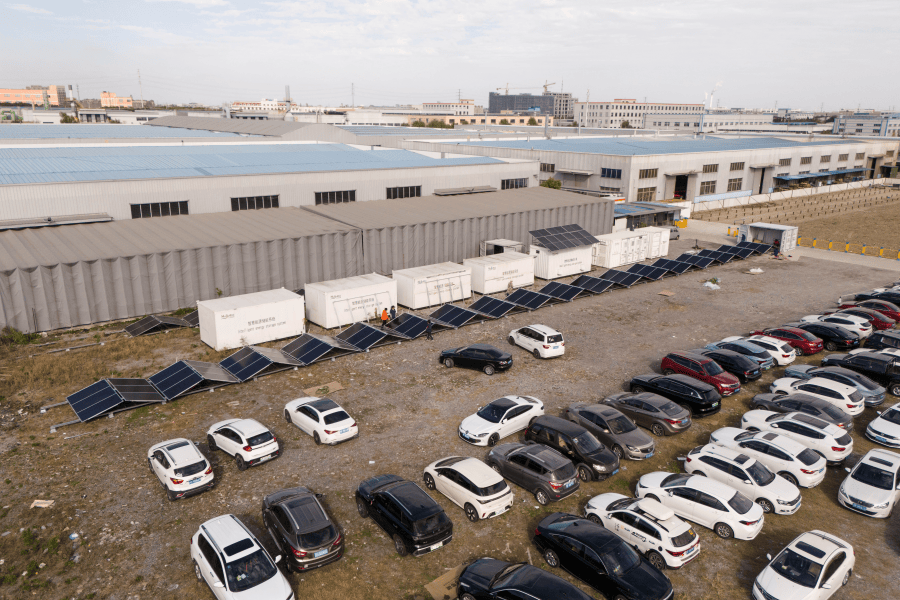
I want to walk you through a project we completed last year - a 1MWh solar storage system for a luxury eco-resort in a location prone to seasonal wildfires and grid instability. Their mandate was clear: achieve 24/7 renewable power and zero operational interruption, no matter what.
The Project Breakdown: From Blueprint to Island Mode

The Scene: A 120-room resort in a scenic but grid-remote area. They had a 500kW solar carport and a legacy diesel generator.
The Challenge:
- Eliminate generator use for daily operations.
- Guarantee power through multi-day grid outages.
- Keep the entire system silent and emissions-free.
- Meet strict local building and electrical codes (UL 9540, IEEE 1547 were non-negotiable).
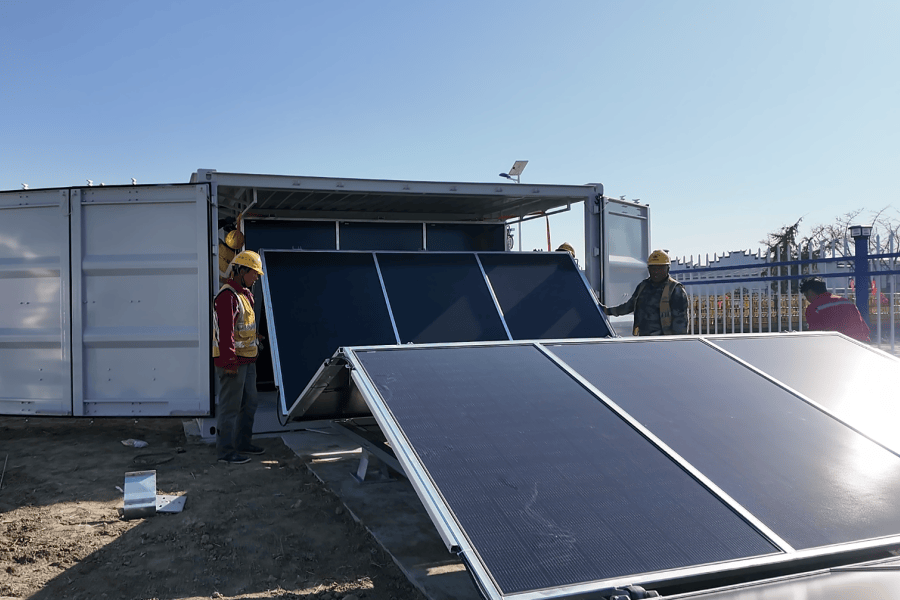
The Highjoule Solution: We deployed a 1MWh, containerized Battery Energy Storage System (BESS) with a black start inverter at its core. This wasn't an off-the-shelf unit. The power conversion system (PCS) was specifically engineered to initiate a stable voltage and frequency waveform without any external reference - like creating a perfect, miniature grid from a dead start.
The sequence is key:
- Grid Failure Detected: The system isolates from the dead public grid in milliseconds.
- Black Start Sequence: The BESS inverter draws from the battery bank to establish a clean, stable 60Hz microgrid for the resort's critical loads.
- Solar Re-synchronization: Once the microgrid is stable, the solar inverters are carefully signaled to reconnect and start feeding power. They now "see" our BESS as the grid.
- Full Island Mode: The system manages solar production, battery charging/discharging, and load demand autonomously. The diesel generator? It's now only a deeply backup, automated to start only if the BESS reaches a critically low state of charge - a scenario we've designed to avoid.
The Technical Heart: What Makes a BESS Truly "Black Start Ready"?
From my two decades on site, I can tell you that slapping "black start" on a spec sheet is easy. Delivering it is where engineering matters. Here's what we focused on:
1. The Inverter's Brain (Grid-Forming vs. Grid-Following): Most inverters are "grid-following." They need a leader to sync to. A black start inverter is "grid-forming." It becomes the leader, creating the voltage and frequency that other sources follow. This requires robust control software and over-sized components to handle the initial inrush currents of transformers and motors.
2. Battery C-rate and Duration: Black start is a high-power event. You need to spin up loads instantly. We specified batteries with a sufficient C-rate (the rate of charge/discharge relative to capacity) to deliver that huge burst of power without damage. But it's a balance - you also need duration (the 1MWh capacity) to carry the loads for days. It's about power and energy.
3. Thermal Management (The Silent Hero): Pushing that much power in a container, especially in a hot climate, is a thermal challenge. We used a liquid-cooling system for the battery racks. Honestly, air-cooling might have been cheaper upfront, but for 24/7 resilience and battery longevity (which directly lowers your Levelized Cost of Energy - LCOE), liquid cooling is non-negotiable. It keeps every cell within a 2-3C range, preventing hot spots and degradation.
4. Standards Are Your Safety Net: Every component, from the battery modules to the fire suppression system, was selected and integrated to comply with UL 9540 (the standard for Energy Storage Systems) and IEC 62619 (safety for industrial batteries). This isn't just paperwork; it's a rigorous validation of safety that insurers and local authorities demand, especially in the EU and US markets.
Beyond the Resort: What This Means for Your Business
The resort now runs on >90% solar year-round, with the grid as a backup, not the other way around. Their diesel fuel bill? It's dropped by over 95%. But the real value, as the GM told me, is "unshakeable guest confidence."
The principles of this case study apply far beyond resorts. Any business where continuity is critical - manufacturing plants, water treatment facilities, community microgrids - faces the same core problem. The economics have shifted. When you factor in avoided losses, fuel savings, and resilience premiums, the business case for a properly engineered, black-start capable system becomes compelling.
So, what's the biggest hurdle you're seeing in your own plans for energy independence? Is it the initial capex, the regulatory maze, or simply figuring out what technology you actually need? I'd love to hear what keeps you up at night - drop me a note. Sometimes the best solution starts with a coffee-chat about a real-world problem.
Tags: UL Standard BESS Black Start Microgrid Solar Storage Energy Resilience Case Study
Author
James Zhang
20+ years agricultural energy storage engineer / Highjoule CTO