
Black Start BESS for Island Microgrids: A Real-World 5MWh Case Study
Contents
- The Silent Problem: When the Lights Go Out for Good
- Beyond the Battery Box: What "Black Start" Really Means on Site
- A Case in Point: The 5MWh Island Grid Savior
- The Technical Grit: Making Black Start Work in the Real World
- The Business Case: More Than Just Kilowatt-Hours
- Your Grid, Your Rules: What to Look For
The Silent Problem: When the Lights Go Out for Good
Let's be honest. For most of my career, when we talked about energy storage for microgrids, the conversation was about shifting solar production or shaving peak demand. It was an economic play. But on remote islands, or in far-flung industrial sites, the conversation is fundamentally different. It's about survival. The core problem isn't just high energy costs - it's the terrifying prospect of a complete, prolonged blackout with no way to self-recover.
I've seen this firsthand on site. A traditional diesel-powered microgrid trips offline due to a fault, a storm, or even just equipment failure. The diesels stop. And then?- nothing. You're in a "black" state. Restarting requires an external power source - a "grid kick" - that simply doesn't exist miles out to sea. You're waiting for a repair crew, maybe even waiting for fuel to be shipped in, while businesses shut down, food spoils, and communications fail. The financial and social cost isn't just a line item; it's a crisis. According to the National Renewable Energy Laboratory (NREL), resilience is now the primary driver for microgrid deployments in critical infrastructure, and black start capability is at the top of that resilience checklist.
Beyond the Battery Box: What "Black Start" Really Means on Site
So, we throw a big battery at the problem, right? Not so fast. A standard grid-following BESS is like a brilliant assistant that needs constant direction. If the boss (the grid) leaves the room, it just sits there. A true black start capable system is the boss. It must autonomously create a stable, clean "island" of electricity - establishing voltage and frequency from zero - and then have the muscle and intelligence to sequentially re-energize the network and restart large loads like diesel gensets. This isn't an add-on feature; it's a fundamental redesign of the power conversion system (PCS), controls, and protection schemes, all baked in from the start and rigorously tested.

A Case in Point: The 5MWh Island Grid Savior
Let me walk you through a project that perfectly illustrates this. We recently deployed a 5MWh, utility-scale BESS for a community microgrid on a remote North Atlantic island. Their challenge was classic: reliance on aging, expensive diesel generators, vulnerability to outages that could last days, and a desire to integrate a new wind farm that their existing grid couldn't handle.
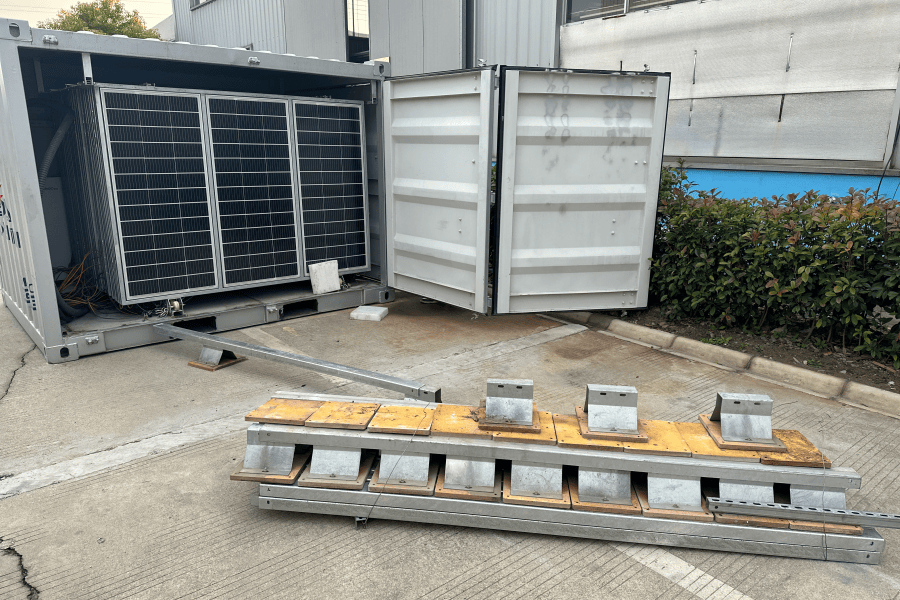
The Highjoule solution wasn't just a containerized battery. It was a grid-forming powerhouse. The system's core mandate was to provide instantaneous black start capability. Here's how it worked on commissioning day: We intentionally islanded the microgrid, letting the diesels shut down. The site was in total blackout. Then, with a single command, our BESS activated its black start sequence. It established a stable 60Hz, 480V grid within milliseconds. Once that "synthetic grid" was rock-solid, the control system methodically energized sections of the distribution network and issued start commands to the primary diesel gensets. Within minutes, the diesels were synchronized and loaded, with the BESS then shifting to its optimal role of smoothing wind power and displacing diesel fuel. The relief on the local operator's face? That's the real-world impact.
The Technical Grit: Making Black Start Work in the Real World
This gets into the weeds a bit, but stick with me - it's crucial. To deliver this reliably, several technical aspects move from "important" to "non-negotiable".
- Grid-Forming Inverters (The Brain & Brawn): Unlike typical grid-following inverters, these can set the voltage and frequency reference. They behave like a traditional generator, providing inertia and stability to a weak grid. This is the foundational tech for black start.
- C-rate and Power Density (The Instant Surge): To start large motors in gensets, you need a huge surge of power for a short time. We're talking about a high C-rate discharge. A system sized only for energy (MWh) might fail here. Our 5MWh system was designed with a power (MW) rating that could deliver that initial "punch" without breaking a sweat.
- Thermal Management (Keeping Cool Under Pressure): That high-power surge generates immense heat. A standard thermal system would throttle the output or risk damage. Our design uses an advanced, independent liquid cooling loop that keeps cell temperatures uniform even during the most aggressive black start sequence, ensuring performance and longevity.
- UL/IEC 62933 & IEEE 1547-2018 Compliance (The Rulebook): This isn't about paperwork. These standards, especially the sections covering grid support functions and islanding, provide the tested, vetted blueprint for safe interconnection and operation. It's your assurance that the system won't fail or create a hazard during critical moments.
The Business Case: More Than Just Kilowatt-Hours
When you frame this as a pure energy storage play, the ROI models get tricky. But when you factor in black start capability, the value proposition transforms.
- Eliminating Downtime Risk: What's the cost of a 24-hour blackout for your hotel, fishery, or data center? The BESS acts as an insurance policy against that total loss.
- Enabling Higher Renewable Penetration: That island couldn't have connected their 3MW wind farm without our BESS stabilizing the grid. The black start capability was the final, critical piece that gave the utility the confidence to proceed. Now, they're cutting diesel use by over 60%.
- Optimizing LCOE (Levelized Cost of Energy): Yes, the upfront cost is higher than a simple battery. But by enabling cheap wind power, reducing diesel maintenance (fewer run hours, fewer stressful starts), and preventing outage losses, the total cost of energy over the system's life plummets. The International Renewable Energy Agency (IRENA) notes that storage is key to lowering LCOE in island settings, and black start is a core value stream.

Your Grid, Your Rules: What to Look For
If you're evaluating a system for a remote or critical microgrid, move beyond the spec sheet's MWh and MW numbers. Dig into the black start claims.
Ask the vendor: "Can you show me the factory test report for the black start sequence, including the step-load response and frequency stability graphs?" "Is the grid-forming functionality native to your PCS, or is it an external add-on that creates a single point of failure?" "How does your thermal management system handle a full-power, 30-second discharge to start my largest genset?"
At Highjoule, we build this capability into the DNA of our utility-scale platforms because we've been on those remote sites. We understand that your energy storage system isn't just a financial asset; in a storm, it's the critical infrastructure that keeps the community running. The question isn't really if you can afford a black start capable BESS. It's whether you can afford the next extended blackout without one.
What's the single biggest resilience concern for your off-grid or weak-grid operation today?
Tags: UL Standard BESS Black Start Utility-Scale Energy Storage IEC Standard Island Grid Mirrogrid
Author
James Zhang
20+ years agricultural energy storage engineer / Highjoule CTO