
Black Start Solar Container Case Study: Real-World BESS Solutions for Grid Resilience
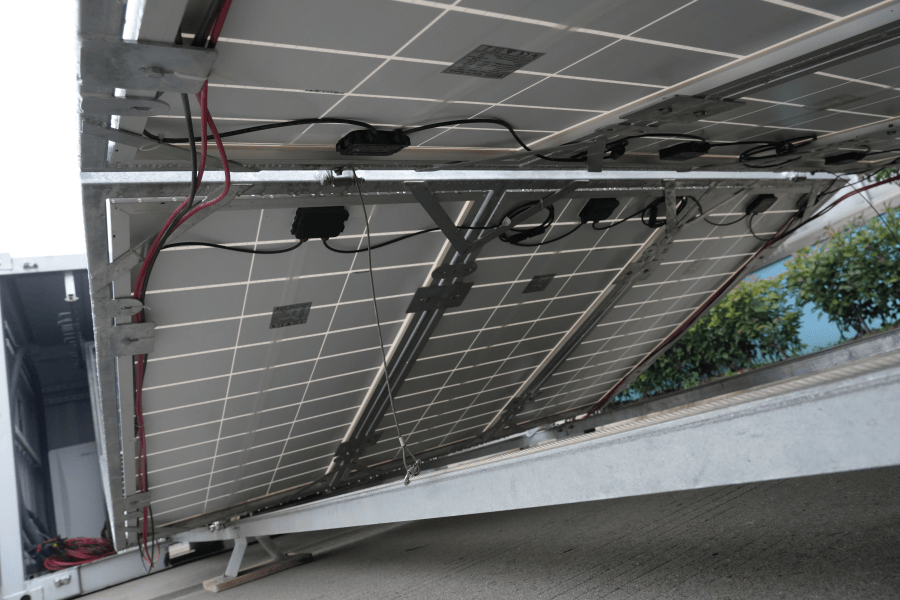
Table of Contents
- The Silent Threat to Grid Modernization
- Beyond the Basics: Why Standard BESS Falls Short for Black Start
- A Real-World Case Study: The Texas Grid Support Project
- The Tech Behind the Magic (And Why It's Not Magic)
- Your Next Step: Questions to Ask Your Team
The Silent Threat to Grid Modernization
Let's be honest. Across the US and Europe, we're adding renewables at an incredible pace. IEA data shows global renewable capacity additions jumped nearly 50% in 2023 alone. That's fantastic. But here's the problem I've seen firsthand on site: our grid's backbone wasn't built for this new, distributed reality. We're putting a digital, intermittent heart into an analog, always-on system. The result? Increased vulnerability. A storm hits, a fault cascades, and suddenly a critical substation is dark. The traditional recovery playbook - waiting for a distant fossil-fuel plant to slowly ramp and "crank" the grid back online - is painfully slow and, frankly, becoming a liability.
Beyond the Basics: Why Standard BESS Falls Short for Black Start
Now, everyone talks about BESS for frequency regulation or peak shaving. But black start capability is a whole different beast. It's not just about having energy in a box; it's about being the first, stable, and reliable spark to re-energize a dead grid section. Most commercial BESS units simply aren't designed for this.
The challenge is threefold. First, power quality. You need a pristine, stable sinusoidal waveform to safely energize transformers and sensitive equipment without causing damage. A cheap inverter won't cut it. Second, autonomous operation. The system must boot and operate completely "islanded," with no external grid signal for reference. Third, and this is huge, sequential load pickup. You can't just flip a switch. You need to carefully manage inrush currents, bringing loads online in a staged manner to avoid crashing your own system. Honestly, I've been on calls where utilities discovered their shiny new storage asset couldn't perform this fundamental duty after a blackout. It's a costly oversight.
The Data That Demands a Better Solution
According to a 2023 NREL report on grid resilience, the frequency and duration of major power outages in the US have been trending upward over the past decade. The economic cost? Billions annually. In Europe, ENTSO-E's analysis points to similar stresses from the energy transition. This isn't a hypothetical risk; it's a daily operational concern for grid operators from California to North Rhine-Westphalia.
A Real-World Case Study: The Texas Grid Support Project
Let me walk you through a project that gets to the heart of this. A major public utility in Texas, serving a mix of urban and critical industrial loads, faced a specific vulnerability: a key transmission corridor that, if lost, could plunge a significant region into a multi-day blackout. Their existing peaker plants took over 12 hours to black-start. They needed a faster, cleaner, and deployable solution.

Their ask was clear: a self-contained, transportable "grid-in-a-box" that combined solar generation with black-start capable storage, all within a standard ISO container footprint for rapid deployment. The core challenge was ensuring the battery system could provide the necessary voltage and frequency control to act as a grid-forming source, not just a follower.
The solution deployed was a 4 MWh, UL 9540-certified battery container paired with a 1 MWp solar canopy. The real engineering wasn't in the hardware alone - it was in the control system. We implemented a grid-forming inverter technology that could create a stable "mini-grid" from a dead start. The system was designed to first energize a critical substation bus, then sequentially pick up local loads, and finally synchronize with the incoming main grid once it was restored.
The result? During a regional disturbance last summer, the unit successfully performed its black start sequence, restoring power to the critical corridor in under 90 minutes, compared to the previous 12+ hour timeline. It provided voltage support and allowed the main thermal plants to come back online smoothly. For the utility, this wasn't just about backup power; it was about grid orchestration and resilience.
The Tech Behind the Magic (And Why It's Not Magic)
So, what makes a BESS truly black-start capable? Let's break down a few key terms you should discuss with any vendor.
- Grid-Forming Inverters (GFM): This is the brains. Unlike typical grid-following inverters that need an existing grid signal to sync to, GFM inverters can establish the voltage and frequency themselves. They act as the leader, creating a stable electrical island. It's a must-have.
- C-rate & Power Stack Design: For black start, the instantaneous power demand (in MW) to energize equipment is often more critical than total energy (MWh). You need a high C-rate battery chemistry and a power conversion system rated for the surge. A system sized only for energy duration might fail at the first crucial step.
- Advanced Thermal Management: When you're pushing high power for sequential load pickup, heat is the enemy. A passive cooling system might not keep up, leading to derating or shutdown. Active liquid cooling, like what we design into our Highjoule containers, maintains optimal cell temperature even under the most demanding black-start sequences, ensuring full performance when it's needed most.
- Levelized Cost of Resilience (LCOR): We all know LCOE (Levelized Cost of Energy). But for utilities, think about LCOR. A slightly higher upfront cost for a truly resilient, multi-functional asset that prevents millions in outage costs and regulatory fines delivers a far better lifetime value. Compliance with UL 9540A (fire safety), IEC 62933, and IEEE 1547 is non-negotiable here - it's what allows for fast permitting and community acceptance, especially in the EU and US markets.
Our approach at Highjoule has always been to engineer from the site conditions backward. It's not about selling a container; it's about delivering a guaranteed outcome - in this case, a successful black start. That means rigorous factory testing that simulates real black-start scenarios, not just a spec sheet checkmark.
Your Next Step: Questions to Ask Your Team
The transition from theory to real-world resilience is paved with hard questions. Next time you're evaluating a BESS for grid support, move beyond the basic MWh and MW specs. Ask your engineering team - and your vendor:
- "Can you demonstrate grid-forming capability with a full witness test report?"
- "How do you manage thermal performance during a 2-hour maximum power output black-start sequence?"
- "What is the specific sequence of operations (SOE) for load pickup, and can we customize it for our substation?"
- "Can you provide a reference from a utility that has used this system for an actual or simulated black start?"
The grid of the future needs more than storage; it needs intelligent, resilient anchors. The real question isn't if you need black start capability, but how quickly and reliably you can deploy it when the lights go out.
Tags: UL Standard BESS Black Start Grid Resilience Solar Container Microgrid Utility-scale Storage IEC Standard
Author
James Zhang
20+ years agricultural energy storage engineer / Highjoule CTO