
Black Start Solar Container: A Real-World Case Study for Island Microgrids
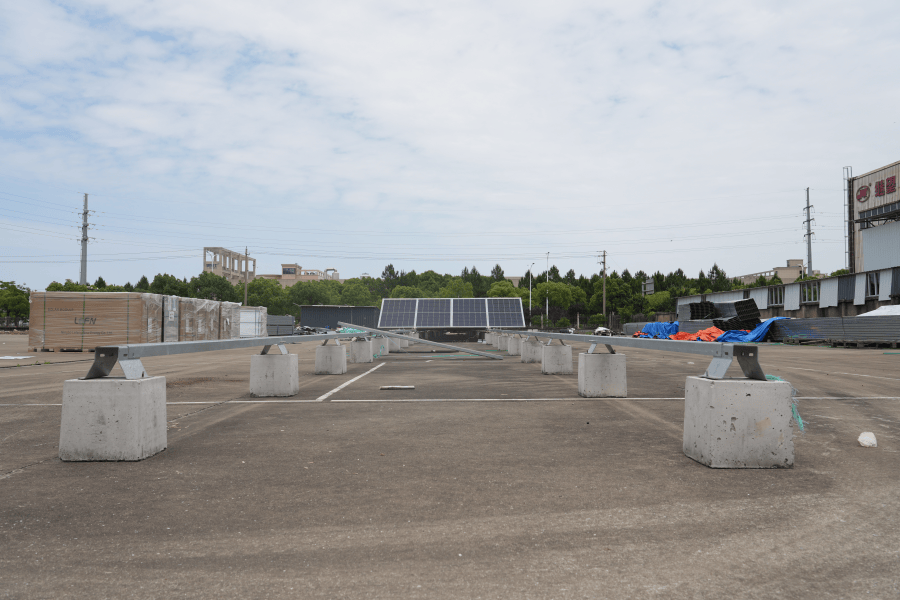
Table of Contents
- The Problem: When the Lights Go Out for Good
- The Agitation: The High Cost of "Business as Usual"
- The Solution: A Power Plant in a Box That Can Wake Itself Up
- The Case: From Diesel Dependency to Solar Resilience
- The Insight: What Makes a Black Start System Actually Work
- The Ask: Is Your Microgrid Trally Resilient?
The Problem: When the Lights Go Out for Good
Let's be honest, for most of my career, when we talked about energy storage for microgrids - especially in remote places like islands or mining sites - the conversation was pretty straightforward. It was about shifting solar power from day to night, or shaving peak demand to save on diesel fuel. The goal was efficiency and cost savings. But there's a deeper, more critical problem that often gets overlooked until it's too late: a complete blackout with no way back.
I've seen this firsthand on site. A storm takes out a line, a legacy generator fails catastrophically, and suddenly, you're not thinking about kilowatt-hours; you're thinking about how to get any power flowing to restart the core systems. Traditional battery systems need an external power source to "wake up" - they can't boot themselves from zero. In a true blackout, that means you're reliant on a diesel genset that might also be down, or waiting for a utility crew that could be days away. For a remote community or a critical industrial operation, that's not an inconvenience; it's an existential threat.
The Agitation: The High Cost of "Business as Usual"
The standard fix for this has been oversizing diesel fleets, installing redundant generators, and hoping for the best. But let's look at the real costs. The International Energy Agency (IEA) points out that electricity supply in isolated systems, like islands, can be two to ten times more expensive than in mainland grids, with fuel costs and logistics being the primary culprits. Every hour of downtime isn't just lost productivity; it's spoiled inventory, safety risks, and a massive hit to operational confidence.
Worse, the push for renewables can accidentally make this problem harder. A microgrid with a high penetration of solar PV but no black start capability is more fragile, not less. When the grid crashes, your solar inverters trip offline for safety. You're left in the dark with a field of silent panels and a battery bank that's waiting for instructions. The financial and operational agony of this scenario is what keeps facility managers and community energy directors up at night.
The Solution: A Power Plant in a Box That Can Wake Itself Up
This is where the concept of a Black Start Capable Solar Container moves from a technical spec to a game-changer. We're not just talking about a battery in a box. We're talking about a fully integrated, self-contained power source that combines solar generation, high-density storage, and advanced inverters with one crucial feature: the ability to self-energize from a completely discharged state and establish a stable voltage and frequency "island" from scratch.
Think of it as a digital, renewable replacement for that critical diesel genset you keep for emergencies - but one that can also run your daily operations, cut your fuel bill, and do it all silently. The key is in the system design: inverters with dedicated black start sequences, robust battery management systems that preserve a minimal "life-support" charge, and controls smart enough to orchestrate the entire revival process autonomously.

The Case: From Diesel Dependency to Solar Resilience
Let me give you a concrete example from a project we were involved in through a partner in the Caribbean. A small island community, reliant on a single, aging diesel power plant, was battered by a hurricane. The grid collapsed entirely. Their backup generators failed to start due to maintenance issues. The community was without power for over 72 hours, impacting water supply, communications, and medical services.
Their solution wasn't just to rebuild the old system. They deployed a pre-integrated, containerized BESS with black start capability, coupled with a new solar carport. Here's how it works now:
- Normal Operation: The system runs in "grid-forming" mode, integrating solar and managing the diesel gensets at their most efficient point, slashing fuel use by over 60%.
- During an Outage: If the grid fails, the system isolates instantly. The battery, maintaining its black start reserve, uses its inverters to create a pristine, stable microgrid for the critical load panel (hospital, comms center, water pump).
- The Black Start Sequence: Once stable, it sequentially re-energizes circuits, and can even send a "soft start" signal to wake up and synchronize the main diesel generators if they are needed for extended backup, all without human intervention.
The result? They've not only future-proofed against storms but have turned their energy system from a cost center into a model of resilience. The Levelized Cost of Energy (LCOE) for their hybrid system is now lower than the diesel-only past, and they sleep better at night.
The Insight: What Makes a Black Start System Actually Work
From an engineer's perspective, you can't just slap a "black start" label on any battery. A few non-negotiable elements make it work. First is the C-rate - the speed at which the battery can discharge power. For black start, you need a high C-rate to provide the massive initial "inrush" current to energize transformers and motors. A sluggish battery won't cut it.
Second, and honestly where many systems cut corners, is Thermal Management. A black start event is a high-stress, high-power operation. If the battery overheats and derates or shuts down mid-sequence, you've failed. The system needs a robust liquid-cooling or advanced air-cooling design that can handle that peak thermal load, something we've standardized in our Highjoule containers for harsh environments.
Finally, it's about the brains. The system controls must be designed to UL and IEC standards for island operation (like UL 1741 SA). They need to manage the voltage and frequency with rock-solid stability during the vulnerable transition from black start to stable microgrid. This isn't off-the-shelf software; it's specialized firmware born from real field experience.
Beyond the Tech: The Deployment Reality
What I tell every client is that the technology is only half the battle. The other half is deploying it in a way that works for them. A black start container for a remote island isn't like installing one in a California warehouse. It means designing for salt spray corrosion, ensuring minimal maintenance needs, and having remote monitoring and support so our team can troubleshoot from thousands of miles away. That's the service layer that turns a great product into a reliable asset.
The Ask: Is Your Microgrid Trally Resilient?
So, the next time you review your microgrid or remote power strategy, ask this simple question: "If we go to zero right now, how do we get back to 100%?" If the answer involves hoping a diesel engine starts or waiting on external help, you've got a vulnerability.
The real-world case for black start solar containers is no longer just about niche military or telecom applications. It's a commercially viable, standards-compliant (UL, IEC, IEEE) solution for any operation where reliability isn't just a metric, it's the bottom line. The data and the field results are proving it out. Maybe it's time we chat about what your "power plant in a box" could look like.
Tags: BESS Black Start Solar Container Island Microgrid Remote Power
Author
James Zhang
20+ years agricultural energy storage engineer / Highjoule CTO