
Real-world Case Study: C5-M Anti-corrosion BESS for Construction Site Power
Contents
- The Hidden Cost of Power on a Construction Site
- Beyond Rust: What the Specs Don't Tell You
- A Real Case: The Coastal California Hospital Project
- Engineering the Solution: It's More Than a Coating
- The Business Case: From Cost Center to Value Driver
- Your Next Step: Asking the Right Questions
The Hidden Cost of Power on a Construction Site
Let's be honest. When you're planning a major construction project - be it a new data center in Virginia or a manufacturing plant expansion in North Rhine-Westphalia - your energy focus is usually on the finished facility. The temporary power for the 18-24 month build phase? It often gets relegated to a line item for diesel generators. We've all seen it: the constant hum, the fuel deliveries, the emissions, and honestly, the staggering cost that seems to just bleed out weekly. The International Energy Agency (IEA) has highlighted that diesel generators remain a dominant, yet highly inefficient and polluting, source of off-grid and temporary power globally. But the real pain point I've witnessed firsthand isn't just the fuel bill. It's the downtime, the schedule risk, and the sheer operational headache when that single source of power fails or needs servicing.
The promise of pairing solar with a Battery Energy Storage System (BESS) for these sites is obvious - cut fuel, go greener, reduce noise. But here's the agitation part, the reality check from the field: most standard commercial BESS units are built for a clean, controlled environment. They're designed for a behind-the-meter installation at a warehouse or next to a solar farm. They are not built for the harsh, unforgiving reality of a live construction site.
Beyond Rust: What the Specs Don't Tell You
So, what makes a construction site a "harsh environment"? It's a perfect storm of conditions that eat standard equipment for breakfast.
- Corrosive Agents: This is the big one. It's not just about sea spray on coastal projects. Concrete dust is highly alkaline. Soil and excavation work create fine, abrasive particulates. In colder climates, road salts and de-icing agents are aerosolized. All of these contaminants are hygroscopic - they attract and hold moisture, creating a corrosive paste that attacks electrical enclosures, cooling systems, and battery terminals.
- Physical & Thermal Stress: The ground is rarely level. Vibration from heavy machinery is constant. Temperatures can swing wildly, from the heat of a Texas sun on a black container to freezing nights. This thermal cycling stresses welds, seals, and electronics.
- Unforgiving Operational Demands: Power needs are "lumpy." You might have hours of low load (office trailers) punctuated by massive, short-duration spikes (crane operation, concrete pouring). This demands a BESS with a robust C-rate capability - meaning it can discharge high power quickly without damaging the cells or overheating. The thermal management system has to be a beast, and it has to be sealed from all that dust.
I've been called to sites where a "standard" BESS was deployed with the best intentions. Within months, we see corrosion on busbars, filters clogged with dust forcing fans to overwork, and communication errors from compromised sensors. The result? Reduced performance, unscheduled maintenance, and in worst cases, a complete safety shutdown. That's not resilience; that's a liability.
A Real Case: The Coastal California Hospital Project
Let me walk you through a project that cemented our approach at Highjoule. It was a new hospital complex on the central California coast - a multi-year build with a strict sustainability mandate and a zero-tolerance for power interruptions to critical temporary facilities (like modular labs).
The Challenge: The developer wanted to minimize diesel use. They installed a sizable solar canopy over the staff parking area. But the salt-laden fog (a classic C5-M corrosion environment per ISO 12944) was destroying electrical gear. Their first attempt with a containerized BESS saw corrosion issues within 8 months. Alarms were triggering, and they were facing a potential full replacement.
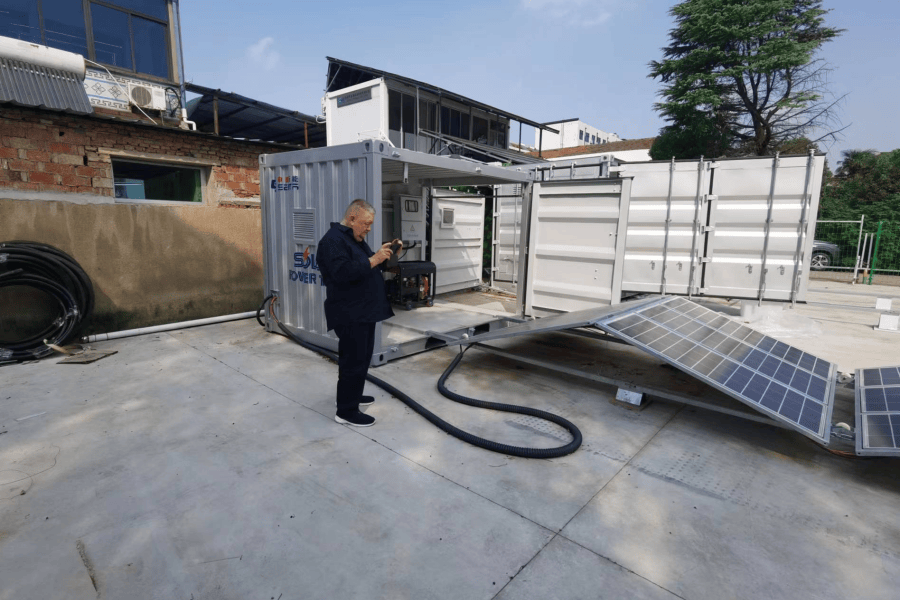
The Highjoule Solution: We mobilized one of our purpose-built C5-M Anti-corrosion BESS units. The key differentiators weren't just marketing bullets:
- Sealed & Pressurized Enclosure: The entire container maintains a slight positive pressure with HEPA-filtered air intake. This keeps corrosive particulates out. It's a simple concept with complex engineering to get right.
- Corrosion-Resistant Materials: We're talking stainless steel fixings, powder-coated steel with a specific epoxy system rated for C5-M, and protected conductive surfaces. It's about the entire ecosystem, not just the battery rack.
- Site-Adaptive Thermal Management: We used a closed-loop liquid cooling system for the battery racks. The heat exchangers are external but built with coated fins and materials to resist salt spray corrosion. This allowed us to maintain optimal cell temperature even during those high C-rate discharges for crane operations, which dramatically extends lifespan.
The Outcome: The unit has been on-site for over two years now. Diesel consumption dropped by over 70% for the temporary site load. More importantly, there have been zero environment-related faults. The project manager's quote stuck with me: "It's the only piece of equipment out here that doesn't look like it's been through a war." That's reliability you can bank on.

Engineering the Solution: It's More Than a Coating
When we talk about a C5-M rated BESS for construction, it's a holistic design philosophy. It starts with the core standards. Our systems are engineered from the ground up to meet and exceed UL 9540 (the essential safety standard for energy storage systems in the US) and IEC 62933 series for international projects. But we go further, designing for IEEE 1547 interoperability for when these units need to interact with the grid or site generators seamlessly.
Let's break down two technical concepts in plain English:
1. C-rate & Why It Matters for Cranes: Think of C-rate as the "sprint speed" of a battery. A 1C rate means a battery can discharge its full capacity in one hour. For a site needing to power a large crane for 15 minutes, you need a high C-rate capability - maybe 2C or 3C. Not all batteries can do this efficiently without overheating or degrading fast. We design our cell selection and thermal systems to handle these bursts, which is critical for construction cycling.
2. LCOE (Levelized Cost of Energy) - The Real Metric: The upfront cost of a ruggedized BESS is higher than a standard unit. I won't sugarcoat that. But the business case is in the LCOE - the total cost of ownership over the system's life. For a construction site, this includes:
| Diesel Fuel Savings | Direct, massive reduction. |
| Generator Maintenance & Rental | Drastically lowered. |
| BESS Downtime & Repairs | Near-zero with proper ruggedization. |
| Resale/Reuse Value | A Highjoule C5-M unit can be redeployed to the next site, its lifespan preserved. |
When you run the numbers, the rugged unit's LCOE over 5-10 years of multi-project use is often lower than the "cheaper" unit that fails mid-project.
The Business Case: From Cost Center to Value Driver
This shifts the narrative. A C5-M anti-corrosion BESS stops being just a temporary power expense and starts becoming a strategic, movable asset. For large developers or engineering firms running multiple projects, especially in harsh environments, it's a tool that ensures:
- Schedule Certainty: No power-related delays.
- ESG Compliance: Tangible reduction in carbon emissions and noise pollution, supporting sustainability reports.
- Budget Predictability: Lock in a large portion of your energy costs, immune to diesel price volatility.
- Safety & Reputation: A well-protected, UL-certified system mitigates fire and electrical risk on a vulnerable site.
Our role at Highjoule isn't just to sell a container. It's to provide a localized service package - site assessment, interconnection planning with your temporary setup, and remote monitoring so you and we can see the system's health in real-time from anywhere. That's the peace of mind that matters when you're managing a $200 million project.

Your Next Step: Asking the Right Questions
If you're evaluating power for your next ground-up project, move beyond the basic spec sheet. Ask your potential BESS provider these questions, drawn straight from my field notebook:
- "What specific ISO 12944 corrosion category is this enclosure system certified for, and can I see the test reports?"
- "How is the thermal management system protected from particulate ingress? Can it maintain cell temperature during simultaneous high C-rate discharge and high ambient heat?"
- "What is the expected cycle life and capacity retention when used in a highly dynamic, stop-start load profile typical of a construction site?"
- "Can you provide a scenario-based LCOE model comparing your solution to a diesel-only or standard BESS + diesel hybrid approach for my specific site duration and load?"
The right technology, built for the real world, doesn't just solve a power problem - it de-risks your entire project. What's the one power-related delay you can't afford on your next site?
Tags: Construction Site Power UL Standard BESS LCOE Renewable Energy C5-M Anti-Corrosion Microgrid IEC Standard
Author
James Zhang
20+ years agricultural energy storage engineer / Highjoule CTO