
Grid-Forming BESS for Telecom: Solving Off-Grid Power & Grid Stability
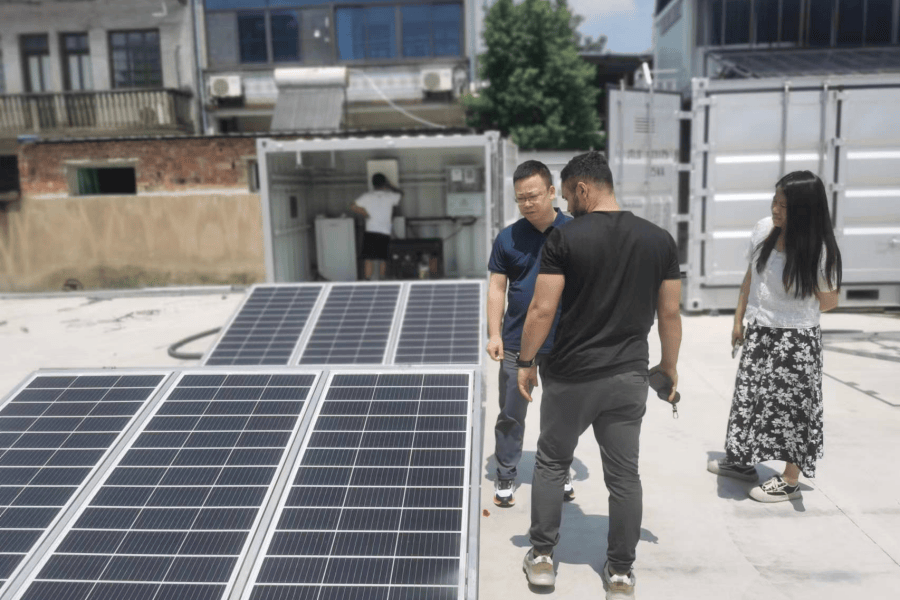
Table of Contents
- The Silent Power Problem in Modern Telecom
- Why Old Solutions Fall Short (And Cost More)
- The Grid-Forming Game Changer: More Than Just Backup
- A Real-World Look: Powering a Remote Base Station
- The Tech Behind the Reliability: An Engineer's Perspective
- Beyond the Telecom Site: A Blueprint for Energy Resilience
The Silent Power Problem in Modern Telecom
Let's be honest, when we talk about telecom networks, we obsess over 5G speeds, latency, and coverage maps. But over two decades of deploying energy systems across four continents, I've learned one thing firsthand: the most critical piece of infrastructure is often the one we don't see C the power system. A base station is just a very expensive metal box when the lights go out.
The problem is especially acute for off-grid or weak-grid sites, which are far more common in both remote areas and, surprisingly, some urban fringe locations than you might think. These sites traditionally rely on dirty, noisy, and maintenance-hungry diesel generators. I've been on site for generator failures; it's not pretty. Fuel costs are volatile, emissions targets are tightening, and the operational expense is a constant drain. According to the International Energy Agency (IEA), telecoms account for a significant portion of global diesel generator use, a carbon footprint everyone is now scrambling to reduce.
Why Old Solutions Fall Short (And Cost More)
So, the industry pivoted to solar-plus-storage, right? It seemed like the perfect fix. But here's the agitating part: the standard "grid-following" battery storage systems we've been using for years have a fundamental flaw in these isolated settings.
Think of a grid-following inverter like a diligent follower. It needs a strong signal - a stable grid voltage and frequency - to synchronize with and operate. In an off-grid site powered only by solar and batteries, there is no grid to follow. The system can become unstable, leading to shutdowns, or it remains overly dependent on that diesel gen-set as the "grid former," which defeats the whole purpose. You've added solar, but you haven't slayed the diesel dragon. You've just made a more complex, and sometimes less reliable, hybrid system.

The Grid-Forming Game Changer: More Than Just Backup
This is where the real solution lies: Grid-Forming Battery Energy Storage Systems (BESS). This isn't just a buzzword; it's a paradigm shift. A grid-forming BESS acts as the leader, the foundation. It creates a stable voltage and frequency waveform from scratch, essentially building a miniature, pristine grid (a "microgrid") that the solar inverters and all the site's critical loads can follow reliably.
For a telecom operator, this means the solar-plus-storage system becomes the primary power source, with the diesel generator relegated to a true, last-resort backup. The reliability skyrockets. Honestly, seeing a site transition from a generator-centric system to a silent, solar-powered one with the BESS humming away as the brain is one of the most satisfying parts of this job.
A Real-World Look: Powering a Remote Base Station
Let me give you a concrete example from a project we were involved with in Northern Arizona, USA. The challenge was a cluster of telecom sites in a region with high solar potential but extremely poor grid reliability. Frequent outages meant generators were running 30-40% of the time. The goal was 99.99% uptime and a 70% reduction in diesel use.
The solution was a containerized, UL 9540 and IEEE 1547-compliant grid-forming BESS from Highjoule, coupled with a sizable PV array. Here's what made it work:
- The BESS as the Grid: Our system provided the stable "grid" reference. The PV inverters, configured in grid-following mode, fed power seamlessly into this microgrid.
- Seamless Transitions: When clouds rolled in, the BESS discharged to cover the load. If the state of charge dropped too low, the system signaled the diesel generator to start and synchronize to the microgrid smoothly, avoiding a hard crash. Once solar was back, the generator was shut down.
- The Outcome: Diesel runtime dropped by over 80% in the first year. The Levelized Cost of Energy (LCOE) for the site fell dramatically when you factor in slashed fuel and maintenance costs. The silent, emission-free operation also solved a lot of community relation issues they didn't even know they had.
The Tech Behind the Reliability: An Engineer's Perspective
You don't need an engineering degree to get why this matters, but a peek under the hood helps. The reliability of such a system hinges on a few key things we obsess over at Highjoule:
- C-Rate & Duration: For telecom, you need power (kW) to run the equipment and energy (kWh) to get through the night or low-solar periods. We design with an optimal C-rate - basically, how fast the battery charges/discharges - to ensure it can handle the sudden load of all the radios and have enough capacity. It's a balancing act.
- Thermal Management: This is non-negotiable. In an Arizona desert or a Texas summer, a poorly cooled battery degrades fast and becomes a safety risk. Our systems use active liquid cooling that maintains a uniform temperature inside the battery pack. This extends lifespan by years and is a core part of meeting UL 1973 safety standards. I've seen too many air-cooled units struggle in real-world conditions.
- Standards are Your Blueprint: For the US market, UL 9540 (system level) and IEEE 1547 (grid interconnection) aren't just checkboxes; they are the blueprint for safe, interoperable systems. In Europe, it's the IEC 62619 standard. Our design philosophy is to build to these standards from the ground up, not retrofit for compliance. It saves huge headaches during permitting and commissioning.

Beyond the Telecom Site: A Blueprint for Energy Resilience
The beauty of this real-world case study is that the template works far beyond a cell tower. Any critical off-grid or weak-grid industrial facility, microgrid for a community, or backup power for a data center can use this same architecture. The grid-forming BESS is the anchor that allows renewables to become the primary, not just a supplementary, source.
The question for facility managers and energy decision-makers isn't really "can we add storage?" anymore. It's "what kind of storage do we need to truly achieve energy independence and resilience?" If your operations can't afford to follow a grid that isn't there, you need a system that can form its own. That's the lesson from the front lines of telecom, and it's reshaping how we power everything else.
What's the single biggest power reliability headache at your remote or critical sites? Is it fuel cost, maintenance, or simply the fear of an unexpected shutdown?
Tags: UL Standard BESS LCOE Europe US Market Renewable Energy Telecom Power Grid-Forming Inverter
Author
James Zhang
20+ years agricultural energy storage engineer / Highjoule CTO