
High-voltage DC 5MWh BESS for Agricultural Irrigation: A Real-World Case Study on Cost & Reliability
From Grid Anxiety to Harvest Security: A 5MWh BESS Story for Modern Farming
Honestly, if you're managing a large-scale agricultural operation in North America or Europe right now, your relationship with the grid is probably... complicated. You're dealing with irrigation schedules that can't wait, soaring demand charges that eat into your margins, and this nagging worry about reliability. I've been on-site for enough of these deployments to see the tension firsthand. The promise of solar to offset costs is real, but without the right storage, that sunshine is just a daytime bonus. Today, I want to walk you through a specific, real-world challenge we solved: deploying a high-voltage DC, utility-scale 5MWh Battery Energy Storage System (BESS) purely for agricultural irrigation. This isn't theory; it's a blueprint for turning grid dependency into energy independence.
Quick Navigation
- The Real Problem: More Than Just Power Outages
- Why It Hurts: The Financial and Operational Squeeze
- The Solution Unpacked: A 5MWh High-Voltage DC BESS
- Case in Point: A California Almond Grove
- The Tech Behind the Curtain (Made Simple)
- Making It Work for You
The Real Problem: More Than Just Power Outages
The phenomenon is universal. Farms are becoming more electrically intensive - sophisticated pivot irrigation, precision dosing systems, on-site processing. You're likely drawing more power than ever, and often at the exact times everyone else is too. According to the National Renewable Energy Laboratory (NREL), agricultural irrigation can account for over 30% of total energy use on a large farm. The grid, especially in rural areas, wasn't always built for this concentrated, simultaneous demand. The result? You face not just the threat of outages during critical growth periods, but also steep time-of-use rates and punitive demand charges from utilities for that short, intense period of peak draw.
Why It Hurts: The Financial and Operational Squeeze
Let's agitate that pain point a bit. An irrigation pump going down for 4 hours during a heatwave isn't an inconvenience; it's a direct threat to that season's yield. But here's what I've seen on site that balance sheets often miss: the reactive cost. You might have backup diesel gensets. But between fuel costs, maintenance, and emissions compliance (especially under strict EU and California regulations), that "backup" becomes a massive operational sinkhole. It's noisy, it's dirty, and it turns your sustainable farming narrative on its head. Financially, you're getting hit twice: unpredictable operational risk and skyrocketing energy costs that are utterly divorced from your actual crop value.

The Solution Unpacked: A 5MWh High-Voltage DC BESS
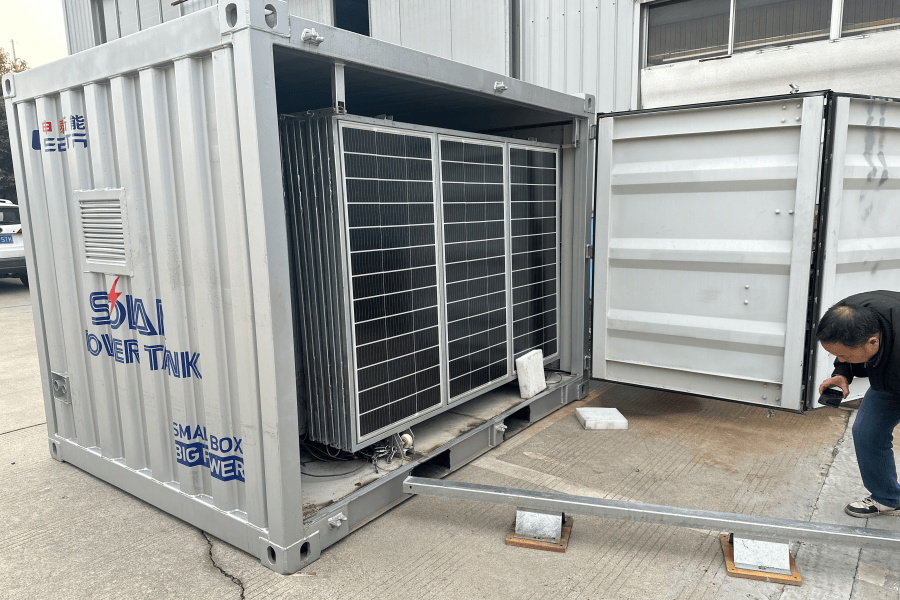
This is where our real-world case study crystallizes the solution. The ask was clear: eliminate grid anxiety for a 72-hour critical irrigation window, slash demand charges, and integrate with an existing solar array - all within a tight footprint and with a 20-year lifespan in mind. The answer was a containerized, utility-scale 5MWh BESS built on a high-voltage DC platform. Why this spec? For a load this size, high-voltage DC (typically around 800-1500V) is a game-changer. It allows for fewer parallel battery strings, simpler power conversion, and significantly higher efficiency when coupling with solar. You lose less energy as heat, which means more of every stored kilowatt-hour goes directly to your pumps. It's a more elegant, resilient, and ultimately cost-effective architecture for this scale.
Case in Point: A California Almond Grove
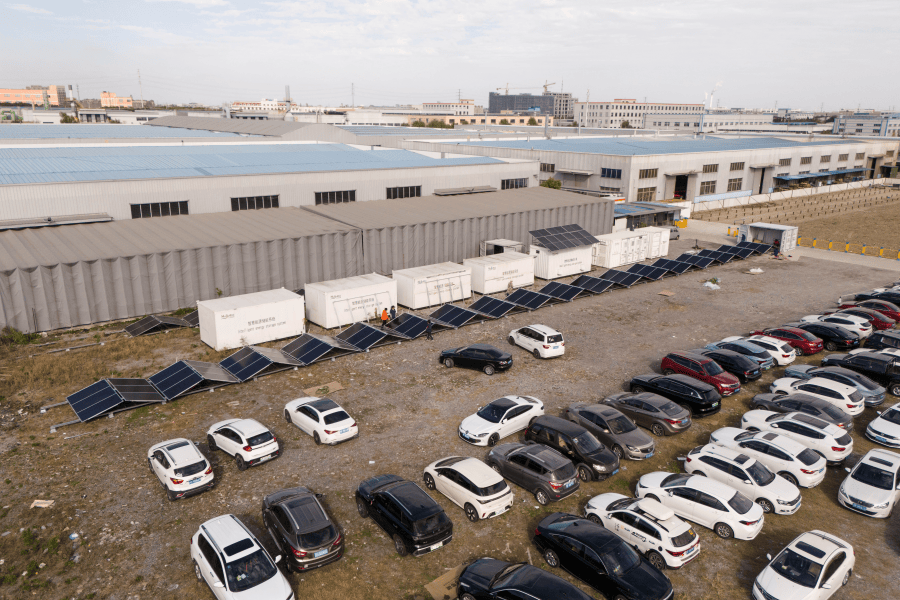
Let me give you a concrete example from California's Central Valley. A 2,000-acre almond farm was facing CPUC-mandated grid curtailment events and demand charges that could top $50,000 in a single month during peak irrigation. Their solar array was underutilized, often exporting power at low rates while they bought it back at a premium in the evening. The challenge was to provide uninterrupted power for three consecutive days of irrigation if the grid went down, while performing daily "peak shaving" to cut those demand charges.
We deployed a single 40-foot Highjoule container housing a 5MWh lithium-iron-phosphate (LFP) BESS with a 1500V DC architecture. The integration was key: our system's controller doesn't just react; it forecasts. Using weather and crop data, it predicts irrigation needs and grid price signals, autonomously deciding when to charge from the solar excess, when to discharge to shave the peak, and when to hold a reserve for emergency backup. In the first year, the project delivered a 40% reduction in monthly demand charges and provided full backup through two public safety power shutoff (PSPS) events. The farmer's comment to me was telling: "I'm not just saving money. I'm finally scheduling my water based on my crops, not my utility."
The Tech Behind the Curtain (Made Simple)
You don't need to be an engineer, but understanding a few concepts shows why this works. First, C-rate. Think of it as the "speed" of charging or discharging. A low C-rate is a slow trickle; a high C-rate is a firehose. For irrigation, you need a moderate, sustained flow (a mid-range C-rate), which is perfect for LFP chemistry - it's less stressful on the battery, extending its life far beyond older technologies.
Second, Thermal Management. This is the unsung hero. A battery pack's worst enemy is inconsistent temperature. Our systems use a liquid cooling loop that precisely controls the temperature of every cell module. It's like having a sophisticated climate control system for your battery, ensuring it performs the same way in a Texas summer or a German autumn. This is non-negotiable for a 20-year design life and is a core part of the UL 9540 and IEC 62933 safety standards we build to.
Finally, LCOE (Levelized Cost of Energy). This is the total lifetime cost of your stored energy. By focusing on high system efficiency (from high-voltage DC), incredible cycle life (from LFP and great thermal management), and low maintenance, we drive down the LCOE. You're not just buying a battery; you're securing a low-cost, predictable energy supply for decades.
Making It Work for You
So, what does this mean for your operation? The beauty of a system like this is its dual personality. It's your silent, emission-free guardian during grid outages, and your shrewd financial operator every other day, actively managing your energy costs. For us at Highjoule, the deployment is just the start. Our service model is based on ensuring you hit those LCOE targets. That means remote performance monitoring, predictive maintenance alerts, and software updates that constantly optimize for new utility rate structures - a common headache in both the US and EU markets.
The question I leave you with is this: When you look at your next season's energy budget and operational risk plan, what's the true cost of not having control over your power? The technology, proven in fields from California to Castile, is ready. The real-world case study is written. The next step is a conversation about your specific acreage, your grid constraints, and your vision for a more resilient, profitable farm.
Tags: UL Standard BESS LCOE Europe US Market Agricultural Irrigation Renewable Energy Utility-Scale Energy Storage High-voltage DC
Author
James Zhang
20+ years agricultural energy storage engineer / Highjoule CTO