
How IP54 Outdoor Off-Grid Solar Generators Solve Key Grid Challenges: A Real-World Case Study
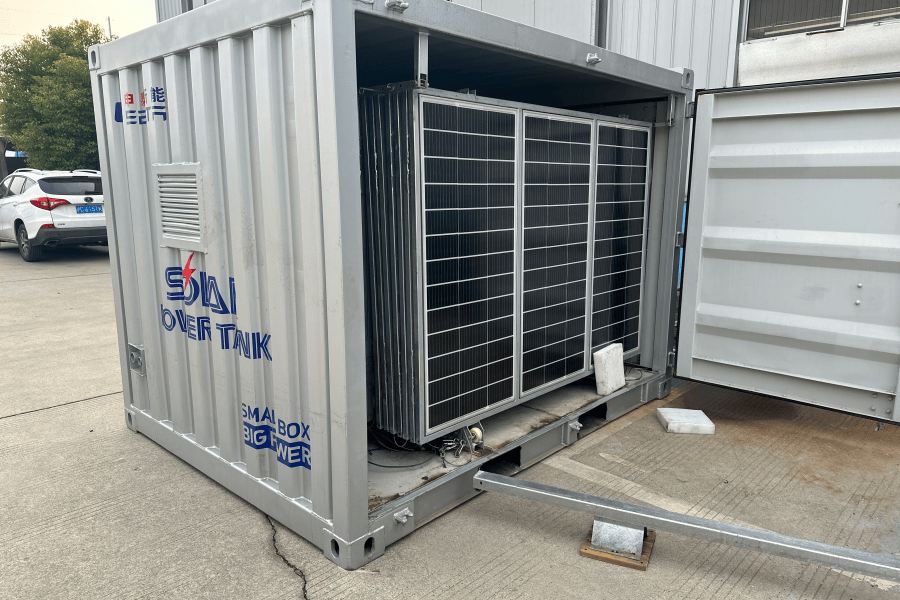
Table of Contents
- The Silent Grid Problem Nobody Likes to Talk About
- Why This Hurts More Than You Think: The Agitation
- The Practical Solution: It's More Than Just a Box
- A Case from the Field: Keeping the Lights on in Rural California
- Expert Takeaways: What We Learned So You Don't Have To
The Silent Grid Problem Nobody Likes to Talk About
Honestly, after two decades on site from Texas to Bavaria, there's one conversation I have repeatedly with utility managers and public works directors. It goes something like this: "We need reliable, instant power for that new traffic control system at the remote intersection," or "The backup generator for the lift station is too noisy and expensive to maintain," or "This community microgrid needs to survive the next storm." The core problem isn't a lack of will or technology. It's deploying resilient, set-and-forget power in harsh, unattended, off-grid locations that are a nightmare for traditional equipment. We're talking about spots where the grid is weak, non-existent, or too costly to extend. And let's be real, slapping together a makeshift solution with consumer-grade parts just invites trouble - moisture, dust, extreme temps, and ultimately, failure.
Why This Hurts More Than You Think: The Agitation
I've seen this firsthand. A utility in the Midwest used a standard indoor-rated battery system in a vented shed for a remote monitoring site. One humid summer later, corrosion on terminals led to a cascade failure. The cost? Not just the equipment replacement, but the data gap during a critical flood event. The Levelized Cost of Energy (LCOE) for that site skyrocketed when you factor in the truck rolls and emergency service.
This isn't isolated. According to the National Renewable Energy Laboratory (NREL), enhancing grid resilience is a top priority, with distributed energy resources playing a key role. But if those resources themselves aren't resilient, you've just created a new single point of failure. The pain points are clear:
- Durability vs. Environment: Outdoor means constant battle with weather (IP rating) and wide temperature swings (thermal management).
- Total Cost of Ownership: High maintenance, frequent replacements, and fuel for traditional gensets kill your budget.
- Safety & Compliance: Meeting UL 9540 for energy storage and IEC 62619 for battery safety isn't optional - it's your liability shield.
- Complex Integration: Making solar, storage, and the load talk reliably without an engineer on standby.
The Practical Solution: It's More Than Just a Box
So, what's the answer? It's moving beyond just "a battery in a cabinet." The solution is a purpose-built, IP54 Outdoor Off-grid Solar Generator system. Think of it as a self-contained power plant designed for neglect - in the best way possible. The IP54 rating is the starting point, not the finish line. It means the enclosure is protected against dust ingress and water splashes from any direction. That's crucial for coastal areas with salt spray or dusty plains.
At Highjoule, when we engineer these systems, we start with that IP54 shell but build the intelligence inside. It's about:
- Thermal Management: This is the heart of longevity. We don't just rely on ambient air. We use active, climate-controlled systems to keep lithium-ion batteries in their 20-25C sweet spot year-round, whether it's -10F or 110F outside. This directly boosts cycle life and safety.
- Right-Sized C-Rate: Here's a bit of insider talk made simple: C-rate is basically how fast you charge or discharge the battery. For utility applications, you often don't need super-fast discharge. A moderate C-rate, say C/2 or C/3, puts less stress on the cells, leading to a much longer system life and a lower LCOE. It's about matching the tech to the duty cycle.
- Grid-Forming Intelligence: The system must be able to "start" the local grid (black start) and maintain stable voltage and frequency for sensitive public infrastructure, all autonomously.

A Case from the Field: Keeping the Lights on in Rural California
Let me give you a real example. A municipal utility in Northern California had a recurring issue. A critical water pumping station at the edge of their service territory sat at the end of a long, overhead distribution line. During winter storms, falling trees would knock out power, risking both water service and potential pipeline integrity. Running a new, hardened line was quoted at over $500k. A diesel generator required bi-weekly fuel deliveries and failed an emissions review.
Their solution, which we were proud to support, was an off-grid solar + storage system. We deployed a pre-integrated, IP54 outdoor BESS paired with a ground-mount solar array. The challenge wasn't just installation; it was ensuring 99.9% availability in a location with heavy rain, morning fog, and summer heatwaves.
The????? The system was designed with:
- A UL 9540 listed enclosure, which sped up permitting significantly.
- An advanced thermal system that could handle the valley's temperature swings.
- A conservative cycling strategy to guarantee capacity during multiday storm outages.
The result? The station has operated through two winter seasons without a single outage-related service call. The utility manager told me the "set-and-forget" reliability was what impressed him most - the system just does its job. The payback, when compared to the avoided line upgrade and generator O&M, was under 7 years.
Expert Takeaways: What We Learned So You Don't Have To
Based on this and similar projects across Europe and the US, here's my blunt advice if you're evaluating such a system:
1. The Spec Sheet Lie: Don't just look at kWh and kW. Dig into the environmental specs and ask for the test reports. IP54 should be a minimum. Ask about the heater and cooling system capacity for your specific location.
2. Think in Total Cost, Not Capex: The cheapest upfront unit can be the most expensive. Calculate the LCOE over 15 years. Factor in replacement cycles, efficiency degradation in heat, and maintenance costs. A robust thermal management system might add 10% to capex but can double the battery life.
3. Local Support is Non-Negotiable: Even the best system might need a software update or a diagnostic check. Work with a provider that has local or regional technical support. At Highjoule, for instance, our partnership model ensures there's always an engineer who understands the local grid codes and can be available for critical support, which provides immense peace of mind.
4. The Compliance Paper Trail: Insist on seeing the certifications - UL, IEC, IEEE. For public projects, this is your armor. It proves due diligence and reduces insurance liabilities.
The transition to a more resilient grid is happening one remote pumping station, one traffic island, one community shelter at a time. The technology isn't just ready; it's proven. The real question is, which critical node in your network will you secure next?
Tags: UL Standard BESS Energy Storage Grid Resilience Off-grid Solar Generator IP54 Utility Grid
Author
James Zhang
20+ years agricultural energy storage engineer / Highjoule CTO