
Step-by-step Installation of 215kWh Cabinet Pre-integrated PV Container for EV Charging Stations
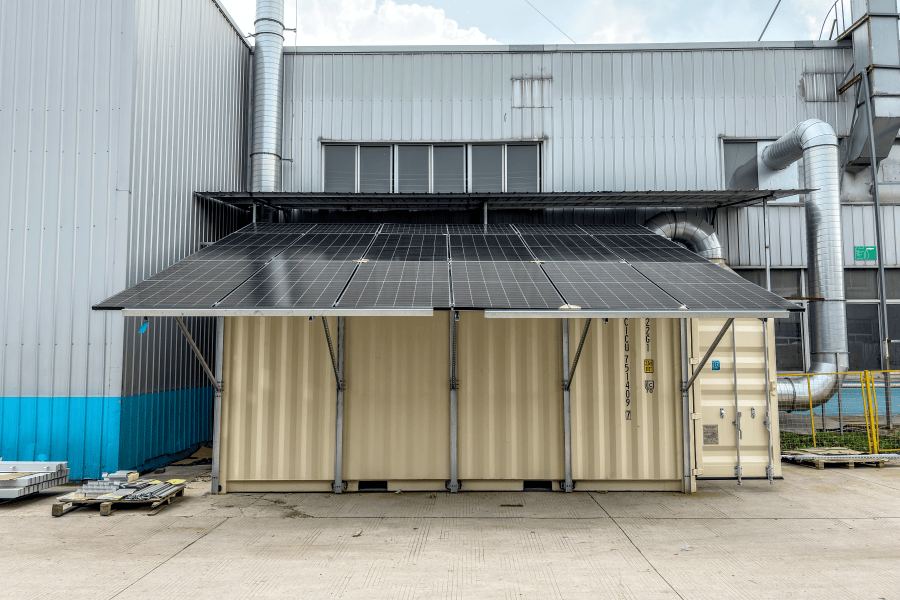
Table of Contents
- The Real Problem: It's Not Just About the Box
- Why This Hurts Your Bottom Line and Timeline
- A Simpler Path: The Pre-Integrated, Step-by-Step Approach
- A Site Engineer's Walkthrough: The 215kWh Cabinet Installation
- Real Numbers, Real Savings: The LCOE and Efficiency Talk
- Case in Point: A California EV Hub
- Your Next Steps: Getting It Right From the Start
The Real Problem: It's Not Just About the Box
Let's be honest. When you're planning an EV charging station, especially one powered by solar, the conversation quickly jumps to power ratings, charger numbers, and solar panel kW. The battery system? Too often it's an afterthought, a "we'll figure it out later" item. And that's where the headaches begin. I've been on sites from Texas to North Rhine-Westphalia where the BESS arrives as a pile of components C cabinets here, inverters there, a separate thermal management unit, a maze of DC cabling. The onsite integration becomes a puzzle, and a costly, time-consuming one at that.
Why This Hurts Your Bottom Line and Timeline
This fragmented approach agitates three major pain points: cost, complexity, and compliance.
First, cost. Think about it. Every extra day of crane rental, specialized electrician labor, and commissioning is money straight off your project's ROI. The National Renewable Energy Laboratory (NREL) has highlighted that soft costs C like installation labor and permitting C can make up a staggering portion of total BESS project expenses. You're not just paying for the battery; you're paying for the chaos of putting it together in the field.
Second, complexity. Coordinating multiple vendors (battery, inverter, HVAC), ensuring they all communicate, and troubleshooting on a dusty construction site is a project manager's nightmare. One mismatched communication protocol can set you back weeks.
Finally, compliance. This is the big one for the US and EU markets. Your system needs to meet UL 9540, IEC 62933, IEEE 1547 standards. When components are sourced and assembled piecemeal, the burden of proving full-system compliance falls on you, the integrator. I've seen firsthand how a single non-compliant sub-component can hold up an entire project's interconnection approval.
A Simpler Path: The Pre-Integrated, Step-by-Step Approach
This is why the industry is shifting towards pre-integrated, containerized solutions like the 215kWh Cabinet Pre-integrated PV Container. The core idea is simple: we do the hard part C the system integration, the safety testing, the compliance certification C in our controlled factory environment. What arrives on your site isn't a puzzle, but a plug-and-play power asset. At Highjoule, our philosophy has always been to ship certainty, not just components. Our containers land with the full UL 9540 system certification, so you have one less monumental worry.
A Site Engineer's Walkthrough: The 215kWh Cabinet Installation
So, what does this "step-by-step" actually look like on the ground? Let me break it down based on our standard deployment playbook:
Step 1: Site Prep & Foundation (Day 1)
This is all about the pad. We provide clear specs for a level, reinforced concrete foundation. The beauty of the single-container design? You're preparing one foundation, not multiple. No complex alignments for separate units.
Step 2: Delivery & Placement (Day 2)
The container arrives on a flatbed. Honestly, this is often the most dramatic part, but it's straightforward. Using a crane, the entire 215kWh system C batteries, bi-directional inverter, thermal management, fire suppression, and controls C is placed in one lift. 
Step 3: The Four Critical Connections (Day 3)
Here's where you see the time savings. Our field technicians typically handle just four main connections:
- Grid/EV Charger AC Connection: A single AC disconnect point to your main panel or directly to the EV charger bank.
- PV Array DC Input: Pre-terminated DC conduits for your solar field.
- Communication Link: An Ethernet or fiber line for monitoring and grid communication.
- Utility Meter Connection: For revenue-grade metering and grid interaction.
Step 4: Commissioning & Go-Live (Day 4-5)
We power up the system and run through a predefined protocol. Because it was pre-commissioned as a unit, this process is more of a verification than a debugging session. We validate grid compliance (IEEE 1547 is key here), test the charge/discharge cycles, and ensure the thermal management system is quietly doing its job C keeping those battery cells at their ideal 25C (3C) for optimal life and performance.
Real Numbers, Real Savings: The LCOE and Efficiency Talk
Let's talk about two technical terms that matter to your CFO: C-rate and LCOE (Levelized Cost of Energy Storage).
The C-rate, simply put, is how fast you can charge or discharge the battery. Our 215kWh cabinet is optimized for the duty cycle of EV charging C it can handle the rapid bursts of power needed when multiple EVs plug in simultaneously without excessive degradation. This intelligent power management extends the system's calendar life, directly improving the LCOE.
And LCOE is the ultimate metric. By slashing installation time and labor (those NREL-identified soft costs) and by ensuring high efficiency through superior thermal management, the pre-integrated container significantly lowers the lifetime cost per kWh stored and delivered. You get a more predictable, lower-cost energy asset over its 15+ year life.
Case in Point: A California EV Hub
Let me give you a real example. We deployed a system for a logistics company in California's Central Valley. They had a 500kW solar carport and wanted to add 12 fast-charging stalls for their electric fleet. The challenge? Limited space, a strict interconnection timeline with the utility, and a budget that couldn't tolerate surprises.
By choosing a pre-integrated 215kWh container from Highjoule, they bypassed the typical multi-month integration phase. From empty pad to operational system supporting their chargers, it was under three weeks. The UL 9540 certification we provided was accepted without question by the AHJ (Authority Having Jurisdiction), and the system's built-in climate control handles the Valley's 40C+ summers without breaking a sweat. The project manager told me it was the least stressful energy asset deployment he'd ever managed. 
Your Next Steps: Getting It Right From the Start
The lesson here isn't just about a product; it's about a process. If you're in the planning stages for an EV charging depot, microgrid, or any commercial solar-plus-storage project, ask your storage provider one simple question: "How much of this system will be assembled and certified on my site versus in your factory?"
The answer will tell you everything you need to know about your project's future risk, timeline, and total cost. At Highjoule, we're committed to delivering not just energy storage, but clarity and confidence. Because in the end, the best installation process is the one you hardly have to think about.
What's the biggest hurdle you're anticipating in your next storage deployment? Is it the permitting, the interconnection, or the physical build-out? Let's discuss.
Tags: UL Standard BESS LCOE Europe US Market EV Charging Infrastructure Solar Plus Storage Renewable Energy
Author
James Zhang
20+ years agricultural energy storage engineer / Highjoule CTO