
IP54 Outdoor Solar Container for Construction Site Power: A Real-World Case Study
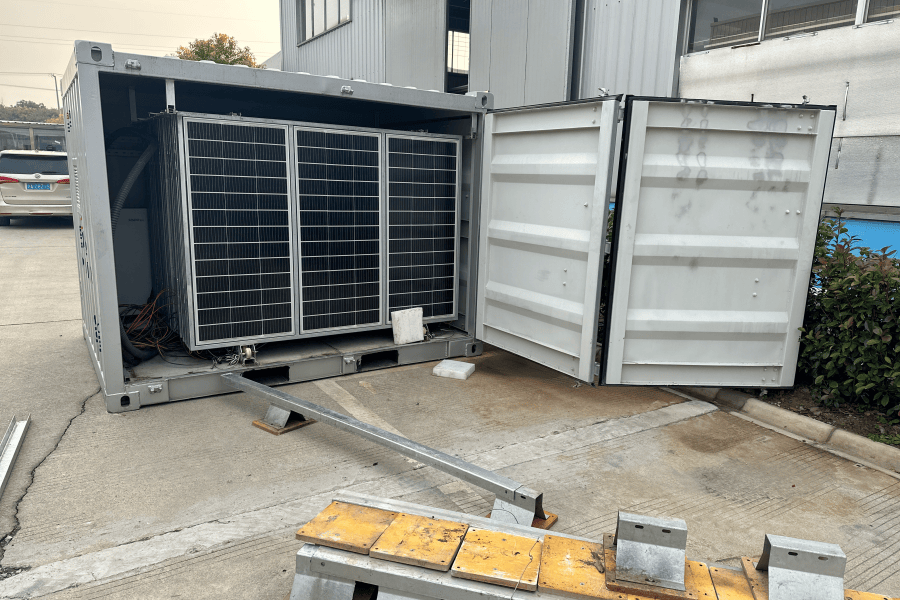
Table of Contents
- The Hidden Cost of "Business as Usual" on Site
- Why Diesel Generators Are Failing Modern Projects
- A Better Way: The Mobile, Rugged Power Station
- Real-World Case Study: Powering Progress in Texas
- Expert Insight: What Makes a Site-Ready BESS Tick
- Making the Switch: What to Look For
The Hidden Cost of "Business as Usual" on Site
Let's be honest. If you're managing a construction or remote industrial project in the US or Europe, you've probably had the same initial thought for temporary power: get a diesel generator. It's familiar, it's "reliable," and the rental company is just a phone call away. I've been on hundreds of sites over the years, and for a long time, that was the only real option. But here's the thing we're all starting to realize - that familiar choice is becoming a massive anchor on project budgets, timelines, and even your company's reputation.
The real cost isn't just the fuel bill, though that's bad enough. It's the constant hum (more like a roar) that leads to community complaints and strict noise ordinance fines. It's the plume of diesel particulate that violates increasingly tight air quality regulations, especially near urban areas or protected environments. It's the vulnerability of a fuel supply chain that can be disrupted by price spikes or logistics nightmares. You're not just paying for kilowatt-hours; you're paying for risk.
Why Diesel Generators Are Failing Modern Projects
Let's agitate that pain point a bit. The International Energy Agency (IEA) has highlighted the construction sector as a major source of dispersed emissions, with off-grid machinery and generators being significant contributors. On the ground, this translates into real problems. I've seen projects get delayed because they couldn't run generators overnight due to noise restrictions. I've watched project managers nearly pull their hair out coordinating twice-daily diesel deliveries to a site with poor access.
Then there's the pure financial waste. A diesel gen-set runs at a constant speed regardless of the load. When your tools are idle, that engine is still guzzling fuel. You're burning money 24/7. For a mid-sized site, we're often looking at tens of thousands of dollars in fuel alone, not to mention maintenance and rental fees. The business case for a cleaner, quieter, and frankly smarter alternative isn't just about sustainability - it's about the bottom line and operational control.
A Better Way: The Mobile, Rugged Power Station
So, what's the solution? It's not about finding a slightly better generator. It's about rethinking temporary power from the ground up. The answer we've successfully deployed across multiple continents is the integrated, containerized battery energy storage system (BESS) paired with solar - specifically, a unit built to IP54 standards for outdoor deployment.
Think of it as a "power station in a box." This isn't a delicate piece of lab equipment. An IP54 rating means it's protected against dust ingress and water splashes from any direction. It can sit in a muddy field, withstand rain, and keep on working. You crane it into position, connect your solar array (if you have one), plug in your site distribution board, and you have instant, silent, emissions-free power. It decouples your energy supply from the fuel pump and gives you predictable, manageable costs. Honestly, the first time you walk onto a silent, fume-free site powered by one of these, it feels like the future.
Real-World Case Study: Powering Progress in Texas
Let me give you a concrete example from our work at Highjoule. A client was developing a new logistics warehouse in Central Texas. The site had no grid connection for the first eight months of construction. The initial plan was a bank of large diesel generators.
The Challenge: Local community pushback on noise, rising diesel costs eating into the contingency budget, and a corporate mandate to reduce the project's carbon footprint.
The Solution: We deployed a 500 kWh Highjoule IP54 Outdoor Solar Container. The system included integrated battery racks, a hybrid inverter, and a built-in section for step-up transformers to run heavier equipment. We set up a 150 kW solar canopy over the material staging area, feeding directly into the container.
The Outcome: The system covered over 85% of the daily site load with solar, only dipping into the stored battery power at night or during cloudy periods. The generators were relegated to emergency backup, sitting silent 95% of the time. The project manager reported a 60% reduction in expected energy costs for the off-grid period and zero noise complaints. The container's UL 9540 and IEC 62485-3 certifications also smoothed the permitting process with the local authority having jurisdiction (AHJ).

Expert Insight: What Makes a Site-Ready BESS Tick
Now, not all containerized BESS are created equal. From my two decades on site, here's what truly matters for construction power:
- Thermal Management is Everything: Texas heat, German winter - the battery has to stay at an optimal temperature. Our units use an independent, liquid-cooled climate control system. It's not just a fan blowing hot air around; it's precise, ensuring cell longevity and safety regardless of the weather outside. Poor thermal management is the fastest way to kill a battery's lifespan.
- The Right C-Rate for the Job: "C-rate" is just engineer-speak for how fast you can charge or discharge the battery. A forklift needs a burst of power (high discharge C-rate), while trickle-charging from solar is slow (low charge C-rate). A site BESS needs a versatile, robust C-rate profile to handle everything from welders to LED lighting without breaking a sweat.
- Thinking in LCOE, Not Just Capex: The initial price might give your CFO pause, but you must calculate the Levelized Cost of Energy (LCOE). Factor in the avoided costs: zero fuel, minimal maintenance, no noise fines, and the ability to sell back or use excess solar. Over a 6-12 month project, the LCOE of a solar+BESS system often undercuts diesel decisively. The National Renewable Energy Lab (NREL) has great tools on LCOE that back this up.
Making the Switch: What to Look For
If you're considering this path, your checklist should be strict. Look for UL 9540 certification (the US safety standard for energy storage systems). Ensure the enclosure rating is at least IP54 for true outdoor resilience. Ask about the thermal management system specifics. And critically, partner with a provider that offers local commissioning and support - having an engineer who can be on site quickly if needed is worth its weight in gold.
At Highjoule, we've baked these principles into our mobile power containers. We focus on safety-by-design, LCOE optimization over the project lifecycle, and ensuring every unit we ship meets the rigorous local standards, be it UL, IEC, or IEEE, that you need to get the job done without hiccups.
The question isn't really if mobile, clean energy storage will become the standard for temporary site power. Based on what I'm seeing in California, Germany, and across the Sunbelt, that shift is already happening. The real question is, how much will you save on your next project by being ahead of the curve?
Tags: Construction Site Power UL Standard BESS Solar Container Microgrid Off-Grid Energy IP54 Enclosure
Author
James Zhang
20+ years agricultural energy storage engineer / Highjoule CTO