
Liquid-Cooled BESS for Mining & Remote Sites: Lessons from Mauritania
Contents
- The Remote Power Problem Isn't Just About Location
- Beyond Diesel Gensets: The Hidden Costs of "Reliability"
- A Real-World Test: Mauritania's Extreme Classroom
- The Thermal Management Game-Changer
- Lessons for US & EU Deployments: It's Not Just About kWh
- Making the Numbers Work: The LCOE Conversation
The Remote Power Problem Isn't Just About Location
Honestly, when we talk about "remote" or "off-grid" power in the US and Europe, we're often thinking of a cabin in the woods or a research station. But the real industrial-scale challenge? It's mines, quarries, and temporary industrial sites. Places where the grid is weak, non-existent, or simply too expensive to extend. The default solution for decades has been the diesel generator. It's familiar, it's "reliable," but let me tell you from 20+ years on site, it's a beast to manage. The case study from a mining operation in Mauritania isn't just a story about a far-off desert; it's a crystal-clear blueprint for tackling the same fundamental issues we see in remote parts of Nevada, Arizona, Western Australia, or Northern Scandinavia.
Beyond Diesel Gensets: The Hidden Costs of "Reliability"
We all know diesel is expensive. But the pain goes deeper than the fuel bill. I've seen this firsthand: the constant maintenance cycles, the vulnerability to fuel supply chains (remember the price spikes?), the noise, the emissions compliance headaches, and the sheer operational inefficiency. Gensets run best at 70-80% load. In reality, they often idle or run at low load, burning fuel and wearing out for minimal output. A report by the International Energy Agency (IEA) highlights that diesel-based power in remote industrial settings can have a Levelized Cost of Electricity (LCOE) exceeding $0.30/kWh, and that's before you factor in carbon costs or supply risks.
The real agitation point? You're building a multi-million dollar operation on a foundation of volatile, high-cost, high-maintenance power. Your CFO hates the unpredictable OpEx, your operations manager hates the downtime for maintenance, and your sustainability officer... well, they just despair.
A Real-World Test: Mauritania's Extreme Classroom
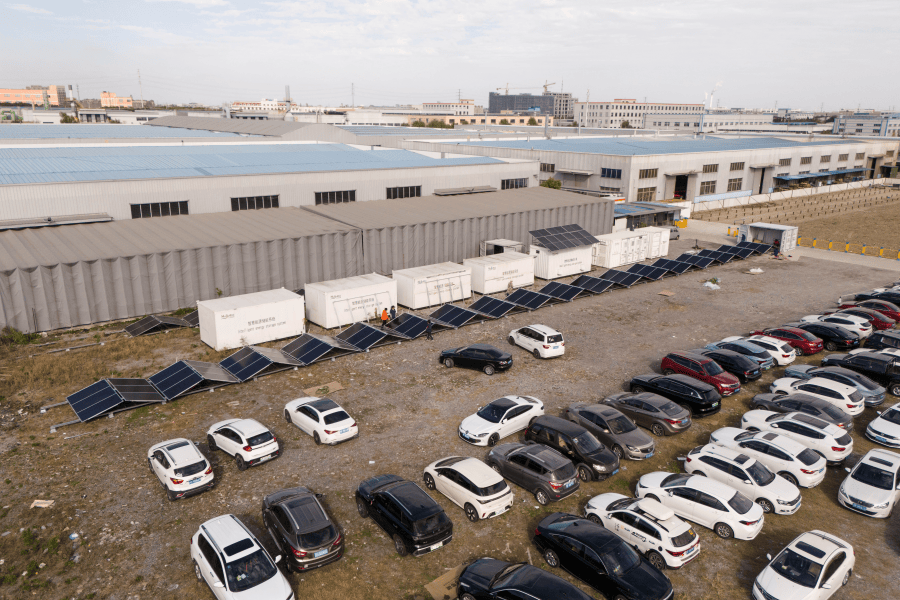
This brings us to the Mauritania project. The challenge was textbook: a mining site needing 24/7 reliable power in an environment where ambient temperatures regularly hit 45C (113F). Solar was an obvious partner to diesel - abundant resource. But slapping PV panels next to gensets isn't a solution; it's just adding complexity. The core of this hybrid system was a liquid-cooled Battery Energy Storage System (BESS).
Why liquid-cooling? In that heat, air-cooled battery containers would struggle. Their internal fans would be running constantly, fighting a losing battle to maintain an optimal 25-30C cell temperature. The temperature gradient across the pack would be huge, leading to accelerated, uneven aging. The system would derate itself - meaning you pay for a 2 MW battery but only get 1.5 MW when you need it most. The Mauritanian solution used a closed-loop liquid cooling system that directly manages cell temperature with precision.

What This Meant On the Ground:
- Diesel Offline, Solar Delivering: The BESS allowed the solar PV to operate at its full potential, storing excess midday energy and then discharging it in the evening, enabling the diesel gensets to be switched off completely for hours at a time.
- Fuel & Maintenance Savings: We're talking a reduction of thousands of liters of diesel per day. Fewer running hours on the gensets also means extended service intervals and lower long-term capital risk.
- Grid-Forming Stability: This BESS wasn't just a silent bucket of electrons. It provided grid-forming capabilities, creating a stable voltage and frequency waveform that the mine's sensitive processing equipment could rely on, smoothing the transition between solar, battery, and diesel power sources.
The Thermal Management Game-Changer
This is the key insight for any hot or cold climate deployment. Thermal management isn't an accessory; it's the cornerstone of performance, safety, and lifespan. Think of C-rate - the speed at which you charge or discharge a battery. Want fast, high-power discharge to start a big crusher motor? That requires a high C-rate. But high C-rates generate immense heat internally. An air-cooled system can't pull that heat away fast enough, forcing the Battery Management System (BMS) to throttle performance (derate) to prevent damage. A liquid-cooled system, like the one we deploy at Highjoule, actively removes that heat, maintaining consistent performance and preventing thermal runaway risks. It's the difference between a sports car with a standard radiator and one with a full racing cooling system.
For the US and EU market, this translates directly to compliance and safety. Systems built to standards like UL 9540 (Energy Storage Systems) and UL 1973 (Batteries for Stationary Use) have rigorous thermal testing requirements. A robust liquid-cooling design isn't just about performance; it's a fundamental part of meeting these safety certifications that are non-negotiable for insurers and local authorities.
Lessons for US & EU Deployments: It's Not Just About kWh
The Mauritania case isn't an outlier. We applied similar principles for a natural gas compression station in West Texas. The challenge wasn't full off-grid, but an extremely weak grid prone to outages. A diesel backup was the existing plan. Instead, we integrated a UL 9540-certified, liquid-cooled BESS with on-site solar. The BESS now provides seamless backup during grid dips, participates in limited grid services when available, and drastically reduces the runtime of the backup genset. The client's "aha" moment came when they realized the BESS also mitigated demand charges from their intermittent high-power loads - a direct OpEx saving we could model from day one.
The takeaway? Whether it's a mine, a data center backup system, or a microgrid for a remote community, the principles are the same:
- Hybridize Intelligently: Use storage to maximize renewable penetration and minimize fossil fuel use.
- Prioritize Thermal Design: Spec a cooling solution for your worst-case ambient conditions, not the average.
- Demand Grid-Forming Capability: For true off-grid or weak-grid resilience, your BESS must be able to create a stable grid, not just follow one.
Making the Numbers Work: The LCOE Conversation
At the end of the day, it's a capital allocation decision. The conversation has to move from simple upfront cost to Total Cost of Ownership (TCO) and Levelized Cost of Electricity (LCOE). A hybrid system with a high-quality, liquid-cooled BESS has a higher CapEx than a bank of diesel gensets. But when you run the model over 10-15 years - factoring in guaranteed fuel savings, zero fuel price volatility, reduced maintenance, extended genset life, potential carbon credits, and the intangible value of guaranteed power - the numbers flip.
Our job at Highjoule isn't just to sell a container. It's to bring that site-based operational experience to the design table, ensuring the system is built to IEC 62933 standards, certified for your local market (UL, CE), and supported by a local service network that understands industrial uptime requirements. Because the technology, as proven in the deserts of Mauritania and the plains of Texas, is ready. The question is, is your next remote power project designed for the past, or for a more resilient and cost-effective future?
What's the single biggest operational cost headache you're facing with your current remote power setup?
Tags: UL Standard BESS LCOE Thermal Management Industrial Energy Remote Power
Author
James Zhang
20+ years agricultural energy storage engineer / Highjoule CTO