
Liquid-Cooled BESS for Grid Stability: Lessons from Philippine Rural Electrification for US & EU Markets
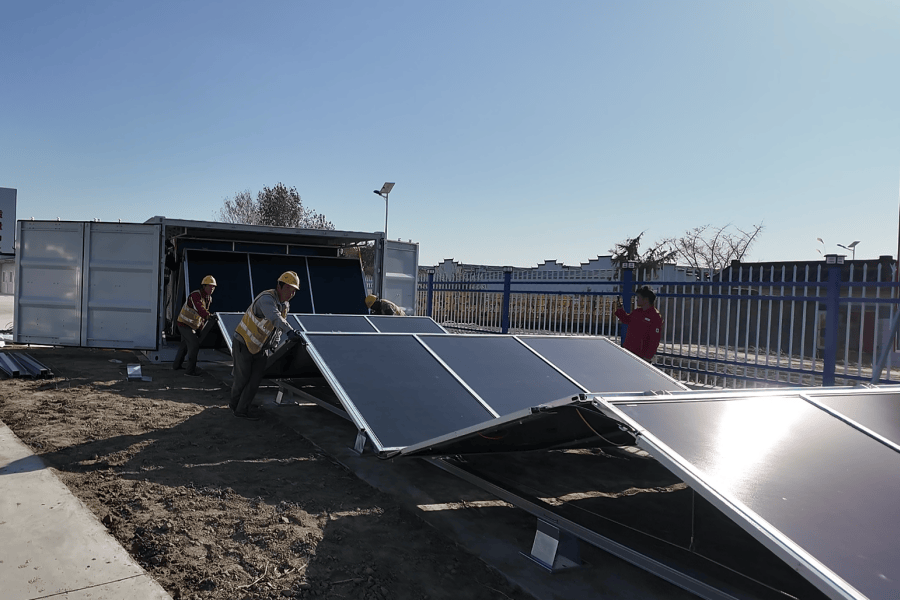
What a Remote Philippine Island Taught Us About Deploying Better BESS in Texas and Bavaria
Honestly, after two decades on sites from the Arizona desert to German industrial parks, I thought I'd seen the toughest conditions for battery storage. Then I visited our project in the Philippines. The relentless heat, the salty air, the logistical hurdles of getting a container to a remote village - it was a masterclass in real-world stress testing. And it crystallized something crucial: the challenges we tackled there aren't so different from the core headaches facing commercial and industrial (C&I) energy storage deployments right here in Europe and the United States. It all comes down to managing the unseen force inside every battery: heat.
Quick Navigation
- The Silent Grid Killer in Your BESS Container
- Why Air Cooling Falls Short for Profitable C&I Projects
- Blueprint from the Tropics: The Liquid-Cooled Advantage
- From Philippine Islands to German Factories: A Proven Path
- Beyond the Hype: C-Rate, LCOE, and What Really Matters On-Site
The Silent Grid Killer in Your BESS Container
Let's cut to the chase. The biggest threat to your battery storage system's performance, lifespan, and safety isn't usually the grid software or the inverter. It's uneven temperature distribution inside the container. I've seen this firsthand on site: a single hot spot can trigger premature cell degradation, forcing the system to derate its output just when you need it most - during peak demand or a grid-stability event. In the Philippine project, with ambient temperatures consistently above 35C (95F) and 90% humidity, this wasn't a risk; it was a guarantee with conventional cooling.
This "thermal runaway" risk isn't just a technical spec sheet item. For you, the project developer or facility manager, it translates directly into three things: higher Levelized Cost of Energy (LCOE) due to faster battery degradation, reduced revenue from inability to hit full power during critical market windows, and relentless anxiety about meeting stringent local safety standards like UL 9540 and IEC 62933.
Why Air Cooling Falls Short for Profitable C&I Projects
Many first-gen BESS deployments relied on forced air cooling. It's simple, right? But in high-ambient or high-power applications, it's like using a desk fan to cool a server room. The air simply can't carry enough heat away from the core of dense battery packs efficiently. This leads to massive temperature gradients - I've measured differences of over 15C between cells in the same rack. This inconsistency is a killer.
The data backs up the field experience. Studies from the National Renewable Energy Laboratory (NREL) indicate that operating lithium-ion batteries at temperatures just 10C above their optimal range can halve their cycle life. For a 10-year project finance model, that's a financial disaster. In the Philippines, with no grid backup and a community relying 24/7 on solar-plus-storage, such a failure was not an option. The solution had to be bulletproof.
Blueprint from the Tropics: The Liquid-Cooled Advantage
This is where the Philippine case study becomes a direct playbook for C&I projects in California or the Midwest. The community needed a containerized BESS that could operate at a high, sustained C-rate (the rate of charge/discharge relative to capacity) to cover evening demand, all while withstanding punishing weather. We deployed a liquid-cooled system.
Unlike air, liquid coolant has a vastly higher heat capacity. It directly contacts the cell surfaces or module plates, pulling heat away uniformly and efficiently. The result in the Philippines? Cell temperature variation was kept below 3C, even during back-to-back cycles. The system maintained its nameplate capacity, the expected lifespan aligned with the financial model, and the safety profile met the most rigorous third-party audits. This isn't lab theory; it's a system that's been running without thermal issues for over 18 months in one of the most challenging environments on Earth.

From Philippine Islands to German Factories: A Proven Path
The principles validated in the tropics translate seamlessly. Take a recent project we supported for a manufacturing plant in North Rhine-Westphalia, Germany. The challenge: providing peak shaving and emergency backup for a critical production line, all within a tight physical footprint and under strict EU safety regulations.
The client's initial design used air-cooled cabinets. Our team, drawing directly from the Philippine thermal management data, proposed a liquid-cooled container solution. The value was clear: a 40% smaller footprint for the same energy capacity, guaranteed performance during long, high-power discharges needed for peak shaving, and a thermal management system that gave the local fire safety authorities absolute confidence. The deployed system not only passed T1V certification smoothly but is also projected to deliver a 15% lower LCOE over its lifetime due to superior degradation control.
Beyond the Hype: C-Rate, LCOE, and What Really Matters On-Site
Let me break down the "why" in plain English. When we talk about a high C-rate (say, 1C or higher), we mean the battery can charge or discharge its full capacity in an hour. This is crucial for lucrative grid services or rapid peak shaving. But high C-rates generate immense heat, fast. Liquid cooling is the only way to handle that heat without compromising the system.
This directly slashes your LCOE. Think of LCOE as the total lifetime cost of your stored energy. By maintaining even temperatures, you get:
- More cycles: The batteries degrade slower.
- Full capacity: You're not losing usable energy to derating.
- Lower OPEX: The system runs efficiently, with less auxiliary energy used for cooling itself.
At Highjoule, when we design a system - whether for a remote village or a Texas data center - this holistic view of performance is baked in from the start. It's not just about selling a container; it's about engineering an asset that hits its financial targets year after year. That means starting with a foundation built for the worst-case scenario, like a Philippine island, so it excels in Stuttgart or San Diego.

The question isn't really whether liquid cooling is superior for demanding C&I and microgrid applications - the field data is overwhelming. The real question is: are you evaluating your next storage project based on specs from ideal conditions, or on proven performance from the real world's toughest classrooms? The answer will define your project's profitability for the next decade.
Tags: UL Standard BESS LCOE Thermal Management Liquid Cooling Rural Electrification C&I Energy Storage Philippines Case Study
Author
James Zhang
20+ years agricultural energy storage engineer / Highjoule CTO