
Industrial BESS Fire Safety: Why Novec 1230 is the Game-Changer for US & EU Projects
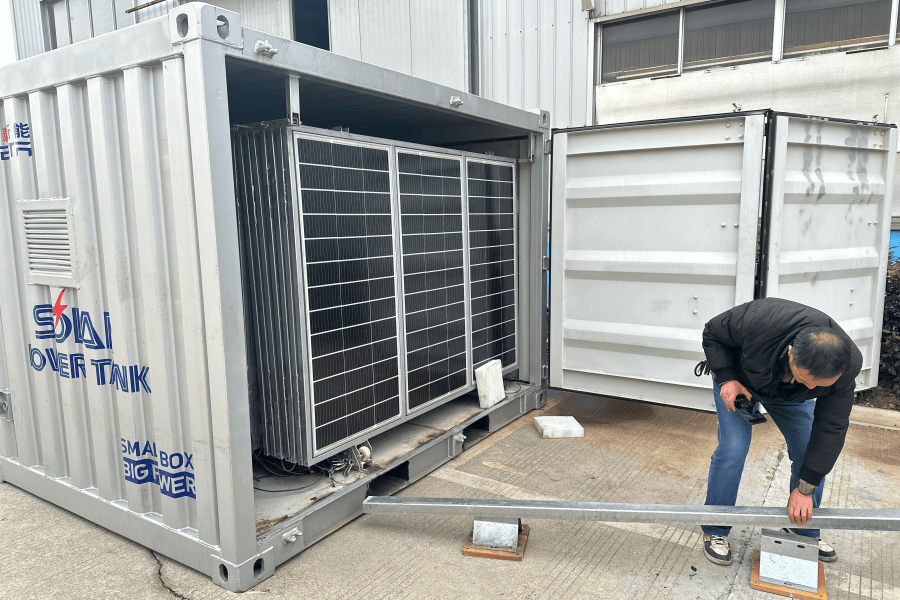
Industrial BESS Fire Safety: Why Novec 1230 is the Game-Changer for US & EU Projects
Honestly, if you're planning a BESS for an industrial park in California or North Rhine-Westphalia, there's one conversation that always, always comes up after the initial excitement about ROI and energy independence. It's not about the C-rate or the cycle life first. It's the safety question. The "what-if" scenario that keeps facility managers and risk assessors up at night. Having been on-site for more deployments than I can count, I've seen firsthand how this single point can stall even the most promising project. Let's talk about why, and more importantly, how the industry is evolving with solutions like Novec? 1230 fire suppression to turn a major hurdle into a manageable, code-compliant advantage.
Quick Navigation
- The Real Problem: It's More Than Just "Compliance"
- The Staggering Cost of Getting It Wrong
- The Solution Evolution: From Water to Clean Agents
- A Real-World Look: Novec 1230 in Action
- Beyond the Chemical: System Integration is Key
- Making the Decision for Your Project
The Real Problem: It's More Than Just "Compliance"
Here's the core issue we face in the field: industrial and commercial energy storage systems are dense energy packages. They operate at high voltages and manage significant thermal loads. The industry standard, set by benchmarks like UL 9540 and the upcoming IEC 62933-5-2, is incredibly rigorous for a reason. Local fire marshals in the US or regulatory bodies in the EU aren't just ticking boxes; they're assessing a genuine risk to property and, critically, business continuity.
The old mindset of "we'll just put it in a container and slap on a standard sprinkler system" doesn't cut it anymore. Water can cause catastrophic short-circuiting in a live battery rack, potentially exacerbating a thermal runaway event. It also leads to significant collateral damage and a long, messy recovery process. For an industrial park tenant or owner, downtime isn't an option. I've sat in meetings where a project's entire financial model unraveled because the added cost and complexity of a compliant, non-water fire suppression system weren't factored in early.
The Staggering Cost of Getting It Wrong
Let's agitate that pain point a bit with some hard numbers. According to a National Renewable Energy Laboratory (NREL) analysis, safety-related incidents, while statistically rare, dominate the risk profile and insurance premiums for BESS projects. A single significant event can lead to:
- Total asset loss of the BESS unit itself.
- Weeks or months of downtime for investigation, cleanup, and replacement.
- Exponential insurance premium increases for the entire site, if coverage is even renewed.
- Reputational damage that can stall the adoption of other sustainability initiatives on-site.
The financial model isn't just about LCOE (Levelized Cost of Energy Storage). It's about Risk-Adjusted LCOE. A solution that appears cheaper upfront but carries higher latent risk can be far more expensive in the long run.
The Solution Evolution: From Water to Clean Agents
This is where clean agent fire suppression systems, specifically those using Novec 1230 fluid, have become a de-facto standard for high-value, mission-critical BESS installations. The shift is driven by pure physics and chemistry. Novec 1230 works by removing heat from the fire triangle incredibly fast - it's a physical cooling mechanism. It's electrically non-conductive and leaves no residue, meaning no secondary damage to sensitive, expensive battery modules and control electronics.
For us at Highjoule, designing a system that meets UL 9540A test criteria isn't just a regulatory step; it's the foundation of our product philosophy. We integrate the detection and suppression system at the design phase, not as an afterthought. This ensures seamless compatibility between our battery racks' thermal management system (which focuses on prevention) and the fire suppression system (the last line of defense). It's this holistic approach that gives installers and authorities having jurisdiction (AHJs) the confidence to approve projects faster.
A Real-World Look: Novec 1230 in Action
Let me give you a concrete example from a project we were involved with in the manufacturing belt of Germany. A mid-sized automotive supplier wanted to pair their rooftop PV with a 1.5 MWh BESS to shave peak demand charges and provide backup power for critical assembly lines.
The Challenge: The local fire code, influenced by stringent German engineering standards (VdS guidelines), required a fire suppression system that could detect and suppress a cell-level thermal runaway event within the sealed battery cabinet without requiring human intervention or damaging adjacent cabinets. Water was explicitly discouraged for indoor installations.
The Solution & Deployment: We provided a containerized BESS solution with a pre-engineered, compartmentalized Novec 1230 system. Each battery cabinet was its own protected zone. The system used a combination of smoke, heat, and gas detection (monitoring for off-gassing, an early sign of trouble) to trigger a discharge specifically in the affected cabinet. This targeted approach contained any potential event, protected the overall asset, and crucially, allowed the rest of the system to potentially remain operational.

The Outcome: The clarity of the safety design package, referencing compliance with relevant IEC standards and the UL 9540A test data for the specific configuration, smoothed the permitting process. The client's insurer provided a favorable premium, citing the "suppression-in-cabinet" design. The system has been operational for over two years now, and the facility manager sleeps better knowing their sustainability investment is protected.
Beyond the Chemical: System Integration is Key
Focusing solely on the fire suppression agent is missing the bigger picture. The real magic - and where you see the difference between a generic and a high-performance BESS - is in the integration. Here's what we've learned matters on site:
- Early & Accurate Detection: It's about speed and precision. Advanced gas detection can signal an issue before a temperature spike, buying precious seconds for the BMS (Battery Management System) to initiate countermeasures.
- Thermal Management Synergy: A good liquid-cooled or forced-air system maintains optimal cell temperature, reducing stress and the probability of an event. The fire suppression system is the failsafe. They must communicate.
- Serviceability & Reset: After a discharge, how fast can you be back online? With a clean agent like Novec 1230, it's primarily about venting the compartment and replacing the triggered canisters, not dealing with corrosive water damage. This directly impacts your project's promised availability.
Making the Decision for Your Project
So, when you're evaluating BESS providers for your industrial park, don't just ask "Do you have fire suppression?" Drill deeper. Ask for the UL 9540A test report for the specific rack and container configuration they're proposing. Ask about the detection logic and the integration between the BMS and the suppression control panel. Ask about the expected total cost of ownership, including agent recharge and system reset procedures.
In the end, choosing a system designed around a robust, integrated safety solution like Novec 1230 isn't just a cost item. It's an investment in project viability, insurance affordability, and long-term peace of mind. It transforms the safety conversation from a scary "what-if" into a solid, demonstrable pillar of your project's value proposition. What's the one safety question about BESS that's still keeping you up at night?
Tags: UL Standard BESS Industrial Energy Storage Novec 1230 Fire Suppression
Author
James Zhang
20+ years agricultural energy storage engineer / Highjoule CTO