
Black Start Solar Container Installation: A Step-by-Step Guide for Remote Mining
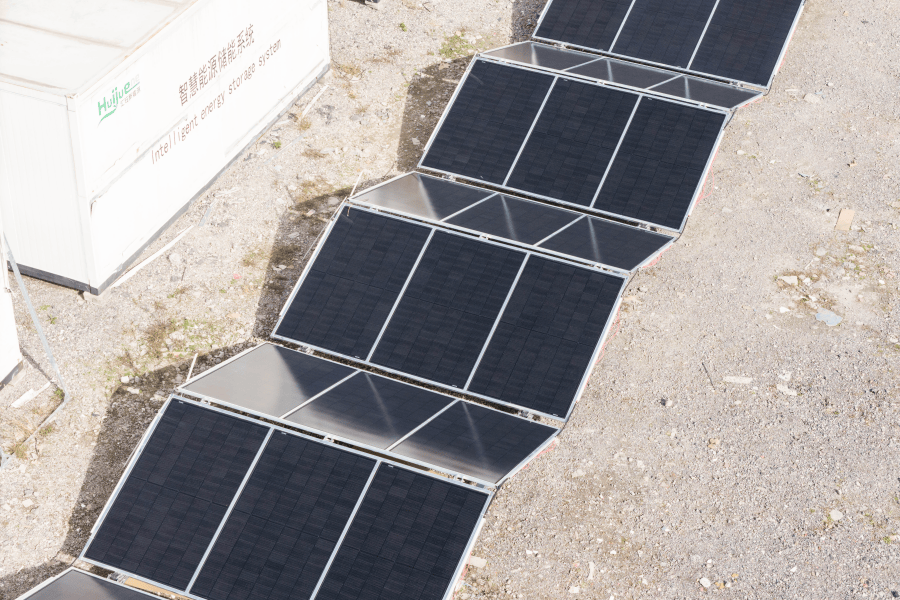
Table of Contents
- The Silent Site: A Costly Reality for Remote Operations
- Beyond the Battery: What "Black Start" Really Demands
- The Installation Playbook: From Dockside to Desert
- The California Lesson: Why Standards Aren't Optional
- Making the Numbers Work: The Real Math Behind LCOE
The Silent Site: A Costly Reality for Remote Operations
Honestly, one of the most expensive sounds in the mining industry is?- silence. When a primary power source fails at a remote site - be it a generator outage or a grid disturbance - that silence means zero production, spiraling downtime costs, and a frantic scramble in the control room. I've seen this firsthand on site. The traditional "solution"? A bank of diesel gensets on permanent standby, guzzling expensive, trucked-in fuel, just waiting for a failure that might happen once a year. It's a massive capital sink and an operational headache.
The data backs up the pain. According to the International Energy Agency (IEA), mining and minerals operations account for a significant portion of global industrial energy demand, with reliability being a top-tier concern for profitability. In remote locations, the levelized cost of electricity (LCOE) from pure diesel can be two to three times higher than grid-connected rates. The problem isn't just cost; it's complexity. Adding renewables like solar seems obvious, but what happens when the sun sets and you need to restart? That's where most standard systems fall short.
Beyond the Battery: What "Black Start" Really Demands
This brings us to the core challenge we're solving with the Step-by-step Installation of a Black Start Capable Solar Container. A black-start capability means your energy system can boot itself up from a complete shutdown - zero voltage, zero frequency - without relying on any external grid. It's like having a champion sprinter who can also tie their own shoes perfectly before the race starts. For a mining operation in a place like Mauritania, this isn't a luxury; it's the cornerstone of energy sovereignty.
The technical heart of this is the power conversion system (PCS) and its control logic. It's not just about having a big battery (though that's important). It's about the C-rate - the speed at which the battery can discharge its energy. A black start requires a high, instantaneous burst of power to energize equipment and motors, which demands a system designed for high C-rate pulses, not just steady energy shifting. Then there's thermal management. Pushing that much power in a desert environment, inside a container, creates heat. If the thermal system isn't meticulously engineered, you degrade the battery's life or, worse, trigger a safety shutdown right when you need power most.

The Installation Playbook: From Dockside to Desert
So, how do you get this self-sufficient power island operational? It's a dance of precision, and skipping steps is not an option. At Highjoule, our approach is born from two decades of deploying in tough environments.
Phase 1: Pre-Deployment & Site Prep (The Most Overlooked Phase)
Long before the container leaves our factory, the work begins. We conduct a virtual site survey using topographical data to design the foundation. For a black-start system, the foundation isn't just a slab; it's the anchor for all electrical grounding, which is critical for safety and surge protection during restart events. All our containers are built to UL 9540 and IEC 62933 standards, but we also pre-configure the control setpoints to match the specific sequence of your mining site's motor loads. This upfront engineering is what prevents "it works in the test lab, but not on site" syndrome.
Phase 2: Receiving, Positioning, and Hardening
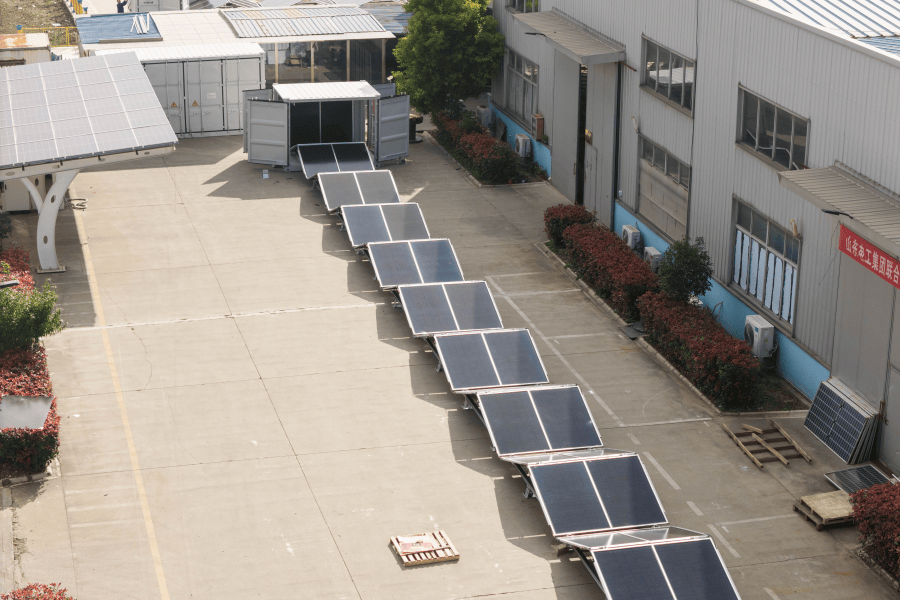
The container arrives as a fully integrated, pre-tested unit. The key step here is positioning it within the optimal "string length" from your solar array and main power distribution to minimize DC and AC losses. We then focus on "site hardening": securing all conduit entries against sand ingress, verifying the external cooling vents have clear airflow (sand dunes can shift!), and establishing a robust, multi-path communication link back to the main site SCADA. This is where local, experienced field engineers make all the difference - they know what to look for.
Phase 3: The Black Start Commissioning Sequence
This is the moment of truth. We don't just flip a switch. We execute a staged commissioning:
- Islanded Self-Test: The system boots using only its own internal backup power, verifying PCS logic and battery status.
- Sequential Load Pickup: We programmatically reconnect site loads in a staggered sequence, starting with essential comms and control rooms, then moving to critical conveyors or water pumps. This prevents a massive inrush current that could trip the system.
- Failover Validation: We simulate a primary power failure. The system must seamlessly island itself, sustain the load, and then be ready to perform a black start once the fault is cleared. We run this test multiple times.
The California Lesson: Why Standards Aren't Optional
Let me share a case from a mining operation we supported in California's remote high desert. They had an older BESS that wasn't black-start capable. A fault took down their main line. The BESS had charge, but it couldn't re-energize the distribution network to restart the massive crusher motor. They lost 14 hours of production waiting for a crew to bring in a mobile genset for a "jump start." The financial loss was staggering.
Our retrofit solution wasn't just a drop-in battery swap. We had to upgrade the PCS to one with certified black-start functionality under IEEE 1547, redesign the grounding scheme, and implement a more aggressive thermal management protocol to handle the desert heat and the high C-rate demands of the crusher motor start. The lesson? Compliance with UL, IEC, and IEEE standards isn't paperwork; it's a pre-validated blueprint for safety and performance. It gives you, the operator, a known outcome.
Making the Numbers Work: The Real Math Behind LCOE
When you look at the business case, the black-start solar container transforms the economics. The solar drastically reduces your daily fuel consumption. The battery provides daily load-shifting. But the black-start capability eliminates the need for a dedicated standby genset and its associated fuel hedging, maintenance, and capex. You're consolidating three assets into one.
When we calculate the Levelized Cost of Energy (LCOE) for a client, we factor in all of this: the avoided capital expenditure on redundant gensets, the 20+ year lifespan of a properly managed lithium-ion system (where thermal management is key), and the value of uninterrupted production. Suddenly, the ROI model gets very compelling, very fast. The system pays for itself not just through fuel savings, but through guaranteed operational resilience.
That's the real goal, isn't it? To know that your power source is as resilient and self-reliant as your operation needs to be. What's the single biggest reliability risk you're managing at your remote site today?
Tags: BESS Off-grid Power Black Start Solar Container UL/IEC Standards Remote Mining
Author
James Zhang
20+ years agricultural energy storage engineer / Highjoule CTO