
Rapid Deployment BESS Containers for Construction Site Power: A Real-World Case Study
Contents
- The Silent Problem on Every New Construction Site
- Beyond Diesel: The Real Cost of "Waiting for the Grid"
- The Mobile Power Plant: A Real-World Case Study from California
- What Makes It Work? An Engineer's Look Under the Hood
- Is This For Your Next Project?
The Silent Problem on Every New Construction Site
Let's be honest. When you're planning a new commercial or industrial build - a warehouse, a data center, a manufacturing plant - the first thing on your mind isn't the temporary construction power. You're focused on the final design, the budget, the timeline. But I've been on enough sites over 20 years to tell you this: how you power the construction phase can make or break that budget and timeline before a single permanent foundation is poured.
The standard playbook? You apply for a temporary grid connection. You wait. And you wait some more. In many parts of the U.S. and Europe, utility lead times for temporary construction power have stretched from weeks to, in some cases, over 12 months. The International Energy Agency (IEA) has highlighted grid connection queues as a major bottleneck for energy infrastructure deployment. So, you're left with two bad choices: delay your multi-million dollar project, or bring in a fleet of diesel generators.
Beyond Diesel: The Real Cost of "Waiting for the Grid"
Okay, so you go with diesel. It's fast, right? On the surface, yes. But let's agitate that pain point a little. I've seen this firsthand on site. You're not just paying for fuel. You're paying for:
- Noise & Community Complaints: 24/7 generator drone is a surefire way to get your project flagged by local residents and councils.
- Air Quality & Permitting Hassles: Emissions regulations are tightening everywhere. In California or parts of the EU, running large diesel sets might require extra, costly permits or simply not be allowed.
- Fuel Security & Logistics: You need a constant, reliable fuel supply chain. Price volatility hits your bottom line directly.
- The "Set-and-Forget" Myth: Generators need constant maintenance and refueling. That's manpower and downtime.
The real cost isn't just the diesel bill. It's risk, reputation, and unpredictable overhead.
The Mobile Power Plant: A Real-World Case Study from California
This is where the real-world case for rapid deployment energy storage containers shines. Let me walk you through a project we did with Highjoule for a tech company building a new campus in the Bay Area.
The Scene: A 100-acre site, zero grid infrastructure. Utility timeline for temporary power: 10 months. Project needed to start in 8 weeks to meet their opening deadline.
The Challenge: Power heavy equipment (cranes, welders, site offices) reliably, meet strict local air quality rules, and stay on schedule.
The Solution: We deployed two of our MobilePowerTM Containerized BESS units. These are not your average batteries. They are pre-integrated, plug-and-play power stations on wheels, built to UL 9540 and IEC 62619 standards. They were delivered on flatbeds, positioned on simple concrete pads, and were online in under 48 hours.
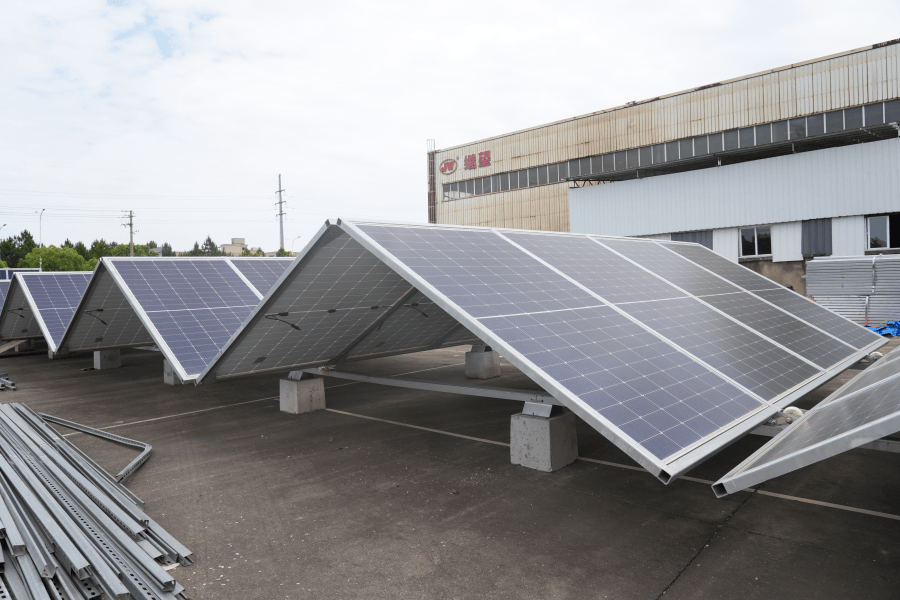
Here's how it worked on the ground: The containers were paired with a modest-sized, quiet solar canopy set up over the site offices. During the day, solar charged the batteries and powered daytime loads. The BESS provided all overnight power and handled the huge, sudden demand spikes from equipment startup - something generators struggle with efficiently. A small, backup biodiesel generator was integrated for absolute peak coverage, but it ran less than 10% of the time.

The Outcome: The project broke ground on time. They saved an estimated 40% on energy costs versus a pure diesel scenario. More importantly, they passed all environmental inspections with flying colors and maintained a good relationship with the neighboring community. When the permanent grid finally arrived, we simply disconnected, loaded the containers back up, and moved them to the next site. That's the beauty of it.
What Makes It Work? An Engineer's Look Under the Hood
You might be thinking, "Sounds good, but is it robust enough for a tough construction site?" Fair question. From an engineering perspective, three things are critical:
1. The Right Battery Chemistry & C-rate: We use LiFePO4 (LFP) chemistry. Why? Safety first - it's inherently more stable. But for construction, the C-rate is key. Simply put, it's how fast you can charge and discharge the battery. Construction sites have "lumpy" demand: a crane lifts, a big welder kicks in. You need a high discharge C-rate to deliver that burst of power instantly, without sagging voltage. Our systems are designed for that.
2. Military-Grade Thermal Management: This is where many systems fail in the field. A container sitting in the Texas sun or a German winter needs a climate control system that's overbuilt. We use independent, redundant cooling loops. Honestly, I specify systems that can handle ambient temps 10-15C beyond the site's recorded extremes. If the thermal management fails, the battery derates or shuts down, and your site goes dark.
3. Thinking in LCOE (Levelized Cost of Energy), Not Just Capex: The initial price tag of a BESS can be higher than a generator set. But you have to look at the total LCOE over the 2-3 year construction period. With solar input and minimal "fuel" costs, the LCOE plummets. Add in the avoided costs of delays, fuel logistics, and potential fines, and the financial case becomes crystal clear. Our job at Highjoule is to model that total cost for you upfront.

Is This For Your Next Project?
So, who's this for? If your project faces grid delays, is in an emissions-sensitive zone, or has a sustainability mandate from the board, a rapid-deployment BESS isn't just an alternative; it's becoming the smart default.
The technology is proven, the standards (UL, IEC, IEEE) are in place for safety, and the operational benefits are tangible. It's about treating your temporary construction power not as a cost center to be minimized, but as a strategic asset that de-risks your entire project.
What's the biggest hurdle you're facing with your upcoming site power plans? Is it the utility timeline, the noise constraints, or the sheer unpredictability of diesel costs? I'd love to hear what's keeping you up at night - maybe over that virtual coffee.
Tags: Construction Site Power Energy Storage Container UL Standard BESS Rapid Deployment Microgrid
Author
James Zhang
20+ years agricultural energy storage engineer / Highjoule CTO