
Utility-Scale BESS for EV Charging: Wholesale Price & ROI Insights for 5MWh Systems

Let's Talk About Powering the EV Rush: It's More Than Just Plugs
Honestly, if I had a coffee for every time a client told me their main EV charging site challenge was "getting enough power from the grid," I'd be wired 24/7. The reality on the ground, from California to North Rhine-Westphalia, is that the grid is straining under this new demand. Utilities are facing upgrade timelines measured in years, not months, and demand charges can turn a promising charging hub into a financial headache overnight. The conversation is quickly shifting from just installing chargers to figuring out how to power them reliably and affordably. That's where utility-scale battery storage comes in, but I know what you're thinking next: "What's this really going to cost me?" Let's break down the real factors behind the Wholesale Price of 215kWh Cabinet 5MWh Utility-scale BESS for EV Charging Stations.
What We'll Cover
- The Real Problem: More Than a Grid Connection
- Beyond the Sticker Price: A True Cost Breakdown
- The 215kWh Cabinet: Your Building Block for Scale
- Making It Work: Safety, Standards, and Smarts
- Your Next Step: Asking the Right Questions
The Real Problem: It's Not Just About "More Power"
I've seen this firsthand on site. You secure a prime location for a charging station, the demand is there, but the local substation is at capacity. According to a National Renewable Energy Laboratory (NREL) study, integrating high-power EV charging can require distribution infrastructure upgrades costing hundreds of thousands of dollars per mile. Even if the capacity exists, commercial power rates are designed with demand charges - a fee based on your highest 15-minute power draw in a month. A simultaneous fast-charge session for ten trucks can spike that demand, leading to astronomical bills that erase your margin.
The problem gets amplified when you add renewables. You want solar on the canopy, right? Great idea. But solar generation is intermittent. Without storage, you're dumping unused solar energy to the grid at noon and buying expensive grid power at 6 PM when everyone plugs in. It's a lose-lose for your economics and does little to ease the grid's peak burden.
Beyond the Sticker Price: What You're Really Paying For
So, when we discuss the Wholesale Price of 215kWh Cabinet 5MWh Utility-scale BESS, we're talking about a system built from ~24 of these standardized cabinets. But the cabinet cost is just one piece. A responsible quote must include:
- Power Conversion System (PCS): The brain and muscle that converts DC battery power to AC for the grid/chargers. Its rating (in MW) defines how fast you can charge or discharge.
- Balance of Plant (BoP): This is where projects live or die. It includes climate control (critical for battery life), fire suppression (non-negotiable), switchgear, and site cabling. I've seen BoP costs vary by 30% based on local codes and labor.
- Software & Integration: The "smarts" to automatically arbitrage energy, shave demand peaks, and integrate with charging management software. A system that can't talk to your chargers is just a very expensive paperweight.
- Compliance & Interconnection: This is huge in markets. Your system must be designed to UL 9540 (the standard for ESS safety) and UL 9540A for fire testing. Grid interconnection studies and meeting IEEE 1547 for grid support functions add time and cost, but are mandatory.
So, a true "all-in" price per kWh ($/kWh) for a 5MWh system is more meaningful than a cabinet-only figure. It reflects the engineered, compliant, and functional solution you need.
A Real-World Glimpse: How This Plays Out
We partnered on a logistics depot project in Germany. The goal was to power 12 new high-speed chargers for their electric fleet. The grid upgrade quote was ?1.2M with an 18-month wait. Instead, we deployed a 4.8MWh BESS using our 215kWh cabinet design, coupled with a 1MW solar canopy. The BESS charges from solar and the grid during off-peak hours, then discharges during the evening charging shift. It cut their grid demand peak by over 80%, saving tens of thousands in demand charges annually. The payback period? Under 5 years. The grid upgrade was avoided entirely. 
The 215kWh Cabinet: Your Building Block for Scale and Value
This is where the modular approach shines. A pre-engineered, factory-tested 215kWh cabinet isn't just a component; it's a strategy.
- Scalability: Start with a 1MWh system for your pilot site. As demand grows, you add cabinets. It's far more capital-efficient than oversizing from day one.
- Serviceability: If a module has an issue, you isolate and service a single cabinet without taking your entire 5MWh site offline. This modularity is a godsend for operational uptime.
- Logistics & Installation: Standardized dimensions simplify shipping, handling, and on-site assembly. It reduces those unpredictable on-site labor costs that can blow a budget.
At Highjoule, we've optimized our cabinet design around total Levelized Cost of Storage (LCOS) - the lifetime cost per kWh stored and discharged. This means using cells with a lower degradation rate, an advanced thermal management system that minimizes HVAC energy use (a huge operational cost saver), and designing for a 20+ year lifespan. A slightly higher initial Wholesale Price for a cabinet with a much lower LCOS is the smartest financial decision you can make.
Making It Work: The Non-Negotiables for Safe, Profitable Operation
Let's get technical for a minute, but I'll keep it simple. Three things matter most once your BESS is humming:
| Term | What It Means | Why You Should Care |
|---|---|---|
| C-Rate | How fast a battery can be charged/discharged relative to its capacity. A 1C rate means a 5MWh system can discharge at 5MW for 1 hour. | For demand charge shaving, you need a high C-rate (like 1C or more) to deliver massive power quickly when chargers kick on. It defines the "muscle" of your system. |
| Thermal Management | How the system keeps batteries at optimal temperature (usually 20-25C). | Poor thermal management is the #1 cause of accelerated aging and safety risks. Liquid cooling is becoming standard for utility-scale for its precision and efficiency, directly impacting lifespan and safety. |
| Grid-Forming Capability | The ability to stabilize the grid's voltage and frequency without relying on a traditional power plant. | In areas with weak grids or high renewable penetration, this feature can make your charging station a grid asset, potentially opening up new revenue streams. |
Our engineering is obsessed with these details. Every Highjoule cabinet is built to the highest standards - UL 9540, IEC 62619 - from the ground up. It's not an afterthought. This is what ensures your investment is protected, operates safely for decades, and actually delivers the ROI on the spreadsheet. 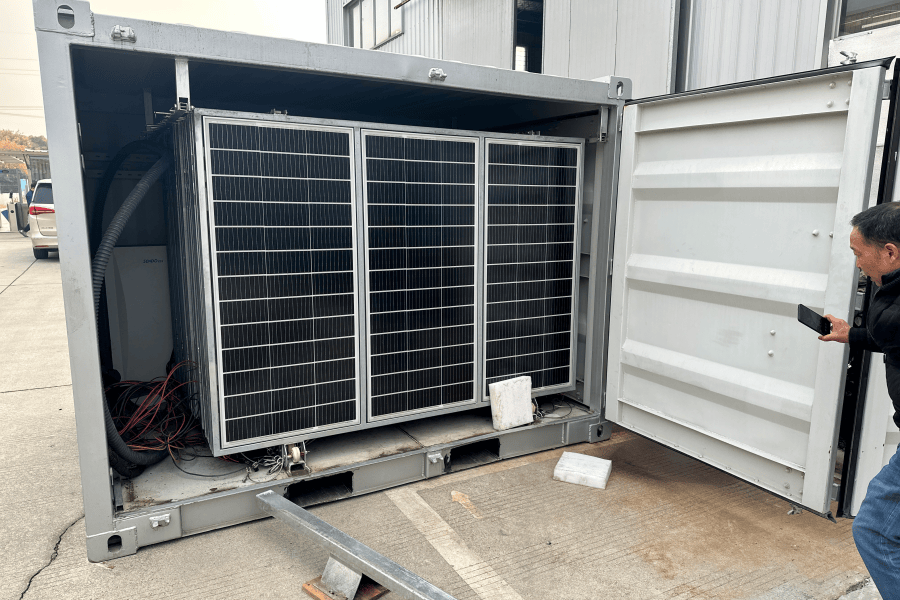
Your Next Step: Questions to Ask Your Supplier
So, when you're evaluating proposals and looking at that Wholesale Price of 215kWh Cabinet 5MWh Utility-scale BESS, move beyond the price per kWh. Sit down with your engineering team or potential supplier and ask:
- "Can you walk me through the full BoP scope and its assumptions for my specific site?"
- "How is the thermal management system designed, and what is its projected auxiliary load?" (This hits your operating cost).
- "Show me the certification documents for UL 9540 and UL 9540A for this exact cabinet design."
- "What does your software stack do for EV-specific applications like demand charge management and solar self-consumption optimization?"
- "What's the projected LCOS over 20 years, and what are the key assumptions behind that number?"
The right partner won't just give you a price; they'll give you a confident, detailed answer to every one of these questions. That's how you build a charging infrastructure that's not just a cost center, but a resilient, profitable asset for the long haul. What's the biggest hurdle you're seeing in your next EV charging project's power design?
Tags: BESS Renewable Integration EV Charging Infrastructure UL 9540 Utility-Scale Energy Storage Grid Stability Wholesale Battery Price
Author
James Zhang
20+ years agricultural energy storage engineer / Highjoule CTO