
Real-World Case Study: Rapid Hybrid Solar-Diesel Systems for Utility Grid Stability
When the Grid Can't Wait: A Real-World Look at Rapid Hybrid Solar-Diesel for Utilities
Hey there. Let's grab a virtual coffee. If you're managing a public utility grid, especially in areas with high renewable penetration or remote infrastructure, you've felt the pressure. The mandate is clear: integrate more solar, reduce carbon, maintain reliability. But the reality on the ground - the one I see when I'm boots-on-the-scene - is a constant tug-of-war between ambition and inertia. The grid doesn't stop, and your community's power can't flicker while you figure it out. That's where the concept of a rapid deployment hybrid solar-diesel system moves from a nice idea to an absolute necessity. Today, I want to walk you through the real-world problem, the tangible impact of delay, and how a specific, fast-track approach is changing the game for utilities on both sides of the Atlantic.
Jump to Section
- The Real Problem: More Than Just Adding Solar
- The Cost of Waiting Isn't Just Financial
- The Rapid Hybrid Solution: A Case Study in Action
- Why This Works: The Tech Behind the Speed
- Your Next Steps: Beyond the Case Study
The Real Problem: It's Not Just About Adding Solar Panels
The phenomenon is universal. A utility, say in Southern Europe or the US Southwest, has a diesel-powered peaking plant or a remote microgrid. The goal is to add a solar PV farm nearby to cut fuel costs and emissions. The standard approach? Treat it as two separate, massive infrastructure projects. You design the solar array. You tender for the EPC. Then, you start a separate, often agonizingly slow, process to figure out how to integrate it with the existing diesel gensets. You're looking at new switchgear, complex control systems, and endless studies on grid synchronization and fault response.
Honestly, I've been on sites where this process took 18-24 months. And the whole time, those diesel generators are running more than they should, fuel bills are bleeding the budget dry, and regulatory targets are slipping further away. The core pain point isn't the technology; it's the deployment timeline and integration complexity. You need a system that acts as a unified, intelligent buffer between the intermittent solar output and the firm, dispatchable diesel generation - and you need it yesterday.
The Cost of Waiting Isn't Just Financial
Let's agitate that pain point a bit. What's the real impact of a slow, piecemeal approach?
- Sky-High LCOE (Levelized Cost of Energy): The longer your solar asset sits idle or curtailed because it can't play nice with the diesels, the worse its economics become. According to the National Renewable Energy Laboratory (NREL), poor integration can erode 20-30% of the projected value of a hybrid plant. That's a direct hit to your ROI.
- Operational Inefficiency & Wear: Diesel gensets operating at low, inefficient loads or constantly ramping up and down to compensate for solar variability suffer more maintenance issues. I've seen firsthand the increased frequency of overhauls when there's no battery buffer in the mix.
- Grid Stability Risks: This is the big one for public utilities. A sudden cloud cover over your new solar farm can cause a rapid dip in output. Without an instantaneous response, frequency can drop, threatening wider grid stability. Relying solely on slow-responding diesel spinners is a risky gamble.
The data is stark. The International Energy Agency (IEA) highlights that hybrid systems are key to decarbonizing off-grid and weak-grid areas, but their success hinges on seamless, rapid integration. The old way of doing things simply doesn't meet the urgency of today's energy transition.
The Rapid Hybrid Solution: A Case Study in Action
So, what does the solution look like? Let me break down a real-world scenario, similar to projects we've been involved with through Highjoule. Imagine a municipal utility in Texas or a grid operator in Southern Italy. They have a 10 MW diesel peaking plant serving a growing town. They install a 15 MW solar farm adjacent to it.
The Challenge: Integrate the solar to maximize its use, minimize diesel runtime, and ensure flawless grid support - all within a single construction season, not multiple years.
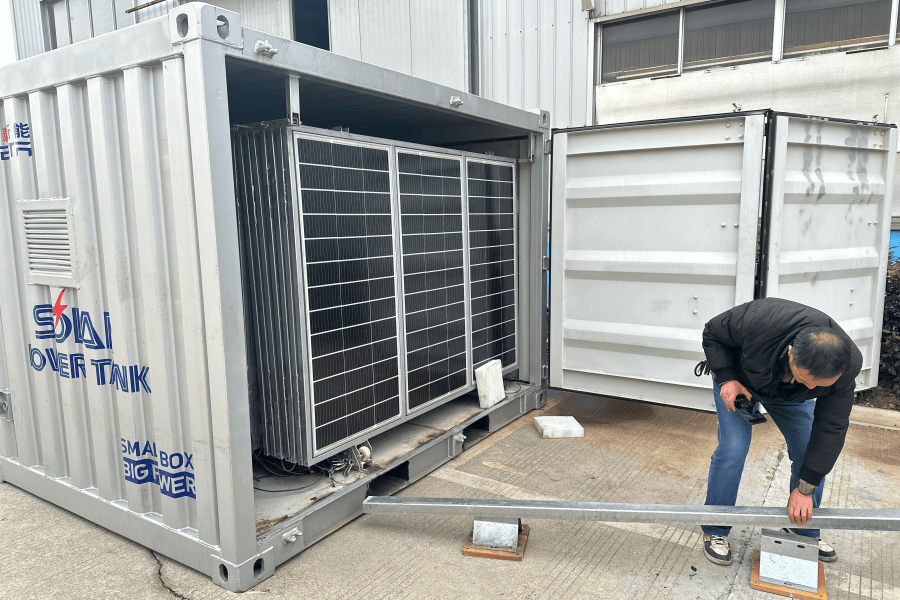
The Rapid-Deployment Hybrid Solution: Instead of custom engineering from scratch, they deployed a pre-engineered, containerized Battery Energy Storage System (BESS) as the central integration hub. This is the heart of the "rapid" model. Here's how it worked on the ground:
- Plug-and-Play Architecture: The BESS, comprising multiple UL 9540/9540A certified containers, was shipped with factory-integrated power conversion systems (PCS), climate control, and fire suppression. On site, it was a matter of placement, cabling, and commissioning. This cut months off the timeline.
- Intelligent Controller: A unified energy management system (EMS) was pre-configured for hybrid applications. It didn't just see "solar" and "diesel." It saw three resources: variable solar, fast-responding battery storage (with a high C-rate for quick bursts of power), and the diesel gensets as the last-resort backbone. The EMS made millisecond decisions on source dispatch.
- The Outcome: Diesel fuel consumption dropped by over 65% during daylight hours. The solar plant's curtailment was reduced to near zero because excess power charged the batteries. Most critically, during a sudden solar drop, the BESS injected power within cycles to maintain frequency, allowing the diesel gensets to start and ramp up smoothly. The entire integration, from BESS delivery to full operation, was under 9 months.

Why This Works: The Tech Behind the Speed (In Plain English)
You don't need to be an engineer to get why this is a game-changer, but let me give you some insider perspective. The speed comes from moving away from a construction project to a productized deployment.
Thermal Management is Everything: In a container in the Texas sun or the Greek islands, batteries get hot. A cheap thermal system throttles performance and kills battery life. Our approach uses a liquid-cooled system that maintains an even temperature. This lets us safely use higher C-rates (think of it as the "sprint capability" of the battery) for those crucial grid support moments without degrading the system. It's reliability by design.
Standards Aren't a Checklist, They're a Blueprint: For the US market, UL 9540 is non-negotiable. In Europe, it's IEC 62619. But compliance shouldn't slow you down. When your BESS is designed from the first bolt to meet these standards, certification is a verification step, not a redesign phase. This pre-certification is a massive time-saver.
LCOE Optimization is the End Goal: Every decision - from battery chemistry to the EMS logic - is made to lower the total lifetime cost of energy. By reducing diesel use, extending generator life, and maximizing solar utilization, the BESS isn't an added cost; it's the enabler that makes the entire hybrid plant more profitable and resilient.
Your Next Steps: Beyond the Case Study
This real-world case study of a rapid deployment hybrid solar-diesel system isn't a one-off. It's a replicable model for public utilities facing grid modernization pressures. The shift is from "Can we build it?" to "How fast can we get it online and working optimally?"
The question for you isn't whether hybrid systems are the future - they are. The question is: Is your current deployment strategy fast and integrated enough to capture their full value? When you look at your next grid reinforcement or solar integration project, consider the timeline. Could a pre-engineered, storage-centric approach cut it in half while boosting performance?
I'd love to hear what your biggest hurdle is right now. Is it the interconnection studies, the controls integration, or just finding a partner who's done this at scale before? The conversation on the ground is where the real solutions are built.
Tags: UL Standard BESS LCOE Rapid Deployment Grid Stability Hybrid Solar-Diesel System
Author
James Zhang
20+ years agricultural energy storage engineer / Highjoule CTO