
Rapid Deployment BESS for High-Altitude & Remote Sites: A Real-World Case Study
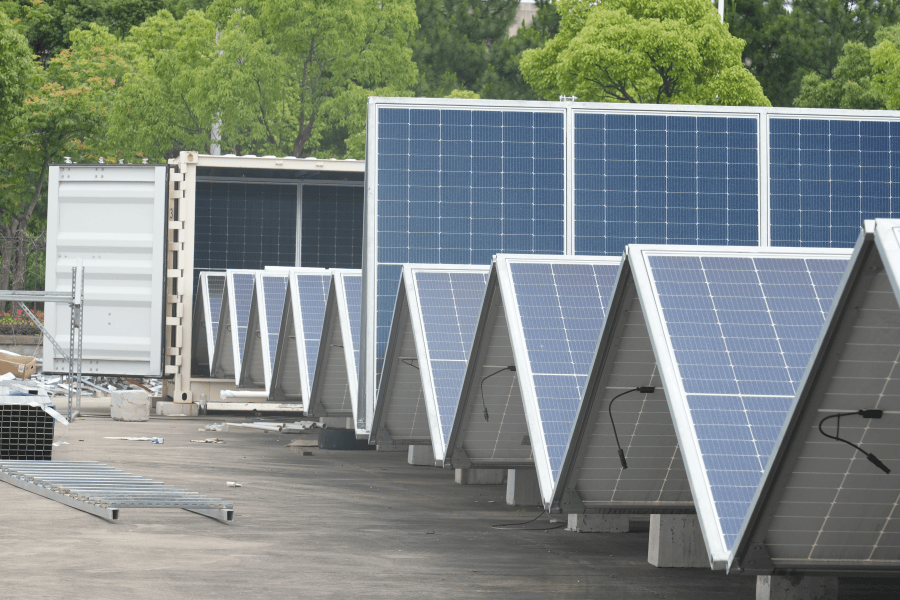
When the Grid is Miles Away and the Air is Thin: A High-Altitude Energy Storage Story
Honestly, after 20-plus years of deploying battery storage from the deserts of Arizona to the fjords of Norway, I thought I'd seen it all. But there's a particular set of challenges that still gets my engineer's heart racing - deploying reliable, safe, and cost-effective energy storage where the air is thin, the weather swings wildly, and the nearest utility crew is a half-day's drive away. I'm talking about high-altitude and remote industrial sites. It's a niche, but a growing one, especially as mining, data, and renewable energy projects push into new frontiers. Let's talk about why standard solutions often fail here, and walk through a real-world case that shows how to get it right.
Quick Navigation
- The Problem: Why Altitude and Remoteness Break Standard BESS
- The Real Cost: More Than Just CAPEX
- The Solution Philosophy: Built for the Edge
- A Real-World Case: Mining in the Rockies
- Key Technical Insights from the Field
- What This Means for Your Project
The Problem: Why Altitude and Remoteness Break Standard BESS
Here's the thing most vendors won't tell you over a glossy brochure: a standard battery energy storage system (BESS) container designed for a temperate, sea-level industrial park is not built for 2,500 meters (8,200 ft). The core issues are physical and logistical.
1. Thermal Runaway Risks at Low Pressure: At high altitudes, atmospheric pressure drops. This reduces the effectiveness of air-based cooling systems - the kind used in many off-the-shelf containers. Heat dissipation becomes less efficient, creating hotspots. For lithium-ion batteries, consistent, precise temperature management is non-negotiable. Overheating accelerates degradation and, in worst-case scenarios, can lead to thermal runaway. The safety standards like UL 9540 and IEC 62933 are your baseline, but at altitude, you need to engineer beyond the baseline.
2. The "Time is Money" Deployment Nightmare: According to the National Renewable Energy Laboratory (NREL), soft costs - including engineering, permitting, and installation - can account for a significant portion of total BESS project costs. Now, imagine those costs when you have a short weather window, specialized transport needs on mountain roads, and a limited crew of certified technicians on site. Every day of complex on-site assembly is a day of lost revenue and skyrocketing labor costs.
The Real Cost: More Than Just CAPEX
I've seen this firsthand. A client once opted for a "low-cost" containerized system for a remote site. The initial purchase price was attractive. But then came the surprises: custom engineering for cooling, weeks of on-site integration work (with technicians billing travel time), and a 15% faster capacity degradation than projected due to poor thermal management. Their Levelized Cost of Storage (LCOS) - the real metric that matters - ended up being 30% higher over 10 years. That's the hidden trap. Focusing solely on upfront capital expenditure (CAPEX) in these environments is a surefire way to inflate your total cost of ownership.
The Solution Philosophy: Built for the Edge
The solution isn't just a product; it's a product philosophy centered on Factory-Integrated Testing and Rapid Deployment. The goal is to move 95% of the complexity from the windy, cold, remote site to the controlled factory floor. At Highjoule, we approach this by building what we call "Site-Ready Containers." This means the entire system - battery racks, HVAC, fire suppression, power conversion, and controls - is fully assembled, wired, and put through a full load and thermal cycle test before it leaves our facility. It's not just a container; it's a pre-commissioned power plant on a skid. This directly tackles the high-altitude challenge by ensuring the thermal management system is validated as a complete unit under simulated stress.
A Real-World Case: Mining in the Rockies
Let me give you a concrete example from last year. Our client was a mining operation in the Rocky Mountains, elevation 2,800 meters. Their challenge was twofold: reduce diesel generator usage (which was costing a fortune and was a sustainability headache) and provide critical backup power for their processing plant during grid disturbances - which were frequent.
The Challenge:
- Altitude: 2,800m, with ambient pressure ~72% of sea level.
- Temperature Range: -25C to +30C annually.
- Logistics: A 6-hour drive from the nearest major city, with a tight 8-week installation window before winter.
- Standard Compliance: Required full UL 9540 certification for the assembled system to meet local and corporate safety mandates.
Our Solution: We provided two 40-foot, 2 MWh Site-Ready Containerized BESS units. The key differentiators were:
- Altitude-Adaptive Cooling: We used a closed-loop, liquid-cooled thermal system for the battery racks. Unlike air, liquid cooling's efficiency is minimally impacted by lower air pressure. The HVAC for the container interior was also up-spec'd for the low-density air.
- Rapid Deployment: The units were shipped with full UL field evaluation reports. On site, it was a matter of placing them on pre-poured pads, connecting the AC and DC external lines, and doing a verification startup. From delivery to grid synchronization took 11 days, not 11 weeks.
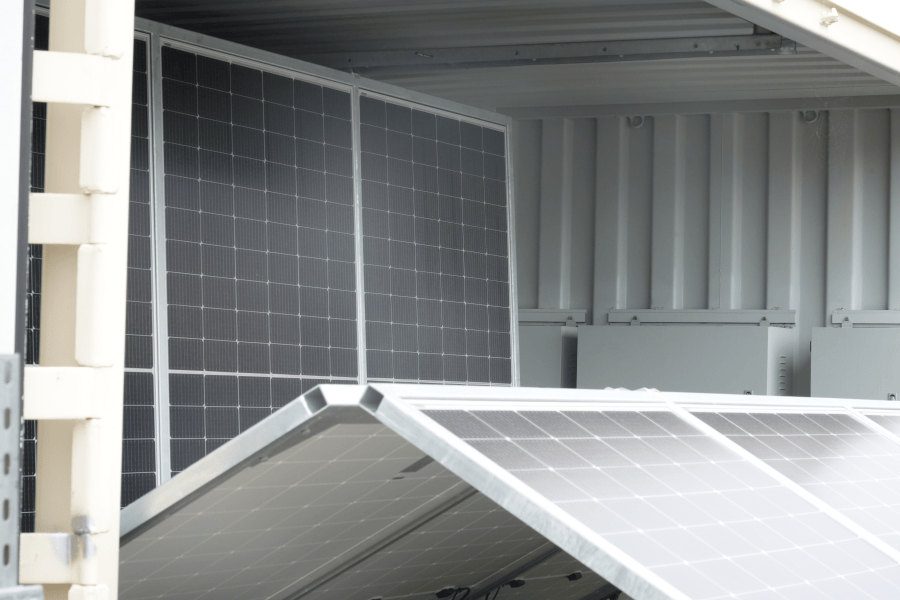
The Outcome: The system cut their diesel consumption by over 70% in the first quarter, and during a sudden grid outage, it seamlessly supported the critical load for 2 hours, preventing a potential production shutdown worth millions. The mining engineers could monitor everything remotely, which is a godsend when you don't want to send staff out in a blizzard.
Key Technical Insights from the Field
Let's break down two technical terms that are crucial here, in plain English.
1. C-Rate and Why It Matters for Thermal Management: Simply put, C-rate is a measure of how fast you charge or discharge the battery. A 1C rate means using the full capacity in one hour. At high altitudes, if you're running at a high C-rate (say, for rapid backup power), you're generating more heat, faster. A standard air-cooled system might not keep up, causing the battery to throttle its power to protect itself - just when you need it most. Our liquid-cooled design in the case study could handle sustained high C-rates without derating, because we could precisely pull heat away from each cell.
2. LCOE/LCOS - The True North Metric: Levelized Cost of Energy (or Storage) is your total lifetime cost divided by the energy you get out. In remote sites, factors that improve LCOE are: longer lifespan (from better thermal management), lower installation cost (from rapid deployment), and higher availability (from robust design). Spending 10-15% more on a factory-integrated, altitude-hardened unit often slashes the LCOE by 25% because it optimizes all these variables. That's the real business case.
What This Means for Your Project
If you're evaluating storage for a non-standard site - be it high-altitude, remote, or both - your checklist needs to change. Don't just ask about the battery cells. Ask:
- "Has the complete system been tested for thermal performance at low atmospheric pressure?"
- "What is the on-site commissioning timeline, and how many man-hours does it require?"
- "Can you provide the UL or IEC certification for the entire containerized unit, not just the components?"
The industry is moving beyond one-size-fits-all. The future is in pre-engineered, site-adapted solutions that de-risk deployment and operations where it's hardest to do our jobs. I'm curious, what's the biggest environmental or logistical hurdle you're facing in your next project?
Tags: Energy Storage Container UL Standard BESS LCOE Rapid Deployment Thermal Management High-Altitude
Author
James Zhang
20+ years agricultural energy storage engineer / Highjoule CTO