
Real-world Case Study: 1MWh Modular Solar Storage for Data Center Backup Power
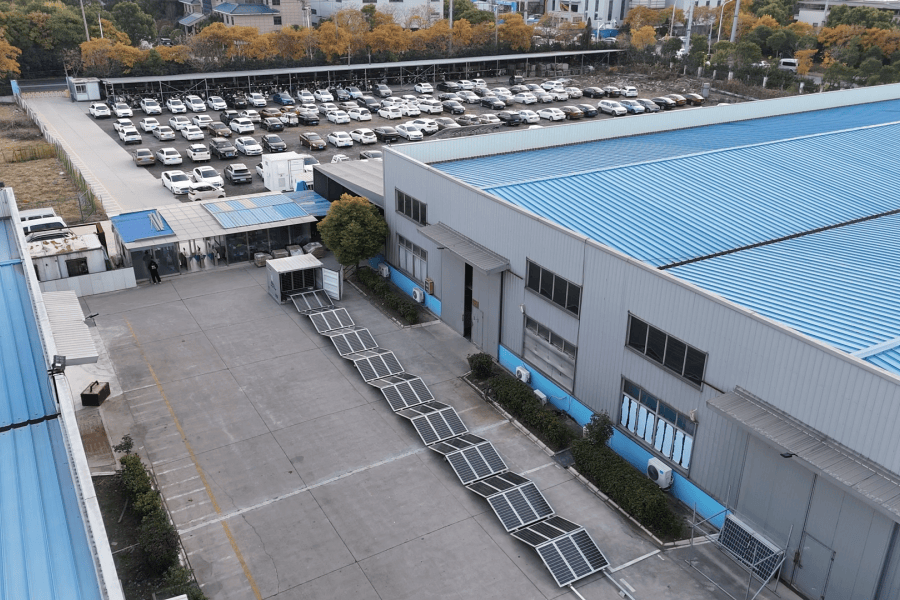
Table of Contents
- The Silent Achilles' Heel of Modern Data Centers
- Beyond the Generator: Why Traditional Backup Falls Short
- The Modular Answer: A Real-World 1MWh Case Study
- Breaking Down the Tech: C-rate, Thermal Management & LCOE in Plain English
- The Highjoule Approach: Safety, Standards, and Seamless Integration
- Your Next Step: Is Modular Storage Right for Your Operation?
The Silent Achilles' Heel of Modern Data Centers
Honestly, if you've been in this industry as long as I have, you've seen the shift firsthand. Data centers are no longer just server rooms; they're the beating heart of the digital economy. And the one thing that keeps every facility manager, CTO, and energy director up at night? Power continuity. A millisecond blip can mean millions in lost revenue and damaged reputation. The traditional playbook - diesel gensets - is looking more and more like a relic. It's loud, it's dirty, it's got a slow response time, and let's be real, in today's climate-focused world, firing up a diesel engine as a "backup" is a tough story to tell your stakeholders.
Beyond the Generator: Why Traditional Backup Falls Short
The problem isn't just philosophical; it's deeply practical and financial. On site, I've seen three core pain points magnify over the last five years:
- The Sustainability Gap: Corporate ESG goals are hard targets now. Relying on fossil-fuel backup directly conflicts with net-zero commitments. According to the International Energy Agency (IEA), data centers and transmission networks account for about 1% of global electricity-related GHG emissions - a figure under intense scrutiny.
- The Scalability Problem: Data centers grow in phases. Oversizing your backup power system for "future capacity" ties up enormous capital. Undersizing it risks availability. Traditional systems are monolithic; you can't just add a slice of backup power when you add a new server rack.
- The Efficiency & Cost Drain: Gensets sit idle 99.9% of the time, requiring costly maintenance for a moment you hope never comes. Their Levelized Cost of Backup (LCOB, if you will) is horrendous. Meanwhile, the grid you're trying to hedge against is getting greener but also, in many regions like California or parts of Germany, less predictable.

The Modular Answer: A Real-World 1MWh Case Study
This is where the rubber meets the road. Let me tell you about a project we were involved with at a colocation data center in the Rhine Valley, Germany. The challenge was classic: they needed to add 1MWh of backup capacity to support a new high-performance computing wing, but space was tight, permitting for fossil-fuel systems was a nightmare, and they needed the system to be operational in under 6 months.
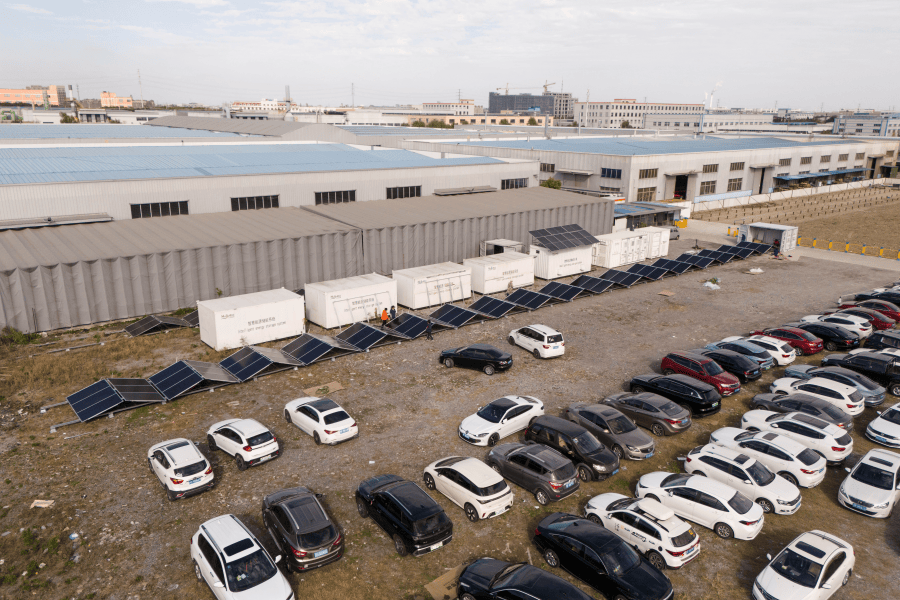
The solution was a scalable, modular Battery Energy Storage System (BESS) paired with their existing on-site solar PV. We didn't build a single, massive battery warehouse. Instead, we deployed four pre-fabricated, 250kWh containerized modules. Each module is a self-contained unit with its own battery racks, thermal management, and fire suppression. They were craned into position over a weekend and connected in parallel. The beauty? The first module was online and providing backup and solar load-shaving services within weeks of arrival, while the others were being commissioned. The client got value immediately, not two years down the line.
This modularity meant the system could be tucked into unused space on the property, avoiding a major construction project. And because it was battery-based, its response time is sub-20 milliseconds - far quicker than any spinning generator - seamlessly bridging the gap until the slower-starting generators (which are now sized smaller, as the BESS handles the critical first minutes) could come online if needed.
Breaking Down the Tech: C-rate, Thermal Management & LCOE in Plain English
I know, jargon alert. But these concepts are crucial for making a smart decision. Let's demystify them:
- C-rate (The "Sprint vs. Marathon" Rate): Think of this as how hard you can push the battery. A 1C rate means you can discharge the full 1MWh in one hour - great for short, high-power backup events. A 0.5C rate means it's optimized for a slower, 2-hour discharge. For data center backup where you need a huge power injection now to prevent a crash, a higher C-rate chemistry (like some LFP variants) is key. In our German case, we spec'd a system that could deliver its full backup power in under 30 minutes, matching the critical load profile.
- Thermal Management (The Unsung Hero): This is where many systems fail in the field. A battery pack's life and safety are dictated by its temperature. A passive air-cooled system might be cheaper upfront, but in a sealed container in Arizona or Spain, it'll degrade rapidly. We insist on active liquid cooling for high-density modular systems. It's like comparing a laptop fan to a car radiator - the precision and heat dissipation are on another level, ensuring 20+ year life even under repeated heavy cycles.
- LCOE (Levelized Cost of Energy): This is the real kicker. A modular BESS isn't just a cost; it's an asset. Unlike a diesel generator that only consumes money, a BESS can make money every day. It can perform peak shaving (buying cheap grid power at night, using it during expensive peak hours), provide frequency regulation services to the grid, and maximize consumption of your on-site solar. This daily revenue stream dramatically lowers the net LCOE. Suddenly, your backup system has a positive ROI.
The Highjoule Approach: Safety, Standards, and Seamless Integration
At Highjoule, our two decades of field experience have taught us that elegance in engineering is about simplicity and safety. Our modular systems are designed from the ground up to meet and exceed the toughest standards that matter to you: UL 9540 for the overall energy storage system, UL 1973 for the batteries themselves, and IEC 62443 for cybersecurity in the control systems. This isn't just a checkbox exercise; it's about de-risking your project for insurers, local fire marshals, and your own board.
How does this translate on the ground? It means our containerized modules arrive site-ready with all safety systems integrated and tested. It means our local deployment teams understand the NEC (for the US) or EN codes (for Europe) for interconnection inside and out. And perhaps most importantly for you as an operator, it means our remote monitoring and proactive O&M service can catch a potential issue with a cell string in Module C long before it ever impacts your backup readiness. We treat the system as a live, revenue-generating asset that needs care, not a dormant insurance policy you forget about.
Your Next Step: Is Modular Storage Right for Your Operation?
So, where does this leave you? If you're looking at a capacity upgrade, a new data hall, or simply feeling the pressure to green your operations while hardening your resilience, the modular 1MWh-scale solar-coupled storage is no longer a futuristic concept. It's a proven, bankable technology.
The question I'd leave you with is this: When you next plan for backup power, are you planning for a static, single-purpose cost center, or a dynamic, scalable asset that strengthens both your balance sheet and your sustainability story? The answer, in my experience on sites from Texas to Bavaria, is becoming clearer every day.
Tags: UL Standard BESS Modular Energy Storage Data Center Backup Microgrid IEEE Standards 1MWh Storage
Author
James Zhang
20+ years agricultural energy storage engineer / Highjoule CTO