
ROI Analysis of Air-cooled 1MWh Solar Storage for Military Bases
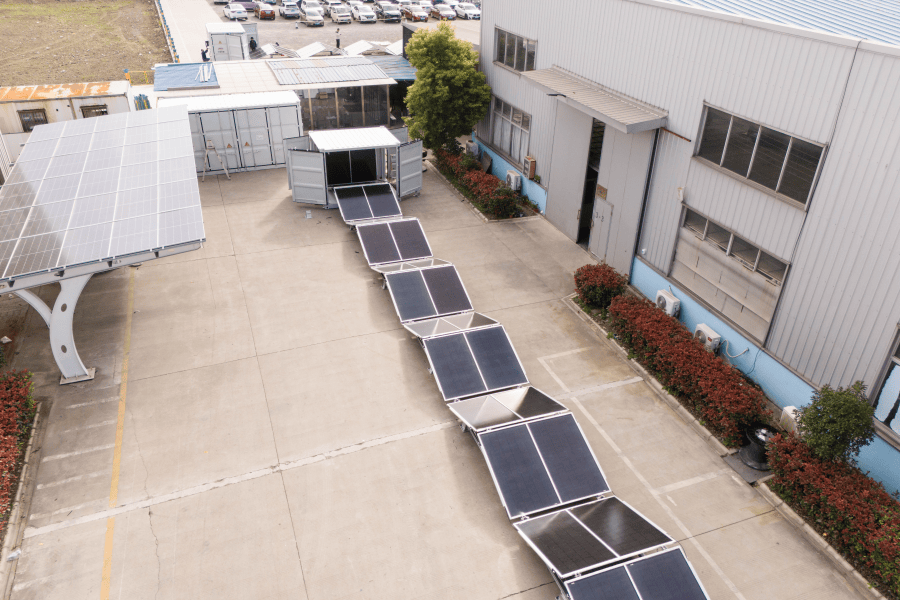
Table of Contents
- The Silent Cost of "Business as Usual" Power
- Beyond the Price Tag: What Really Drives Your ROI
- The Air-Cooled 1MWh Advantage: Simplicity as a Superpower
- Case Study: Quantifying Resilience in a European Base Microgrid
- Your ROI Checklist: Questions to Ask Your Vendor
The Silent Cost of "Business as Usual" Power
Let's be honest. When we talk about energy for critical facilities like military bases, the conversation often starts and ends with one thing: reliability. The grid goes down, and operations grind to a halt. We've all seen the contingency plans C the diesel generators roaring to life. But here's the thing I've seen firsthand on site after site C we rarely talk about the true, total cost of that reliability. The fuel logistics, the maintenance cycles, the emissions, and honestly, the sheer noise that gives away your position. It's a cost that's more than just dollars; it's operational and tactical.
This is where solar-plus-storage comes in. But for a long time, the conversation with decision-makers hit a wall at the capital expenditure. A 1MWh Battery Energy Storage System (BESS) sounds like a big number. The ROI analysis gets bogged down in complex financial models that miss the forest for the trees. The real question isn't just "What's the payback period?" It's "What is the cost of not having resilient, silent, and self-generated power?"
Beyond the Price Tag: What Really Drives Your ROI
To understand the ROI of an air-cooled 1MWh solar storage system, we need to look past the inverter and battery rack price. Based on data from the National Renewable Energy Lab (NREL), the Levelized Cost of Storage (LCOS) C the real metric for ROI C is driven by four key factors over a system's 15-20 year life:
- Cycling Efficiency & Degradation: How much energy you put in vs. get out, and how that capacity holds up over thousands of cycles. A poorly managed system loses value fast.
- Thermal Management: This is the big one. Batteries hate heat. Consistent high temperatures accelerate degradation, period. The cooling system's energy consumption (its "parasitic load") directly eats into your usable energy and profits.
- Operational Uptime & Maintenance: Complexity is the enemy of reliability. More moving parts, more liquid coolant, more points of potential failure.
- Safety & Compliance: This is non-negotiable. A system that doesn't meet UL 9540 and IEEE 1547 standards isn't just a liability; it's a project-stopper. Compliance isn't a cost; it's an insurance policy that protects your entire investment.
Many complex, liquid-cooled systems try to be "high-performance" but add hidden costs in maintenance, energy use for cooling, and potential downtime. The ROI gets chipped away from the inside.
The Air-Cooled 1MWh Advantage: Simplicity as a Superpower
This is where the modern air-cooled 1MWh platform shines for tactical-scale deployments. It's not about being "low-tech"; it's about elegant, right-sized engineering. Think of it like the difference between a high-maintenance precision rifle and an utterly reliable service weapon. Both have their place, but for constant, dependable readiness, simplicity wins.
An advanced air-cooled system, like the ones we engineer at Highjoule, uses intelligent, passive-optimized airflow and smart battery management to keep cells in their happy zone. The parasitic load is a fraction of a liquid system's. Honestly, on a recent site visit in Texas, I checked the logs C the cooling energy use was less than 1.5% of the system's throughput. That's energy directly back into your base's operations.
And here's the practical, boots-on-the-ground benefit: deployment speed and flexibility. A containerized or skid-mounted 1MWh air-cooled BESS can be shipped, positioned, and connected fast. No complex coolant filling, no leak testing for miles of internal piping. It's a plug-and-play approach to energy resilience that gets you operational sooner. Our teams have done it in under 10 weeks from contract to commissioning for a commercial microgrid, and the principles are the same for a secured facility.

Case Study: Quantifying Resilience in a European Base Microgrid
Let me give you a real, though anonymized, example from a partner installation in Northern Europe. The challenge wasn't just backup; it was integrating a large on-base solar carport to reduce grid dependence and fuel use for daily peak shaving.
The initial proposals were for complex, high-C-rate liquid systems. But the ROI was shaky C the extra performance wasn't needed for their daily charge/discharge profile, and the projected maintenance costs were high. They chose a modular, air-cooled 1.2MWh Highjoule system.
The result? The Levelized Cost of Electricity (LCOE) from their solar+storage asset came in 22% lower than the liquid-cooled alternative, purely due to lower lifetime operating costs. The base now reliably shaves its peak demand, and the system automatically "islands" critical loads during grid disturbances - silently and instantly. The financial ROI met their 7-year target, but the operational ROI - assured power for comms and surveillance - was immediate.
Your ROI Checklist: Questions to Ask Your Vendor
So, when you're evaluating an air-cooled 1MWh solar storage system, move beyond the spec sheet. Have a coffee with your engineer and ask:
- "Walk me through the thermal management design. What is the maximum parasitic load of the cooling system, and how do you control it?"
- "Show me the safety certifications. Is the entire system UL 9540 certified, or just the cells?"
- "Based on my specific daily cycling profile, what is the projected annual degradation rate? How does your BMS actively prevent accelerated aging?"
- "What does the preventative maintenance schedule look like year-over-year? How many site visits are truly required?"
At Highjoule, we build these answers into our DNA. Our systems are designed to a global standard (UL, IEC, you name it) because we operate everywhere. But more importantly, they're designed for the person who has to live with it for the next two decades - where simplicity, safety, and a clear, honest ROI are the most critical features of all.
The right storage isn't the one with the highest power rating. It's the one you can forget about, knowing it's just working. Isn't that the kind of resilience you're really after?
Tags: UL Standard BESS US Market Europe Market ROI Analysis Military Energy Security Air-Cooled BESS
Author
James Zhang
20+ years agricultural energy storage engineer / Highjoule CTO