
Scalable Modular BESS for Military Bases: Real-World Benefits & Drawbacks
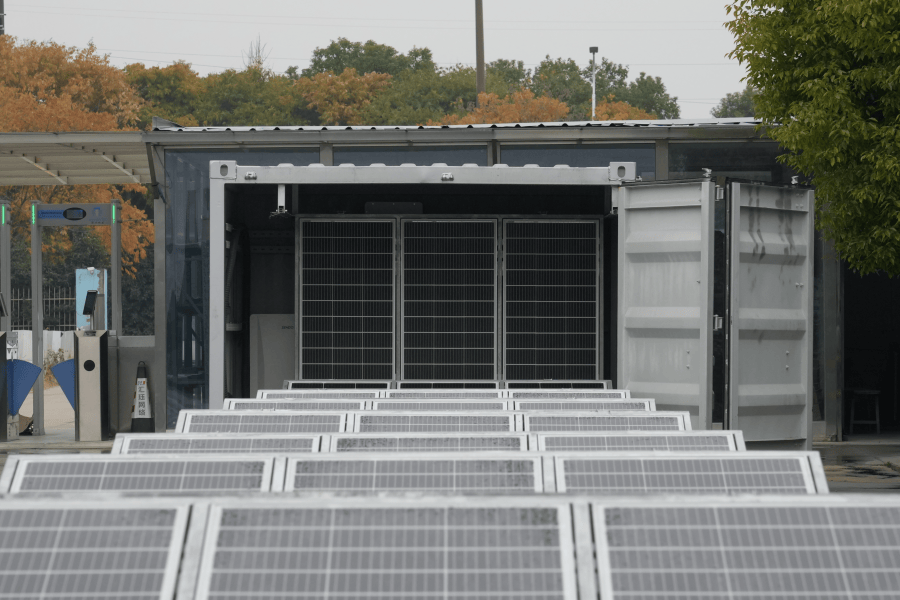
Table of Contents
- The Silent Problem: Why Legacy Power is Failing Our Bases
- The Modular Answer: More Than Just Plug-and-Play
- The Real Benefits: What You Actually Gain On-Site
- The Honest Drawbacks (And How We Navigate Them)
- A Real-World Case: From Blueprint to Reality
- Making the Decision: What to Ask Your Vendor
The Silent Problem: Why Legacy Power is Failing Our Bases
Let's be honest, over a coffee chat. For years, I've walked onto military bases across the US and Europe, and I see the same quiet struggle. The mission is evolving C more electric vehicles, advanced comms, sensitive electronics C but the energy backbone? It's often a patchwork of diesel gensets, aging infrastructure, and a grid connection that's a single point of failure. The Problem isn't just about backup power; it's about resilient, scalable, and silent energy that can adapt to tomorrow's threat, not just yesterday's.
The Agitation comes when you run the numbers. That diesel generator? It needs fuel logistics, creates a thermal and acoustic signature, and fails during extended outages if the fuel convoy can't get through. The U.S. Department of Defense has identified energy resilience as a critical strategic vulnerability. And honestly, a fixed, monolithic battery system isn't the full answer either. What happens when your energy needs grow by 50% in two years? You're looking at a costly, disruptive rip-and-replace project. I've seen this firsthand on site: planning that becomes obsolete before the concrete for the pad even dries.
The Modular Answer: More Than Just Plug-and-Play
This is where the Solution of scalable, modular lithium battery containers enters the picture. We're not talking about a giant, fixed battery box. Think of it as energy Lego. A standard 20- or 40-foot ISO container housing pre-integrated, UL 9540 and IEC 62619 certified battery modules, power conversion, and a state-of-the-art thermal management system. The core idea is scalability: you start with what you need for critical loads today, and as the mission expands, you simply add another identical container, stacking them in parallel. It's a phased capital approach that matches operational growth.

The Real Benefits: What You Actually Gain On-Site
So, what are the tangible Benefits? Let's move beyond the brochure.
- True Tactical Scalability: Need to power a new forward-operating location or integrate solar? Add modules or a whole new container. The system's energy management software (EMS) seamlessly integrates new units. This avoids the massive LCOE (Levelized Cost of Energy) spike of oversizing upfront.
- Engineered Resilience: Modularity means redundancy. If one module has an issue, the system isolates it and keeps running. Deploy containers in a distributed network across the base to eliminate a single point of failure. This isn't theoretical; it's how we design for critical infrastructure.
- Silent, Stealthy Operation: Zero emissions at point of use and near-silent operation. This reduces the logistical tail of fuel and enhances operational security. The thermal management is liquid-based and precise, keeping C-rate (the speed of charge/discharge) optimized without noisy fans that give away your position.
- Standards Compliance You Can Trust: For bases in California or Germany, local fire codes (like NFPA 855) and grid interconnection rules (IEEE 1547) are non-negotiable. A pre-certified container solution from a vendor like Highjoule, with deep experience in both UL and IEC realms, turns a regulatory maze into a straightforward path. It saves months of approval time.
The Honest Drawbacks (And How We Navigate Them)
Now, for the real talk. No solution is perfect. Here are the Drawbacks we discuss openly with every base commander or facility manager.
- Higher Upfront Cost per kWh (Sometimes): The engineering and certification packed into a modular container can mean a higher initial price tag compared to a bespoke, welded-shut system. But C and this is crucial C the total lifecycle cost and risk are often lower. You avoid future retrofit nightmares and the operational cost of downtime.
- Site Footprint & Logistics: A container needs a stable pad, proper spacing for maintenance and thermal management, and access for a crane. In a cramped, historic base, this can be a puzzle. Our deployment teams spend days on site assessment, sometimes recommending a "distributed micro-container" approach instead of one central unit.
- Technology Evolution Lock-in? "If I buy this container tech today, am I stuck in 5 years?" It's a fair question. The key is vendor selection. Our philosophy at Highjoule is open-architecture EMS and using standard, swappable battery modules. This means future chemistry improvements (like solid-state) can potentially be integrated into the same container shell, protecting your investment.
- Complex System Integration: Plugging a BESS into a base with legacy diesel gensets, solar, and complex load controls is not a USB connection. It requires deep integration work. This is where our 20+ years of field experience is the real product C ensuring the system talks to everything else flawlessly, acting as the brain of the microgrid, not just a battery.
A Real-World Case: From Blueprint to Reality
Let me give you a non-classified example from a European NATO partner country. They had a communications station with a 500 kW critical load, reliant on two aged diesel generators and a weak grid. The challenge was to add 4 hours of backup, integrate a planned solar array, and do it all within strict space constraints and local fire safety regulations (the German VdS was key).
We deployed two 40-foot modular containers, each with 1 MWh capacity, but initially only commissioned one. The second sat as a "cold standby" for a year. When funding for the solar carport came through, we activated and interconnected the second container in under a week. The system now does peak shaving, manages the solar PV, and provides seamless transition during grid outages. The base commander's biggest compliment? "We forgot it's there until the monthly report shows how much diesel we saved." The NREL has great data on how this kind of stacking benefits works long-term.

Making the Decision: What to Ask Your Vendor
If you're evaluating a scalable modular BESS, don't just ask for a datasheet. Ask these questions from my field notebook:
- "Walk me through your thermal management design for a 95F (35C) day at full 1C discharge. Show me the CFD models."
- "How does your EMS handle the transition between grid, BESS, and legacy generators? Can I see a simulation or a case study log?"
- "What is your actual local service and maintenance footprint? If a module fails at 2 AM in winter, what happens?" (At Highjoule, we structure our contracts with local, cleared technical partners for this exact reason).
- "Beyond UL 9540, can you provide the specific third-party test reports for seismic and EMI/RFI hardening relevant to our environment?"
The right modular system isn't just a product; it's a long-term partnership for energy resilience. It's about finding a vendor who talks openly about both the benefits and the drawbacks, because they have the experience to manage the latter. So, what's the first energy challenge you'd tackle if your power infrastructure could adapt as fast as your mission does?
Tags: UL Standard BESS Modular Energy Storage IEEE Standards Military Energy Security Scalable Lithium Battery
Author
James Zhang
20+ years agricultural energy storage engineer / Highjoule CTO