
Scalable Modular BESS for Mining: Mauritania 5MWh Case Study & Global Lessons
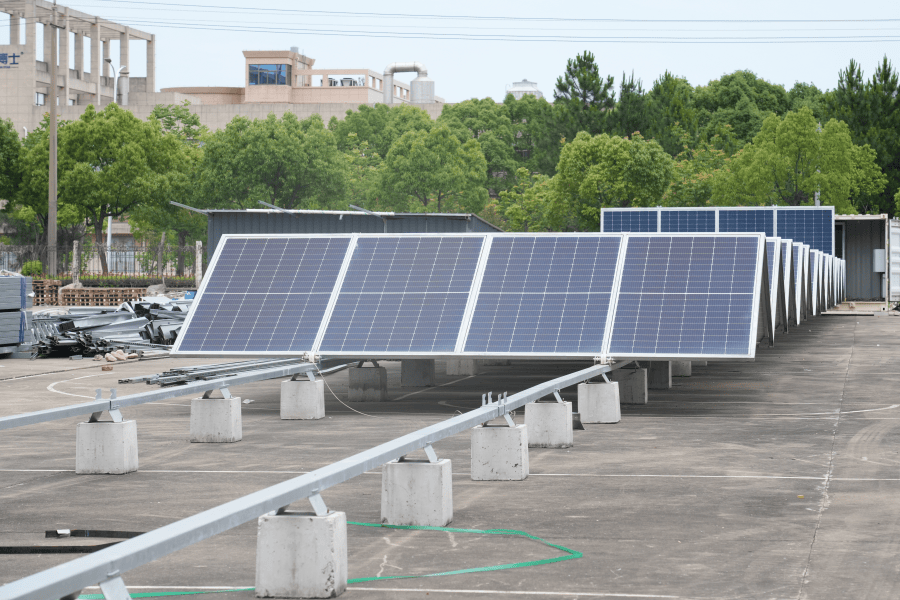
When the Grid Ends and the Work Begins: A 5MWh Lesson from the Mauritanian Desert
Honestly, after two decades on sites from the Australian Outback to the Texas sunbelt, I've learned one universal truth: industrial operations, especially mining, don't have the luxury of waiting for the perfect grid. Their power challenges are immediate, costly, and mission-critical. I want to talk about a project that perfectly encapsulates this C a scalable, modular 5MWh Battery Energy Storage System (BESS) we deployed for a mining operation in Mauritania. This isn't just a remote case study; it's a masterclass in solving problems that resonate deeply with industrial players in Europe and North America.
Quick Navigation
- The Real Problem: More Than Just Backup Power
- Why It Hurts: The High Cost of Unreliable Power
- The Modular Answer: Lessons from Mauritania
- Beyond the Battery: The Tech That Makes It Work
- Bringing It Home: Your Next Steps
The Real Problem: More Than Just Backup Power
When we talk to facility managers in the US or plant directors in Germany, the initial conversation often starts with "backup power." But scratch the surface, and the real pain points emerge. It's about voltage stability during heavy equipment cycles. It's about managing demand charges that can constitute up to 70% of a commercial electricity bill in some regions. It's about integrating on-site renewables like solar, only to find the local grid can't handle the intermittent feed-in. The core problem isn't just outages; it's an inflexible, expensive, and sometimes fragile power ecosystem.
Why It Hurts: The High Cost of Unreliable Power
Let's agitate that a bit. I've seen firsthand a processing plant in Nevada shut down for 45 minutes due to a voltage dip C not a blackout, just a dip. The cost? Over $250,000 in lost production and spoiled batch materials. According to the National Renewable Energy Laboratory (NREL), power quality issues cost U.S. industry billions annually. For mining and heavy industry, the calculus is brutal: diesel gensets are noisy, polluting, and have soaring fuel costs, while traditional grid upgrades can take years and capital commitments that make any CFO wince.
The challenge in places like Mauritania is just a more extreme version of what you might face: a remote location, harsh environment (think dust, heat), and a grid connection that's more of a suggestion than a guarantee. The risk isn't just operational; it's financial and reputational.
The Modular Answer: Lessons from Mauritania
This is where the Mauritania project shines as a scalable solution. The client needed to secure power for a critical mineral processing facility. The goals were classic: ensure continuous operation, integrate a planned solar PV array, and avoid a massive, upfront capex on grid infrastructure.
Our solution was a 5MWh utility-scale BESS, but with a key philosophy: modular scalability. Instead of one monolithic container, we deployed a system built with standardized, factory-integrated modules. Think of it like building with powerful, self-contained LEGO blocks.

How It Worked On the Ground:
- Phase 1: The system was commissioned to provide immediate grid stabilization and backup, allowing the facility to ride through frequent grid disturbances. This alone prevented dozens of potential production halts.
- Phase 2: As the solar farm came online, the BESS seamlessly began arbitrage C storing excess solar generation during the day and discharging during peak evening hours. This drastically reduced fuel consumption from existing gensets.
- The Scalability Kick: The mine's power needs are growing. Next year, they can add more energy "blocks" to the existing system with minimal engineering and downtime. The foundation, from the power conversion system to the UL 9540-certified enclosures, was designed for this growth from day one.
This approach directly translates to a project I advise on in Canada's mining region. They're facing similar grid constraints and are using the same modular blueprint to phase their investment alongside their expanding operations, avoiding a massive single capital outlay.
Beyond the Battery: The Tech That Makes It Work
As an engineer, what excites me isn't just the box, but what's in it and how it thinks. Let's demystify two key terms crucial for any industrial decision-maker:
| Term | What It Means | Why It Matters for You |
|---|---|---|
| C-rate | Essentially, the speed of charging/discharging. A 1C rate means a battery can be fully charged or discharged in 1 hour. | For smoothing out the violent power demands of a crusher or a large mill, you need a high C-rate (like 1C or more). This means the BESS can inject or absorb power very quickly, acting like a shock absorber for your electrical system. The Mauritania system uses cells optimized for this high-power, reliable cycling. |
| Thermal Management | How the system keeps its cool (literally). This isn't just an air conditioner; it's a precision climate control system. | In the 50C (122F) Mauritanian heat or a humid Ohio summer, battery life and safety hinge on this. A poorly managed system degrades fast. Our design uses an indirect liquid cooling system C it's like a car radiator for each battery module. It's quieter, more efficient, and crucially, keeps temperature variation between cells to a minimum, which is a huge factor in longevity and safety. This is non-negotiable for meeting IEC 62933 standards. |
And then there's the Levelized Cost of Storage (LCOS). This is your true north metric. It's the total lifetime cost of owning and operating the BESS per MWh delivered. By focusing on long-life cells, superior thermal management (which slows degradation), and a modular design that allows for easy future expansion instead of premature replacement, you actively drive down the LCOS. You're not just buying a battery; you're buying a lower long-term cost of resilient energy.

The Highjoule Technologies Ltd. Difference in This Context
Our entire philosophy is built around this on-the-ground reality. Our modular platforms are pre-certified to UL 9540 and IEC 62933, not as an afterthought, but as a core design principle. This means faster, smoother permitting for you, especially under the stricter AHJ (Authority Having Jurisdiction) reviews we see in California or New York. The system in Mauritania wasn't a one-off; it's a product of our standard, yet highly adaptable, architecture. We provide the localized deployment support and the performance analytics platform to turn this hardware into a reliable, profit-protecting asset on your balance sheet for decades.
Bringing It Home: Your Next Steps
So, what does a mining operation in West Africa have to do with your industrial facility in Rotterdam or Arizona? Everything. The principles of scalable, resilient, and financially savvy power are universal. The technology proven in the desert is the same ensuring stability in a Bavarian manufacturing park or offsetting demand charges for a chemical plant in Louisiana.
The question isn't whether you need more resilient power - you already know that. The question is how to build that resilience in a way that's flexible, compliant, and economically intelligent. Does your current energy roadmap allow for phased, grow-as-you-go investment? How would your operational risk profile change with a sub-100ms response to a grid fault?
The conversation starts with a single, scalable module. Where could yours begin?
Tags: UL Standard BESS Utility-Scale Energy Storage Mining Operations IEC Standard Scalable Modular Design
Author
James Zhang
20+ years agricultural energy storage engineer / Highjoule CTO