
Novec 1230 Fire Suppression in Pre-integrated PV BESS for Data Centers
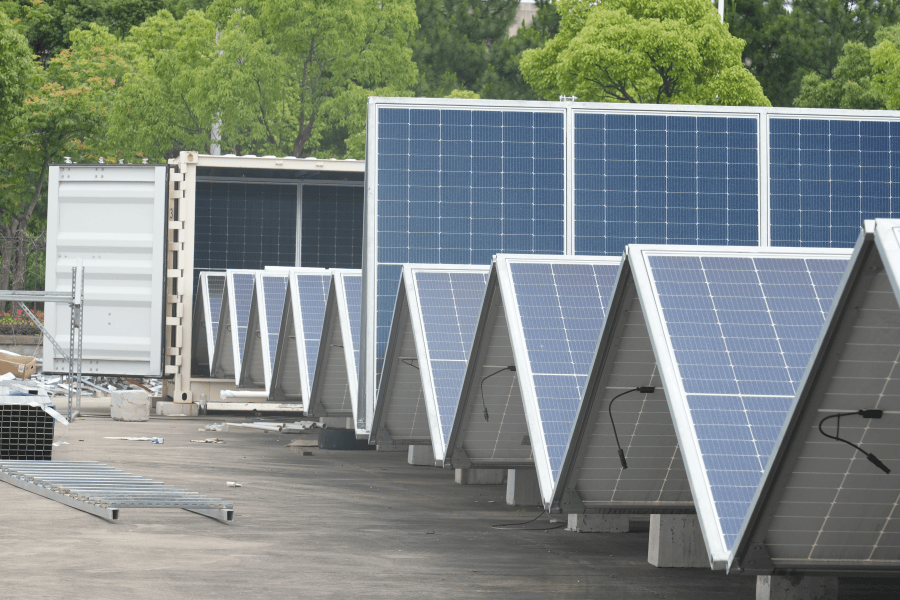
Table of Contents
- The Silent Threat to Your Data Center's "Last Line of Defense"
- Why This Keeps Engineers Up at Night: The Agitation Phase
- Enter the Integrated Solution: More Than Just a Box
- A Real-World Look: The California Colocation Case
- Beyond the Gas: The Technical Symphony of a Safe Container
- Making the Business Case: It's Not Just About Compliance
The Silent Threat to Your Data Center's "Last Line of Defense"
Let's be honest. When we talk about data center resilience, the conversation is dominated by Tier ratings, redundant fiber paths, and dual-powered UPS systems. Rightly so. But there's a critical, and often under-scrutinized, component in the power chain: the backup energy storage system. For many facilities integrating solar-plus-storage, this means a Battery Energy Storage System (BESS) sitting in a container outside. It's your last line of defense when the grid and the generators have a bad day. But here's the problem I've seen firsthand on site: that very container, packed with high-energy-density lithium-ion batteries and complex power electronics, introduces a significant, concentrated fire risk right on your property. Traditional sprinkler systems? They're great for structure fires, but against a cascading thermal runaway event in a sealed container, they're often ineffective and cause massive collateral water damage to the assets you're trying to protect.
Why This Keeps Engineers Up at Night: The Agitation Phase
The risk isn't theoretical. The NFPA and standards like UL 9540A are pushing for rigorous testing because the stakes are enormous. Imagine a thermal event in a standard BESS container. The fire service might have to adopt a "defensive" strategy - essentially letting it burn out while protecting exposures. That means hours of downtime, toxic smoke, and a total loss of your backup power asset. For a data center, that's not an equipment failure; it's a direct threat to business continuity and a potential reputational catastrophe.
I was on a project in Germany where the local fire marshal halted a BESS deployment for six months because the fire suppression plan was deemed insufficient. The delay cost the developer nearly six figures in lost revenue and redesign. The core issue? A disconnect between the battery technology, the enclosure design, and the fire suppression system. They were sourced separately, integrated on-site, and left gaps in safety coverage. This fragmented approach is, unfortunately, still too common.
Enter the Integrated Solution: More Than Just a Box
This is where the concept of a Pre-integrated PV Container with Novec 1230 Fire Suppression shifts the paradigm. It's not just a container with batteries and a gas tank bolted on as an afterthought. Think of it as a safety-critical, self-contained power plant designed from the ground up with a single, non-negotiable priority: to detect and suppress a fire at its earliest possible stage, without harming personnel or the environment, and without leaving a damaging residue.
Novec 1230 fluid is the key enabler here. It's a clean agent - it extinguishes fire primarily by heat absorption, leaving no residue. That means no corrosive mess to clean up on your sensitive battery modules and inverters, allowing for a potential return to service after a thorough safety check. Its low toxicity and zero ozone depletion potential make it a responsible choice, often easing the permitting process with local authorities who are increasingly wary of other chemical agents.

A Real-World Look: The California Colocation Case
Let me walk you through a project we were involved with at Highjoule for a major colocation provider in Silicon Valley. Their challenge was classic: they needed to add solar PV to meet sustainability goals and provide backup power, but space was at a premium, and the risk profile had to be absolute zero. A traditional setup with separate components would have taken up too much space and created a safety integration headache.
We delivered a pre-integrated solution: a single 40-foot container housing a 1.5 MWh BESS, PV inverters and combiners, and a fully engineered Novec 1230 system. The magic was in the pre-engineering. The fire detection used multi-spectrum sensors (smoke, heat, gas) specifically tuned for lithium-ion off-gassing. The Novec piping was routed to ensure uniform distribution within each battery rack, not just in the aisle. This is critical - by the time smoke reaches an aisle-way detector, a cell may already be in runaway.
The entire system, including the suppression logic, was tested and validated as a unit to meet UL 9540 and the local fire code (CFC) before it ever left our factory. On-site, it was a "plug-and-play" installation for the electrical and PV connections. The client's facilities team got a single operations manual and a unified interface. The fire marshal signed off in weeks, not months, because we presented a certified, integrated system, not a collection of parts.
Beyond the Gas: The Technical Symphony of a Safe Container
Focusing only on the fire suppression gas is like praising a surgeon only for their scalpel. The real expertise is in the full procedure. In a well-designed pre-integrated container, the Novec system works in concert with other critical systems:
- Thermal Management: The number one way to prevent a fire is to prevent thermal runaway. Our containers use a dedicated, closed-loop liquid cooling system that maintains optimal cell temperature (typically 25C 2C). This precise control minimizes stress, extends battery life, and keeps the system far from dangerous thermal thresholds. Honestly, a good thermal system is your first and most important fire suppression layer.
- Advanced Ventilation & Gas Detection: Continuous air sampling monitors for volatile organic compounds (VOCs) and hydrogen, the early heralds of cell failure. If detected, the system can isolate a rack, trigger alarms, and prepare the suppression system for a targeted discharge.
- C-rate Management: In backup applications, the discharge rate (C-rate) during a grid outage is carefully managed by the energy management system (EMS). A controlled, steady discharge generates less heat than a frantic, high-C-rate dump, contributing to overall system stability and safety.
When you bundle this with Highjoule's focus on UL/IEC-compliant cell selection and module design, you're not just buying a container; you're buying a risk-mitigated outcome.
Making the Business Case: It's Not Just About Compliance
Sure, meeting NFPA, IEC, and UL standards is table stakes. But the value goes deeper. A pre-integrated, safety-first container directly impacts your Levelized Cost of Energy (LCOE) and total cost of ownership.
How? Reduced insurance premiums are a big one. Insurers are becoming savvy to BESS risks. Showing them a UL 9540A-tested system with a clean agent suppression designed-in can lead to significant savings. Faster permitting gets your asset online and revenue-generating sooner. Reduced downtime risk protects your core business. And the non-residue property of Novec 1230 means a potential asset recovery after an incident, avoiding a total write-off.
For the data center operator, the question isn't just "Can this system provide backup power?" It's "Can this system provide backup power without introducing an unacceptable liability?" A Real-world Case Study of Novec 1230 Fire Suppression Pre-integrated PV Container for Data Center Backup Power demonstrates that the answer can be a definitive, safe, and reliable yes. It's about moving from viewing the BESS as a necessary risk to embracing it as a fortified, resilient asset.
So, next time you're evaluating your backup power strategy, look beyond the kWh and kW ratings. Ask your provider: "Walk me through your fire suppression strategy. Not just the what, but the how it's integrated, tested, and certified." The depth of their answer will tell you everything you need to know about the safety and reliability of your last line of defense.
Tags: UL Standard BESS Data Center Backup PV Integration Novec 1230 Fire Suppression Pre-integrated Container
Author
James Zhang
20+ years agricultural energy storage engineer / Highjoule CTO