
Scalable Modular BESS for Industrial Parks: Cutting Costs & Boosting Resilience
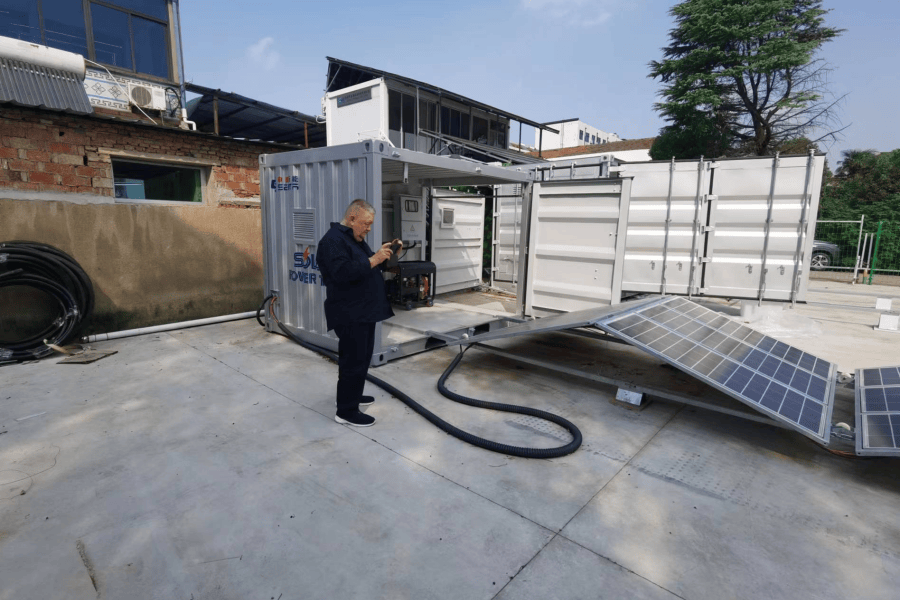
Table of Contents
- The Quiet Pressure on the Grid (and Your Bottom Line)
- Why "One-Size-Fits-All" is a Costly Mistake
- A Real-World Case: From Blueprint to Power in 90 Days
- The Nuts and Bolts: What Makes a Modular BESS Truly Work
- Your Next Step: Is a Modular BESS Right for Your Site?
The Quiet Pressure on the Grid (and Your Bottom Line)
Let's be honest. If you're managing an industrial park or a large manufacturing facility, your relationship with the grid is... complicated. You need rock-solid reliability, but peak demand charges keep climbing. You want to integrate solar, but the sun doesn't always shine during your peak operating hours. And honestly, I've seen this firsthand on site - the anxiety when a grid alert goes out, threatening curtailment or worse, forced shutdowns.
The numbers back this up. The International Energy Agency (IEA) notes that global electricity demand from industry is set to grow by over 3% annually, with much of that concentrated in energy-intensive manufacturing hubs. At the same time, grid infrastructure in many parts of the U.S. and Europe is aging. This creates a perfect storm of volatility, where energy isn't just an operational cost - it's a direct business risk.
Why "One-Size-Fits-All" is a Costly Mistake
For years, the go-to solution for backup power was the diesel generator. It's familiar, but it's loud, dirty, and increasingly expensive to run. For large-scale storage, some turned to massive, custom-built battery systems. Here's the agitation: these monolithic projects are often nightmares. They require a huge upfront capital commitment, extensive custom engineering, and if you need to expand? Forget it. It's like trying to add a room to a house that wasn't designed for it - messy, slow, and prohibitively expensive.
The real pain point isn't just getting storage; it's getting the right amount of storage that can grow with you. A facility's load profile changes. Maybe you're adding a new production line, or your onsite solar capacity is increasing. A rigid system locks you into yesterday's needs.
This is where the concept of the scalable modular lithium battery storage container shifts the entire paradigm. Instead of a single, fixed asset, think of it as building with LEGO blocks. You start with what you need today, and add pre-engineered, pre-tested modules as your needs evolve. It's the solution that finally aligns with how businesses actually grow.
A Real-World Case: From Blueprint to Power in 90 Days
Let me walk you through a project we completed last year for a mid-sized automotive parts supplier in Baden-W1rttemberg, Germany. Their challenge was classic: a 5 MW solar array on their rooftops was generating excess power midday, but they couldn't use it during their evening production shift. They were also facing steep grid fees during two daily peak windows.
Their initial ask was for a 2 MWh system. But during our site audit, we discussed their 3-year expansion plan. A custom 2 MWh system would have been a dead-end. Instead, we deployed a Highjoule Scalable Modular Container. The base unit was a 1 MWh, UL 9540 and IEC 62619 certified all-in-one container, housing battery racks, thermal management, and power conversion. The magic was in the design: we left space and pre-wired for two additional 1 MWh modules.
Deployment took 90 days from contract signing to commissioning. The first module immediately started arbitraging energy (storing cheap solar, discharging during expensive peaks) and providing backup for critical loads. Just nine months later, as a new contract demanded more output, they activated the option for the second module. We plugged it in - literally - and had it online in under two weeks. No major construction, no re-permitting the entire system. The CFO loved it because the CapEx was staggered with actual business growth.

The Nuts and Bolts: What Makes a Modular BESS Truly Work
As an engineer who's commissioned systems from Texas to Poland, I can tell you that not all "modular" claims are equal. Here's what to look for beyond the buzzword:
- True Electrical & Physical Scalability: It's not just about placing another box next to the first. The internal busbar, cabling, and cooling infrastructure must be designed from the start to handle the full, future capacity. At Highjoule, we design our container skids with this "plug-and-play" expansion as a core principle, which drastically reduces future integration costs.
- Thermal Management is Non-Negotiable: Lithium batteries perform best, and last longest, within a tight temperature range. A packed container in Arizona or Spain needs a robust, redundant cooling system. We use a liquid-cooled design that's far more efficient and uniform than air-cooling, especially as you add more modules and heat density increases. This directly protects your investment and optimizes the Levelized Cost of Storage (LCOS).
- C-Rate Isn't Just a Spec Sheet Number: The C-rate tells you how quickly a battery can charge or discharge. A 1C rate means a 1 MWh battery can output 1 MW for one hour. For industrial applications, you often need high bursts of power (like preventing a peak demand spike) rather than long, slow discharges. Our modules are engineered for flexible C-rates, allowing the same physical asset to be tuned for either power-intensive or energy-intensive applications. This flexibility is what delivers the fastest payback.
- Standards are Your Safety Net: In the U.S., UL 9540 is the critical safety standard for energy storage systems. In the EU, it's IEC 62619. A modular system must have each certified module and be certified as a whole assembled system. This isn't just paperwork - it's a rigorous testing protocol for fire, electrical safety, and system controls that we undergo so you don't have to worry.

Your Next Step: Is a Modular BESS Right for Your Site?
So, where does this leave you? If you're looking at your facility's energy bills, sustainability goals, or expansion plans with a sense that your current power setup isn't future-proof, a modular approach is worth a serious conversation.
The business case typically hinges on three things: reducing peak demand charges, increasing self-consumption of onsite renewables, and adding a layer of energy resilience that acts like an insurance policy. The modular container model makes this case stronger by de-risking the initial investment and aligning capital expenditure with tangible growth milestones.
What's the one question you should ask a potential vendor? Honestly, ask them: "Walk me through the exact process, timeline, and cost to add 50% more capacity to this system in two years." Their answer will tell you everything about how scalable and client-centric their solution really is. We at Highjoule built our company around answering that question seamlessly, because in the real world, business needs change. Your energy assets should be able to change with them.
Tags: UL Standard Renewable Energy Integration BESS LCOE Modular Energy Storage Industrial Parks
Author
James Zhang
20+ years agricultural energy storage engineer / Highjoule CTO