
Scalable Mobile BESS for Remote Island Microgrids: A Real-World Case Study
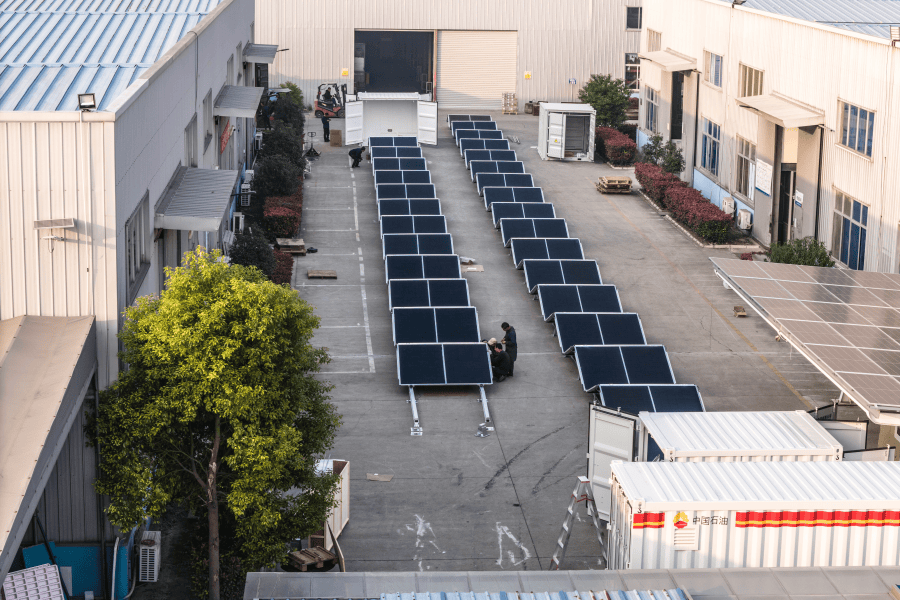
Powering the Last Mile: A Real-World Look at Mobile BESS for Island Grids
Hey there. If you've ever been involved in an energy project on a remote island or a far-flung industrial site, you know the drill. The diesel generators are roaring, fuel costs are eating into your budget, and the idea of integrating renewables feels like a logistical nightmare. I've been on those sites, felt the vibration of those gensets, and seen the spreadsheets where the numbers just don't add up for a sustainable future. Today, I want to share a solution that's moving from concept to reality: the scalable, modular mobile power container. It's not just a product; it's a deployment philosophy that's changing how we think about power in isolated places.
Quick Navigation
- The Core Problem: Why Traditional Approaches Fall Short
- The Real Cost: More Than Just Diesel Bills
- The Solution Unpacked: Modularity in Motion
- Case in Point: A Mediterranean Island's Journey
- Beyond the Box: Making It Work For You
The Core Problem: Why Traditional Approaches Fall Short
Let's be honest. For decades, the blueprint for remote power has been remarkably simple: size a diesel generator for peak load, build a shed for it, and manage a complex, expensive fuel supply chain. The push for decarbonization throws a wrench in this model. Adding solar PV or wind creates instability - the classic "duck curve" on a micro-scale. A fixed, oversized Battery Energy Storage System (BESS) seems like the answer, but the economics for a small community or mine can be prohibitive. The upfront CapEx is daunting, and if the project scope changes or the community grows, you're stuck with an inflexible asset.
The Real Cost: More Than Just Diesel Bills
The pain isn't just operational; it's financial and environmental. The International Energy Agency (IEA) has highlighted that electricity costs in isolated systems can be up to 10 times higher than in interconnected grids, primarily driven by fuel. But it's the Levelized Cost of Energy (LCOE) that tells the full story. LCOE accounts for all lifetime costs - installation, fuel, maintenance, replacement. For a diesel-only system, fuel volatility dominates. For a diesel+solar hybrid without storage, you end up with curtailment (wasting free solar energy) and minimal diesel offset. The financial and environmental promise falls flat.
On top of that, meeting Western standards like UL 9540 for BESS safety or IEEE 1547 for grid interconnection becomes a custom engineering challenge for every unique site, driving up time and cost. I've seen projects delayed for months waiting on customized container designs and site-specific certifications.
The Solution Unpacked: Modularity in Motion
This is where the concept of the scalable, modular mobile power container shifts the paradigm. Think of it not as a single product, but as a "building block" approach to microgrids. The core idea is simple: self-contained, factory-built power modules that are pre-certified to relevant standards (UL, IEC, etc.), shipped on standard trailers, and connected in parallel on-site to meet exact power (kW) and energy (kWh) needs.
Honestly, the beauty is in the logistics. Instead of pouring a giant foundation and building a bespoke BESS house, you prepare a simple, level pad. The modules arrive, are positioned, and connected via plug-and-play electrical and communication interfaces. Need more capacity in two years as tourism grows? Drop off and connect another module. It's scalability without stranded assets.
Case in Point: A Mediterranean Island's Journey
Let me sketch a scenario based on real deployments I've supervised (specifics anonymized for confidentiality). A small Mediterranean island community of about 2,000 people relied on two aging diesel generators. Their goal: integrate a 1 MW solar farm and reduce diesel consumption by over 70%. The challenge was the massive, variable solar output overwhelming the mini-grid.
A fixed 2 MWh BESS was proposed initially. But the community's seasonal population swells from 2,000 to 5,000 in summer, and a future marina expansion was planned. A fixed system would be undersized in 3 years. Our proposal was a mobile, modular solution: two 500 kW / 1 MWh containerized BESS units to start.

Each container was a fully integrated power plant: battery racks, HVAC thermal management system, PCS, and fire suppression, all built and tested in-factory to UL 9540. They were shipped complete, requiring only foundation anchors and interconnection. The thermal management was crucial - island ambient temperatures could hit 40C (104F). A robust, independent cooling system in each module maintained optimal cell temperature, ensuring performance and longevity.
The result? Diesel runs were cut by 75% in the first year. The solar curtailment dropped to near zero. And the clincher: when the marina expansion was approved, the utility didn't need a new feasibility study. They simply procured a third identical module, slotted it in, and increased system capacity by 50% in a matter of weeks.
The Expert Take: What Really Matters On Site
From a technical perspective, three things make or break these projects, and they're often glossed over in brochures.
- C-rate Isn't Just a Spec: It's the battery's "power personality." A 1C rate means a 1 MWh battery can discharge 1 MW for 1 hour. For island grids dealing with sudden cloud cover or a generator trip, you need a high C-rate (like 0.5C to 1C) to provide rapid, stabilizing power. Our modules are engineered for this dynamic response, not just slow, steady discharge.
- Thermal Management is the Guardian of Lifespan: Batteries degrade with heat. In a sealed container under the sun, without superior cooling, you could lose 20% of your capacity years early. We insist on liquid cooling or forced-air systems with climate-specific setpoints. It's a CapEx that saves massive OpEx.
- The True LCOE Winner: By reducing diesel fuel and maintenance, delaying generator upgrades, and allowing incremental capital deployment, the modular mobile BESS achieves a lower LCOE than alternatives. The financial model shifts from a large, sunk cost to a scalable, pay-as-you-grow operational expense.
Beyond the Box: Making It Work For You
At Highjoule Technologies, we've built our Mobile Power Platform around this exact philosophy. The technology inside is critical, but the real value is in the deployment model. Our containers are designed from the ground up to meet UL and IEC standards, not adapted to them. This means faster permitting and peace of mind for local authorities.
But the support doesn't stop at delivery. Our local service teams provide commissioning and ongoing performance monitoring. We can manage the system remotely, but more importantly, we train local technicians - empowering the community to maintain their own energy future. It's about leaving behind capability, not just hardware.
So, if you're looking at a remote microgrid project and the numbers for a traditional fix just aren't working, maybe it's time to think in modules. What would a scalable, phase-able approach do for your project's economics and risk profile?
Tags: UL Standard BESS LCOE Europe US Market Remote Island Microgrid Scalable Modular Container
Author
James Zhang
20+ years agricultural energy storage engineer / Highjoule CTO