
Step-by-step Installation of Tier 1 Battery Cell Lithium Battery Storage Container for Telecom Base Stations
Contents
- The Silent Challenge: Why Your Telecom BESS Installation Isn't Just "Plug and Play"
- The Real Cost of a Rushed Job: Safety, Downtime, and Wasted CAPEX
- The Blueprint for Success: A Proven, Step-by-Step Installation Philosophy
- Step 1: The Pre-Site Audit C More Than Just a Site Visit
- Step 2: Site Preparation and Foundation C Building on Solid Ground
- Step 3: Unpacking and Pre-Commissioning Checks C The "Doctor's Visit" for Your BESS
- Step 4: Rigging, Placement, and Mechanical Integration C The Precision Move
- Step 5: Electrical and Control Systems Integration C Making the Connections That Matter
- Beyond the Checklist: The Expert Insights That Save Your Project
The Silent Challenge: Why Your Telecom BESS Installation Isn't Just "Plug and Play"
Let's be honest. When you're managing a portfolio of telecom sites, the pressure is on to get that new battery storage container online. The grid's getting less predictable, power quality issues are popping up, and your backup runtime needs a serious boost. The temptation is to treat the installation like any other piece of hardware C deliver, connect, flip the switch. I've been on sites where that was the plan. And I've also been the one called back six months later when the system underperforms, or worse, triggers a safety alarm.
The reality we face in the field is that a lithium battery energy storage system (BESS), especially one built with Tier 1 cells for critical telecom infrastructure, is a complex electrochemical asset. It's not a diesel generator. Its long-term health, safety, and return on investment are directly baked into the installation process. A report by the National Renewable Energy Laboratory (NREL) highlighted that improper installation is a leading contributor to underperformance in stationary storage projects, impacting everything from cycle life to round-trip efficiency.
The Real Cost of a Rushed Job: Safety, Downtime, and Wasted CAPEX
So what happens when the installation is an afterthought? The aggravation compounds quickly. First, there's the safety risk. A container placed on an uneven foundation experiences subtle stresses. Cable lugs not torqued to spec create hot spots. A ventilation path blocked during setup compromises the entire thermal management system. These aren't theoreticals; I've seen this firsthand on site. These issues may not cause immediate failure, but they accelerate aging and create latent faults.
Then comes the financial hit. A poorly integrated BESS can have a higher "levelized cost of energy" (LCOE) C a key metric we track for our clients at Highjoule. Think about it: if your system's efficiency drops by just 3% due to poor wiring or calibration, that's energy you paid for but never get to use, year after year. Or if the battery degrades 20% faster because its cooling is suboptimal, your replacement cycle comes much sooner. Suddenly, that CAPEX looks a lot less attractive.
Finally, there's operational downtime. A base station going dark because the BESS didn't take over during an outage isn't just a service level agreement (SLA) penalty. It's a hit to your network's reputation for reliability.
The Blueprint for Success: A Proven, Step-by-Step Installation Philosophy
This is why we don't just ship containers. At Highjoule, based on two decades of global deployment, we advocate for a disciplined, step-by-step installation methodology. It's the difference between just having a battery and owning a resilient, revenue-protecting asset. For telecom operators, this process is your first and best line of defense.

Step 1: The Pre-Site Audit C More Than Just a Site Visit
Before the container even leaves our factory, our team works with yours. We need to understand the specifics:
- Access & Clearance: Can a crane safely operate? Are there overhead lines? I once had a project in the hills of California where we had to map the exact turning radius for the low-loader.
- Geotechnical & Foundation Details: We provide the load specs, but verifying the local pad design against them is crucial. A frost-heave in Minnesota can tilt a container just enough to cause problems.
- Utility Interconnection Point: Distance, cable routing paths, and existing switchgear ratings. This dictates our cabling package and integration design.
- Local Code & Permit Review: NEC, IEC, local fire department regulations C we build to UL 9540 and IEC 62619 standards, but installation must comply with the Authority Having Jurisdiction (AHJ).
Step 2: Site Preparation and Foundation C Building on Solid Ground
The foundation isn't just a slab; it's the first part of the system. We ensure it's level, cured, and has all anchor points correctly positioned. Simultaneously, we verify all conduit stubs and grounding rods are in place as per the engineering drawings. This step seems basic, but getting it wrong is incredibly expensive to fix later.
Step 3: Unpacking and Pre-Commissioning Checks C The "Doctor's Visit" for Your BESS
Upon delivery, before rigging, we conduct a thorough visual inspection. We check for any shipping damage, verify the integrity of seals, and perform initial diagnostic tests on the battery racks and power conversion system (PCS). We're looking for any voltage imbalances or communication faults that might have occurred in transit. It's about catching a problem when it's easiest to solve.
Step 4: Rigging, Placement, and Mechanical Integration C The Precision Move
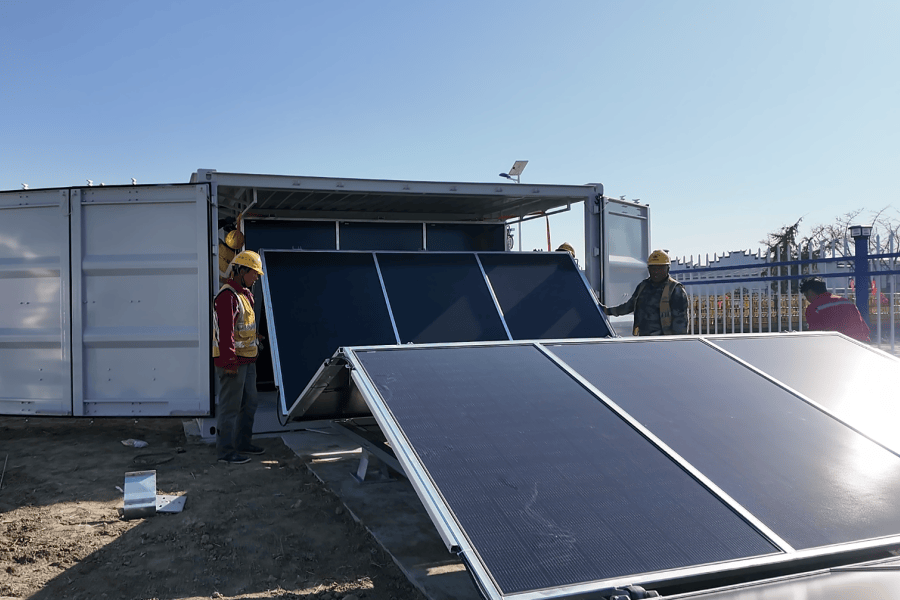
This is the dramatic part. Using certified riggers, the container is carefully placed onto its foundation anchors. The precision here is key C we use laser levels to ensure perfect alignment. Once placed, we mechanically secure it, connect the HVAC ducting if required, and verify all external vents are unobstructed. Proper airflow around the container is a non-negotiable for thermal management.
Step 5: Electrical and Control Systems Integration C Making the Connections That Matter
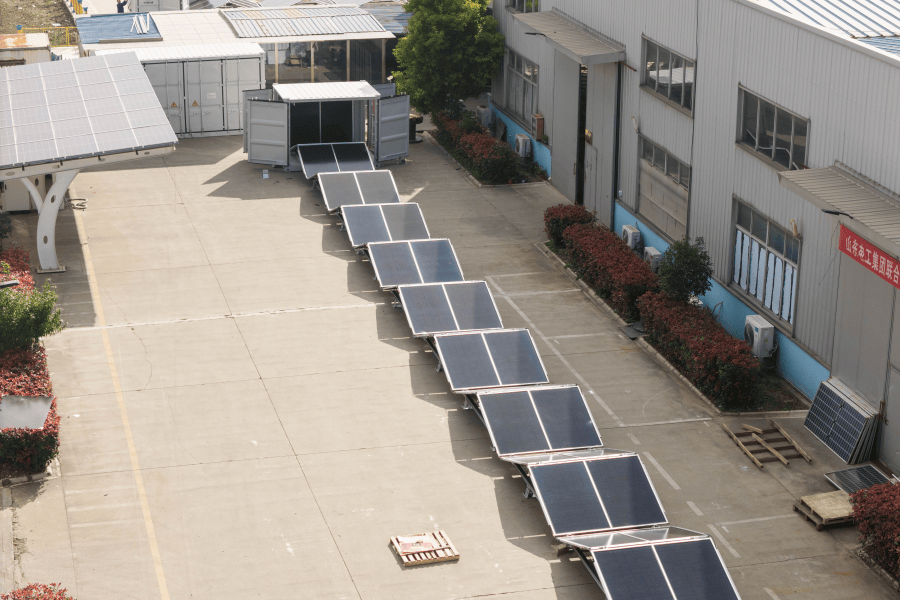
Now we connect the lifeblood: power and data. Our field engineers torque every electrical connection to the manufacturer's specification (this is huge for preventing failures). We integrate the BESS with your existing switchgear, ensuring proper relay coordination so it seamlessly takes over during grid loss. The control system is networked, and we set up the remote monitoring protocols C whether it's our Highjoule Horizon platform or your SCADA. This is where system "smarts" are activated.
Step 6: Commissioning, Testing, and Handover C The Final Verification
This isn't just turning it on. We execute a detailed commissioning script:
- Functional Tests: Verify every relay, meter, and sensor.
- Performance Verification: Run the system through key operating points, checking charge/discharge efficiency (that C-rate curve matters for your duty cycle).
- Safety System Tests: Validate that the integrated fire suppression, gas detection, and emergency shutdown systems respond correctly.
- Grid Simulation Test: For off-grid or microgrid sites, we simulate grid failures to prove the black start and load-following capabilities.
Only after passing all tests do we provide the complete documentation pack C as-built drawings, test reports, compliance certificates (UL, IEC), and the operations & maintenance manual C and formally hand over the system to your team.
Beyond the Checklist: The Expert Insights That Save Your Project
Following steps is one thing. Understanding the "why" is what separates a good installation from a great one. Let me share a couple of hard-earned insights:
Thermal Management is Everything: Lithium cells are sensitive to temperature. A well-designed container like ours has a sophisticated cooling system. But if it's installed facing the afternoon sun with no airflow, or if the internal air ducts get kinked during setup, you're asking for trouble. We always model the site's ambient temperature profile and orient the container and its vents accordingly. This directly protects your battery's warranty and lifespan.
The "Soft Costs" of Non-Standardization: In a recent project supporting a telecom roll-out across Germany, using a standardized, pre-engineered container and installation process cut project timeline variability by over 40%. Every site crew knew exactly what to do. That predictability in deployment is a massive hidden cost-saver, reducing engineering time, crew overtime, and commissioning headaches.
The goal of this meticulous, step-by-step approach isn't to make installation complex. It's to make your asset simple, safe, and profitable for the next 15 years. It transforms the BESS from a capital expense into a predictable, reliable pillar of your network's resilience.
What's the single biggest site-specific challenge you're facing in your next BESS deployment?
Tags: UL Standard BESS Grid Resilience Telecom Energy Installation Guide Lithium Battery Storage
Author
James Zhang
20+ years agricultural energy storage engineer / Highjoule CTO