
Scalable Modular PV Container Solutions for Mining & Industrial Energy Independence
Beyond the Grid: How Pre-Integrated Solar Containers Are Powering the Future of Heavy Industry
Hey there. If we were having coffee, and you asked me about the biggest shift I've seen in energy for mining and heavy industry over my 20+ years in the field, I wouldn't start with a spec sheet. I'd tell you about the sheer relief on a site manager's face when the lights stay on during a dust storm, or when the quarterly fuel bill drops by 40%. Honestly, the real game-changer isn't just adding solar or batteries; it's how you integrate and deploy them in the toughest places on earth. Let's talk about what that really means for operations in places like... well, let's just say the middle of the Mauritanian desert, and why it matters for projects in Nevada or Western Australia.
What We'll Cover
- The Real Problem: More Than Just "Going Green"
- Why It Hurts: The Hidden Costs of Remote Power
- The Modular Answer: Lessons from a Desert Mine
- Making It Work Here: Standards, Safety, and Scale
- Your Next Step: Asking the Right Questions
The Real Problem: More Than Just "Going Green"
In Europe and North America, when we discuss energy storage for commercial and industrial (C&I) sites, the conversation often centers on peak shaving, demand charge management, and backup power. It's a financial and resilience play. But for remote industrial operations - mining, agri-processing, even some data centers - the problem is more fundamental: energy sovereignty.
You're not just managing a grid connection; you are the grid. Your primary power source is often trucked-in diesel, and the cost isn't just in the fuel. It's in the volatile price, the logistics nightmare, the security risk of supply chains, and the massive operational carbon footprint. Adding solar seems obvious, but slapping a few panels near a diesel genset is like putting a sports car engine in a tractor. Without sophisticated integration and storage, you get instability, wasted potential, and frankly, a system that can't be trusted for mission-critical loads.
Why It Hurts: The Hidden Costs of Remote Power
Let's agitate that pain point a bit. I've seen this firsthand on site. A mine might have a 5MW diesel operation. The International Energy Agency (IEA) has highlighted that diesel generation in remote locations can lead to Levelized Cost of Electricity (LCOE) exceeding $0.30/kWh, and that's before you factor in recent price spikes. Every hour a haul truck sits idle because of a power hiccup costs tens of thousands. Every extra technician flown in to troubleshoot a bespoke, on-site-built solar+storage system adds six figures to the CAPEX.
The real agony? Inflexibility. A mine expands to a new pit, or a processing plant increases capacity. Your energy system can't just tag along. You're looking at a brand-new, multi-year engineering and construction project. In today's market, that's an unacceptable risk.

The Modular Answer: Lessons from a Desert Mine
This is where that case study from Mauritania stops being a project report and becomes a blueprint. The challenge was classic: a mining operation needing to cut diesel use, ensure 24/7 power for processing, and do it in an environment where daytime temps hit 50C (122F) and sand gets into everything.
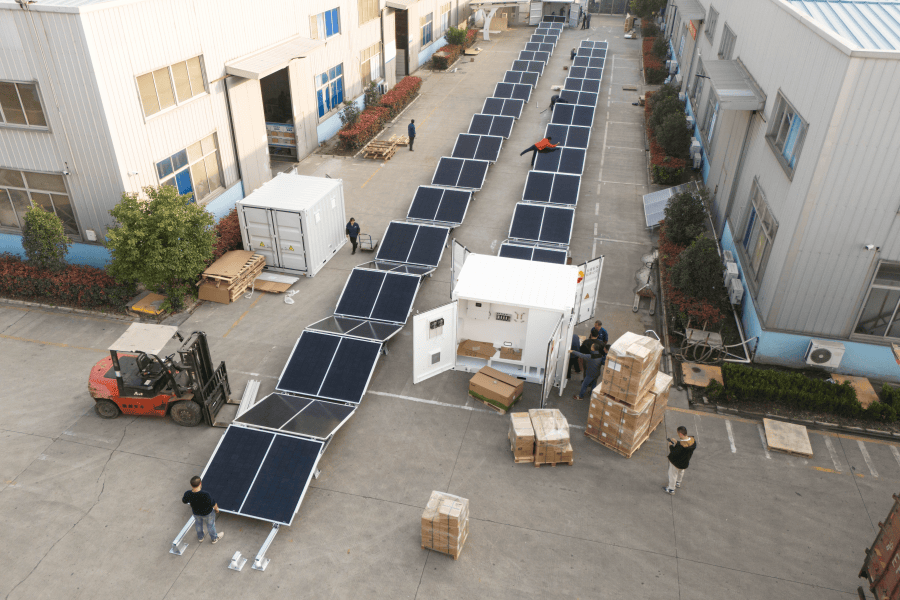
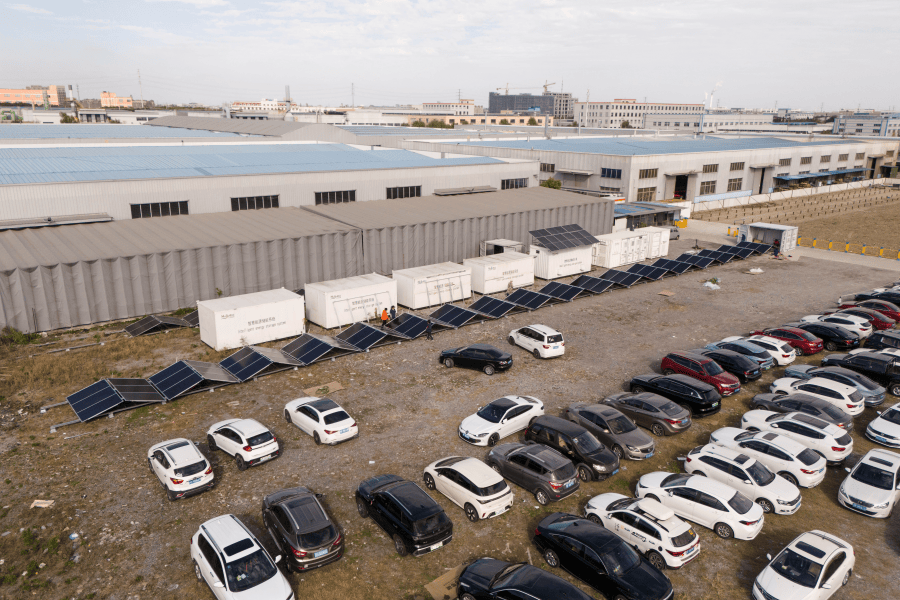
The solution wasn't a custom-built power plant. It was a fleet of scalable, modular, pre-integrated PV containers. Think of them as "energy LEGO." Each container arrives on site with the solar inverters, battery storage (BESS), climate control, and fire suppression fully integrated and factory-tested. For the Mauritania site, they started with a base configuration to power a critical section. It worked? They added more containers, literally plugging them together. The system scaled with the mine's phase.
Here's the expert insight that made it work: Thermal Management. In that heat, battery degradation is your enemy. These units aren't just air-conditioned; they have a liquid-cooled thermal management system designed for high C-rate charging (from the abundant desert sun) and discharging. C-rate, simply put, is how fast you pump energy in and out of the battery. A high C-rate in high heat without proper cooling is a death sentence for battery life. This system managed that, turning a potential liability into reliable, daily cycling.
Making It Work Here: Standards, Safety, and Scale
Now, you might think, "That's great for a remote desert, but my site in Texas or Poland has different rules." Absolutely. And that's the beauty of a mature modular approach. The principles are universal, but the execution must be local.
For any project in the US or EU, the non-negotiable starting point is safety and grid compliance. At Highjoule, when we develop our modular solutions, they aren't just built to generic specs. They are engineered from the ground up for UL 9540 (the standard for energy storage systems), UL 1973 (for batteries), and IEC 62443 for cybersecurity in operational technology. For grid interconnection, the inverters are certified to IEEE 1547-2018. This isn't a checkbox exercise. I've been in the room with AHJs (Authorities Having Jurisdiction) from California to Germany. Showing them a system built to these standards, with a clear, factory-provided certification path, cuts through approval red tape like nothing else.
Let's take a localized example: a manufacturing plant in Germany's industrial heartland, facing high grid costs and carbon pricing. They deployed a modular BESS for peak shaving and backup. The challenge was space and strict local fire codes. A pre-integrated, containerized solution with a certified, built-in fire suppression system (like NFPA 855 compliant design) provided a turnkey answer. It was permitted as a single unit, not a collection of parts, speeding up deployment by months.
The outcome? A lower LCOE. By reducing demand charges, capturing solar self-consumption, and avoiding diesel, the total cost of ownership plummets. The modularity means if the factory adds a new production line in five years, they add another "energy LEGO" block. No rip-and-replace.
What This Means for Your Bottom Line
- Predictable CAPEX: You buy what you need now, with a known cost for future expansion.
- Reduced Risk: Factory testing means the system works on day one. No on-site integration surprises.
- Operational Simplicity: These are designed for remote monitoring and minimal maintenance. My team often supports sites from thousands of miles away.
Your Next Step: Asking the Right Questions
So, as you look at your own energy challenges, don't just ask about kilowatts and kilowatt-hours. Ask about deployment time. Ask to see the factory test reports and the certification listings. Ask, "How do I add 500kW more next year?" Ask about the real-world thermal management strategy for your local climate.
The transition from being grid-dependent or diesel-bound to being energy-sovereign isn't just about technology. It's about a smarter way to deploy it. The question is, is your current plan built like a cathedral, or like LEGO?
Want to dive deeper into the specific performance data from modular deployments in climates similar to yours? The team at the National Renewable Energy Laboratory (NREL) has some fantastic, publicly available field data that mirrors what we see on the ground.
Tags: UL Standard BESS LCOE Modular Energy Storage IEEE 1547 Mining Operations
Author
James Zhang
20+ years agricultural energy storage engineer / Highjoule CTO