
Smart BMS & Solar Containers: Solving Remote Site Power Challenges
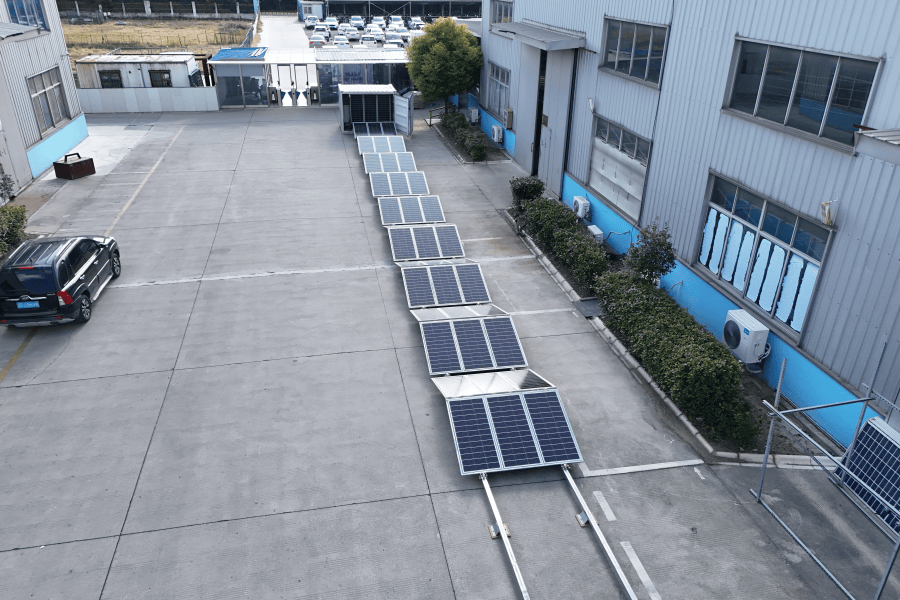
Table of Contents
- The Remote Power Dilemma: More Than Just Diesel
- When "Remote" Gets Real: The Hidden Costs
- Mauritania: A Case in Point
- The Smart BMS Difference: From Battery Babysitter to Site Guardian
- Beyond the Container: Making It Work in Your World
The Remote Power Dilemma: More Than Just Diesel
If you're managing operations in mining, agriculture, or even telecoms in remote parts of the Americas or Europe, we don't need to tell you about the diesel problem. You live it. The fuel logistics, the price volatility, the noise, the emissions reports. It's a headache. But honestly, after two decades on sites from the Australian outback to the Chilean highlands, I've seen the conversation shift. It's not just about replacing diesel anymore; it's about deploying power that you can actually trust to run critical operations when your nearest service technician is a six-hour flight away.
The dream is a resilient, renewable-powered microgrid. The reality? Too often, it's a solar array paired with a standard battery system that wasn't built for the punishment of remote, dusty, and thermally extreme environments. A standard Battery Energy Storage System (BESS) might check the "has batteries" box, but without a brain built for autonomy, it becomes a liability, not an asset.
When "Remote" Gets Real: The Hidden Costs
Let's agitate that pain point a bit. The International Renewable Energy Agency (IRENA) points out that for off-grid industrial applications, operations and maintenance can constitute up to 25% of the total lifecycle cost of a power system. Think about that. A quarter of your spend isn't on the equipment itself, but on keeping it alive.
I've seen this firsthand on site. A minor cell imbalance in one battery module, left undetected by a basic monitoring system, doesn't just reduce capacity. It forces the entire string to work harder, generating excess heat. In a container in the Nevada desert or a Swedish winter, that thermal runaway risk is real. Suddenly, your "low-cost" battery solution triggers a safety shutdown, halts production, and demands an emergency site visit. The Levelized Cost of Energy (LCOE) - the true measure of your power cost over the system's life - skyrockets. It's not just an equipment failure; it's a business continuity failure.

The Standards Gap
Here's another layer. You mandate UL 9540 for system safety and IEEE 1547 for grid interconnection (if you have one). But a remote site isn't a protected industrial park. The UL/IEC standards are the essential foundation - the minimum ticket to play. The real challenge is what happens after certification, during 10+ years of real-world abuse. That's where the engineering philosophy behind the product matters more than the certificate on the wall.
Mauritania: A Case in Point
This brings me to a project that really crystalized this thinking. We deployed a solar-integrated BESS container for a mining operation in Mauritania. The brief was classic remote: extreme heat, abrasive dust, zero grid connection, and a mandate to cut diesel by over 70% for base load operations.
The "smart" part wasn't a marketing gimmick. It was the core spec. We needed a Battery Management System (BMS) that went far beyond voltage and temperature monitoring. This one had to:
- Perform real-time, module-level state-of-health (SOH) and state-of-charge (SOC) analytics.
- Autonomously adjust charging C-rates (the speed of charge/discharge) based on cell temperature and health data to prevent stress.
- Integrate predictive thermal management, proactively cooling or heating the enclosure based on load forecasts and ambient conditions, not just reacting to a high-temp alarm.
- Provide a clear, remote dashboard showing not just if the system was working, but how it was aging, predicting maintenance needs months in advance.
The result? The system didn't just work. It adapted. During a severe sandstorm, the BMS anticipated the solar yield drop and orchestrated a perfectly timed discharge, avoiding a diesel generator kick-in. More importantly, it flagged a slight deviation in the cooling loop performance before it impacted battery temps, allowing for a planned service during the next crew rotation. That's the difference between a controlled cost and an emergency airlift.
The Smart BMS Difference: From Battery Babysitter to Site Guardian
So, what should you look for? The "smart" in Smart BMS is about predictive intelligence and holistic control.
Think of C-rate. A simple BMS might allow a high C-rate to fill batteries quickly when the sun is shining. A Smart BMS, like the one we use in our Highjoule HT-Stack systems, considers the internal cell temperature (not just ambient), the historical rate of capacity fade, and the upcoming load schedule from the mining shift manager. It might choose a slightly slower, gentler charge that extends the battery's life by years, optimizing the LCOE without the operator ever needing to intervene.
Thermal management is the other big one. It's not just about air conditioning. It's about airflow design, sensor placement, and control logic. In the Mauritania case, we used a closed-loop, liquid-cooled system for the battery racks, isolated from the dusty exterior air. The BMS controlled it not just on battery temp, but on the thermal inertia of the entire container. This philosophy is central to our designs for both the European and North American markets - whether it's battling -30C in Canada or +45C in Texas, the principle of proactive, BMS-driven climate control is what prevents premature aging.

Beyond the Container: Making It Work in Your World
The technology inside the container is only half the story. The other half is making it work in your specific context. A solution for a mining operation in Mauritania informs, but doesn't directly copy to, a remote agro-processing plant in Greece or a backup power site for a data center in Oregon.
For instance, we recently adapted this approach for a microgrid project in Northern California, serving a cluster of wineries wanting energy independence. The core tech - the Smart BMS with predictive analytics - was the same. But the container's UL 9540 certification was non-negotiable for local fire code, and the grid-interconnection logic via IEEE 1547 was paramount. The BMS didn't just manage the battery; it became the grid-forming brain, seamlessly islanding and reconnecting.
That's the key takeaway. The value isn't in a magic black box. It's in a platform engineered for resilience from the cell up, wrapped in a service model that understands local codes and provides remote operational support. At Highjoule, our focus is building that foundational reliability into the product, so your local integrator or our service team can focus on optimizing it for your site's unique rhythm, not fixing it.
So, the next time you evaluate a solar-storage solution for a remote site, ask not just about the kWh and the warranty. Ask, "How does the BMS think?" Ask, "How will this system tell me it's getting tired, before it falls over?" The answers will tell you everything you need to know about your project's true LCOE and your own peace of mind. What's the one operational risk your current power system just isn't smart enough to warn you about?
Tags: UL Standard BESS Thermal Management Solar Container Smart BMS IEEE Standard Remote Site Power
Author
James Zhang
20+ years agricultural energy storage engineer / Highjoule CTO