
Hybrid Solar-Diesel BESS for Construction Sites: Cutting Fuel Costs & Emissions
From Fuel Guzzler to Smart Hybrid: A Real-World Blueprint for Construction Site Power
Honestly, if I had a dollar for every time I've stood on a remote construction site, shouting over the relentless roar of diesel generators, I'd probably be retired by now. It's a universal scene across North America and Europe: temporary power that's noisy, expensive, and frankly, a bit of a dinosaur. But what if you could cut that fuel bill by 40-60% and turn the volume down to a hum? Let me walk you through a real-world case study that's changing the game - using a Tier 1 battery cell hybrid solar-diesel system. I've seen this firsthand, and the results aren't just impressive on paper; they're transformative on the ground.
Quick Navigation
- The Real (and Rising) Cost of "Reliable" Diesel Power
- How the Hybrid Solar-Diesel BESS Actually Works
- Case Study Deep Dive: A 12-Month Site Transformation
- The Unsung Hero: Why Tier 1 Battery Cells Are Non-Negotiable
- Practical Steps: Is a Hybrid System Right for Your Next Site?
The Real (and Rising) Cost of "Reliable" Diesel Power
We all know diesel gensets are the go-to for off-grid sites. They're perceived as bulletproof. But the problem isn't just the fuel price volatility, which is brutal enough. The real agitation comes from the hidden costs. On a typical 18-month project, fuel might be only 60-70% of your total cost of energy. The rest? Haulage, maintenance, unplanned downtime, and the growing social license pressure around emissions and noise pollution. I've seen projects in California and Germany where local permits now include strict decibel limits and carbon budgets - traditional genset setups simply don't comply.
According to the National Renewable Energy Laboratory (NREL), integrating storage with generators can reduce fuel consumption by up to 80% in optimal scenarios. That's not a marginal gain; that's a complete rethinking of your site's operational expenditure.
How the Hybrid Solar-Diesel BESS Actually Works
Let's demystify the solution. The core idea is elegant: you're not replacing the diesel generator; you're making it the last resort. The system integrates three key pieces:
- Solar PV Array: The primary fuel source when the sun is shining.
- Battery Energy Storage System (BESS): The brain and buffer. It stores excess solar, handles instant load changes, and supplies power silently.
- Existing Diesel Genset: Now relegated to backup and peak-shaving duty.
A smart controller constantly juggles these sources. Low load at night? The BESS powers the site camp. High-load crane operation during the day? Solar + BESS supports it, preventing the genset from kicking in. The generator only runs at its optimal, fuel-efficient load point to recharge the batteries if needed, or during extended bad weather. This drastically reduces its runtime, maintenance cycles, and fuel burns.
Case Study Deep Dive: A 12-Month Site Transformation
Let's get concrete. I was involved in a project for a major civil contractor building a new highway segment in a semi-remote area of Texas. The challenge was classic: power a site office, batch plant, and small workshop 24/7, far from the grid. Noise ordinances from a nearby community were strict.

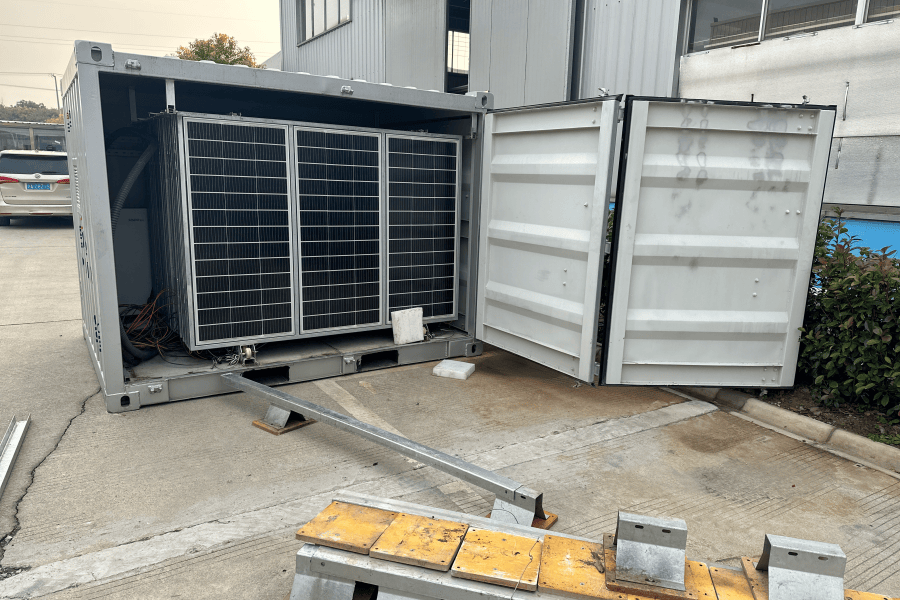
The solution was a 250kW solar canopy over the material yard, paired with a 500kWh BESS using Tier 1 LiFePO4 cells, all integrated with their existing 400kW diesel generator. The BESS and power conversion system were built to UL 9540 and IEEE 1547 standards - non-negotiable for insurance and permitting here.
The results after 12 months were eye-opening:
| Metric | Before Hybrid System | After Hybrid System | Reduction |
|---|---|---|---|
| Diesel Consumption | ~145,000 liters | ~62,000 liters | 57% |
| Generator Runtime | Near-continuous | ~6 hours/day (avg.) | 75% |
| Estimated CO2e | ~390 tons | ~167 tons | 57% |
| Noise Complaints | Frequent | Zero | 100% |
The financials? The payback period landed just under 4 years, factoring in fuel savings and reduced maintenance. But beyond the numbers, the project manager told me the biggest win was "operational serenity." No more panic fuel runs, and a happier local community.
The Unsung Hero: Why Tier 1 Battery Cells Are Non-Negotiable
This is where my 20+ years in BESS deployment gets pedantic. You might see a "BESS" as a black box, but its heart is the battery cell. In a harsh, temporary environment like a construction site, you can't afford compromises.
Tier 1 cells (from manufacturers like CATL, BYD, or Panasonic) aren't just a marketing term. They represent proven, mass-produced cells with impeccable traceability, consistency, and safety data. For us at Highjoule, this is the only starting point. Why? Thermal management is easier to engineer predictably with uniform cells. Their cycle life is verifiable, which directly impacts your long-term Levelized Cost of Energy (LCOE) - the total lifetime cost per kWh. A cheaper, no-name cell might degrade twice as fast, turning your capital investment into a liability.
Also, think about C-rate - basically, how fast you can charge or discharge the battery. Site loads are spikey (think of a welder firing up). Tier 1 cells with a known, stable C-rate allow our system controllers to aggressively manage loads without damaging the battery, squeezing out every bit of diesel-off runtime possible.
Practical Steps: Is a Hybrid System Right for Your Next Site?
So, how do you translate this case study to your blueprints? It's not a one-size-fits-all, but the evaluation is straightforward. Ask these questions:
- Site Duration: Is your project longer than 12 months? That's usually the minimum for the economics to work.
- Fuel Logistics: Is fuel access difficult or expensive? (Hint: it almost always is).
- Load Profile: Do you have a steady base load (site offices, lighting) with intermittent high loads? That's the perfect candidate for hybridization.
Our approach at Highjoule is to model this for you using real weather data and your load estimates. We'll run the numbers on LCOE, not just upfront cost. And because we've done this across different regulatory environments (from UL in the US to IEC in Europe), the system design, from the containerized BESS to the grid-forming inverters, is built for compliance from day one. It's about de-risking your project's power supply.
The transition to smarter, cleaner site power isn't just about sustainability reports. It's a hard-nosed financial and operational decision. That Texas site manager ended our conversation by asking, "Why didn't we do this sooner?" So, what's the first power load you'd want to silence on your next site?
Tags: UL Standard BESS LCOE Tier 1 Battery Hybrid Power System Solar-Diesel Construction Site
Author
James Zhang
20+ years agricultural energy storage engineer / Highjoule CTO