
Tier 1 Battery Cell Off-grid Solar Generator: A Real-World Case Study for Eco-Resorts
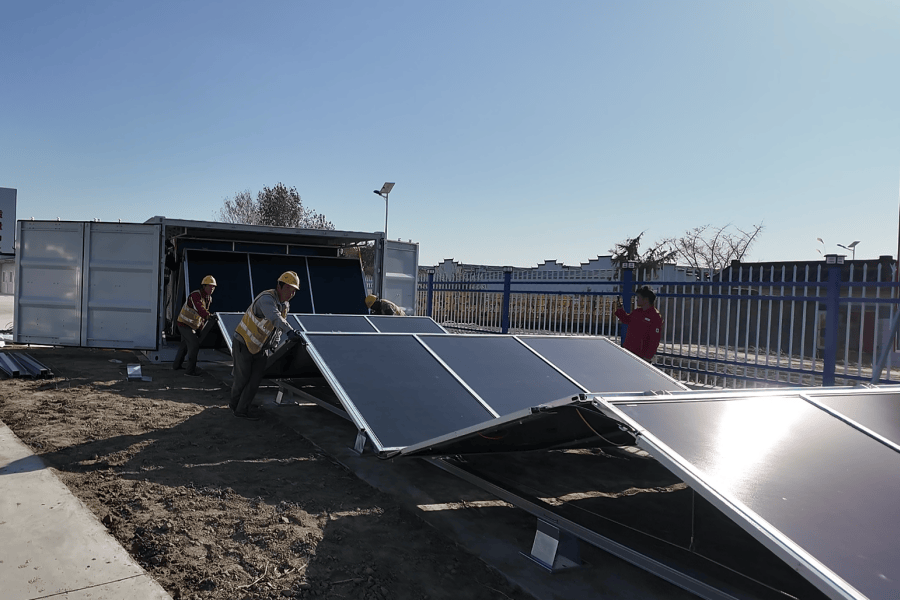
Table of Contents
- The Remote Power Dilemma for Eco-Resorts
- Why Good Intentions Fail: The Real Cost of Compromise
- A Blueprint from the Pacific: The Tier 1 Cell Difference
- Beyond the Battery Cell: The System Makes the Solution
- Is This Your Next Step?
The Remote Power Dilemma for Eco-Resorts
Let's be honest, if you're developing or operating an eco-resort, you're not just in the hospitality business. You're in the energy business. The dream of a self-sufficient, sustainable paradise often hits a hard reality when you're miles from the nearest reliable grid. I've been on-site for these conversations more times than I can count, from the Caribbean to the Greek islands. The initial excitement about solar is always there, but then comes the big question: "What happens when the sun goes down, or we have three cloudy days in a row?"
This isn't a niche problem. The International Energy Agency (IEA) notes that decentralized renewable solutions are critical for energy access in remote areas, but their long-term viability hinges on reliable storage. The old answer - a rack of lead-acid batteries or a noisy, fume-belching diesel generator - just doesn't cut it anymore. It contradicts the very "eco" promise of the resort. Guests paying a premium for sustainability don't want to hear a generator roar to life at dinner, and you certainly don't want the operational headache and fuel cost volatility.
Why Good Intentions Fail: The Real Cost of Compromise
Here's where I've seen projects go sideways. To manage upfront capital costs, there's a temptation to specify a battery system based purely on kilowatt-hour (kWh) capacity and price. The market is flooded with options claiming incredible performance at unbelievable prices. But in off-grid, your battery isn't just a component; it's the heart of your entire power system. A failure here isn't an inconvenience - it's a total blackout, ruined guest experiences, and potentially spoiled food and medicine.
The agitation point is this: the true cost isn't the purchase price. It's the Levelized Cost of Storage (LCOS) - a metric we live by at Highjoule. Think of it as the total cost of owning and operating that battery over its entire life, divided by the energy it actually delivers. A cheap battery with a 3-year lifespan that degrades quickly, requires constant babysitting, and can't handle the resort's peak demand (like when all AC units kick on at sunset) will have a horrific LCOS. I've witnessed resorts burning through budget battery banks in 2-3 years, facing a full replacement cost long before their financial models predicted.
Safety is the other sleepless night. Off-grid systems often push batteries harder, with deeper daily discharge cycles. Inferior cells with poor thermal management can become a real hazard. For any project in the US or Europe, compliance isn't optional - it's foundational. Standards like UL 9540 for the energy storage system and UL 1973 for the batteries themselves aren't just paperwork; they are a blueprint for safety that has been validated by independent experts.
A Blueprint from the Pacific: The Tier 1 Cell Difference
Let me walk you through a case that perfectly illustrates the solution. We worked with an eco-resort on a remote Pacific island. Their challenge was classic: 100% solar aspiration, zero grid connection, and a strict no-diesel-at-night policy. Their initial vendor proposal used generic, uncertified lithium cells. We proposed a redesign centered on a Tier 1 battery cell off-grid solar generator architecture.
"Tier 1" isn't a marketing term we throw around lightly. It refers to cells manufactured by companies with proven, large-scale production for the automotive or grid-scale market - think the equivalents of Panasonic, LG, or Samsung SDI. These cells come with exhaustive traceability, published cycle life data from independent labs, and consistent performance batch after batch.
For this resort, we integrated these cells into a containerized BESS. The result? The system wasn't just a battery box; it was a power plant. The high-performance cells allowed for a higher C-rate (simply put, the speed at which energy can be safely pulled out). This meant the system could effortlessly handle the resort's massive evening load spike without breaking a sweat or needing to be oversized. The thermal management system, designed for the specific discharge profile of Tier 1 cells, kept everything in the optimal temperature range, maximizing lifespan even in a tropical climate.

The outcome was transformative. The resort achieved 99.98% power availability. Their calculated LCOS dropped by over 40% compared to the cheaper alternative when projected over 10 years, because the system is expected to last well beyond that. And crucially, the entire assembly carried full UL certification, satisfying both their insurers and their own commitment to safety.
Beyond the Battery Cell: The System Makes the Solution
Focusing on Tier 1 cells is the most critical decision, but it's not the only one. A cell is not a system. Here's the insight from the field: the Battery Management System (BMS) is the brain. It must be precisely calibrated for the chemistry and performance profile of those premium cells. A top-tier cell with a mediocre BMS is like a Formula 1 engine controlled by a bicycle computer.
At Highjoule, our design philosophy starts with the cell and builds out. We ensure:
- System-Level Compliance: The entire unit - cells, BMS, HVAC, fire suppression - is tested and certified as a single unit (UL 9540). It's one less thing for you to worry about during permitting.
- Adaptive Thermal Management: Our cooling systems don't just run at full blast; they adjust dynamically to load and ambient conditions, saving auxiliary power and reducing wear.
- Localized Support: Deploying in California or the Alps? We design with local climate and grid codes (like IEEE 1547 for interconnection if you have a backup generator) in mind from day one, and we have service partners to provide support.
This integrated approach is what turns a box of batteries into a reliable, long-term asset. It shifts the conversation from "What's the cheapest storage?" to "What's the most reliable and cost-effective power foundation for my business?"
Is This Your Next Step?
So, if you're evaluating an off-grid or microgrid system for a resort, a remote campus, or any critical facility, ask your potential supplier these questions: "Can you provide the full cell pedigree and cycle life test data? Is the entire system UL 9540 certified, or just some components? What is the projected LCOS for my specific load profile over 10 years?"
The answers will tell you everything. The premium for a Tier 1 battery cell-based system isn't an expense; it's an insurance policy and a strategic investment in your operational resilience. Honestly, after two decades in this game, I've never had a client regret opting for quality and safety from the cell up. The ones who regret it are always those who learned the hard way that with energy storage, you truly get what you pay for.
What's the one reliability or cost concern keeping you up at night regarding your resort's power? Is it the fear of a guest-facing blackout, or the unpredictable long-term cost of your storage?
Tags: UL Standard BESS LCOE Energy Storage Tier 1 Battery Cells Off-grid Solar Eco-Resorts
Author
James Zhang
20+ years agricultural energy storage engineer / Highjoule CTO