
ROI Analysis of 20ft High Cube Hybrid Solar-Diesel System for Military Bases
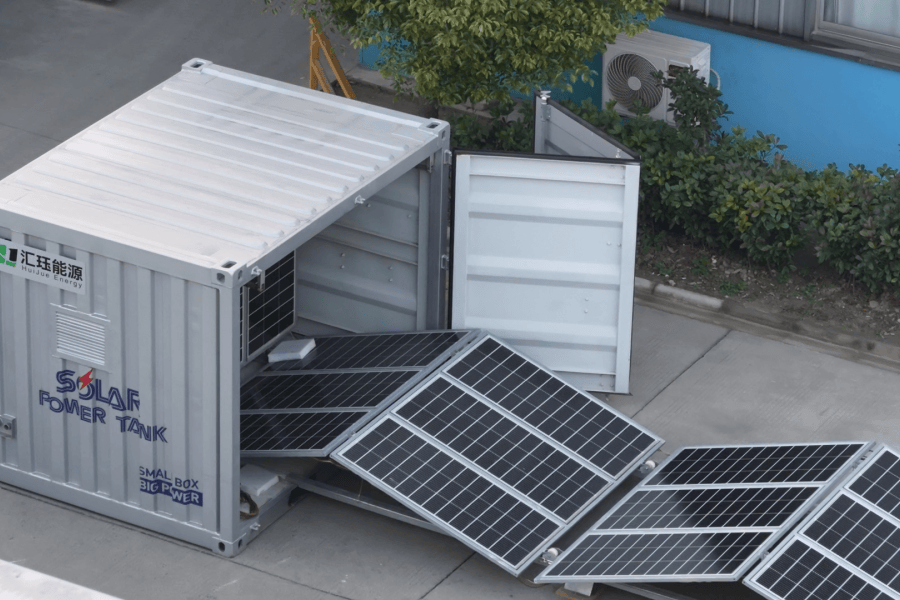
Table of Contents
- The Real Problem Isn't Just Fuel Costs
- The Staggering Cost of "Business as Usual"
- The 20ft High Cube: More Than Just a Box
- Case in Point: A Forward Operating Base in Europe
- Beyond the Spreadsheet: The Intangible ROI
- Making It Work: What You Need to Get Right
- Your Next Move
The Real Problem Isn't Just Fuel Costs
Let's be honest. When we talk about energy at remote military installations, the conversation usually starts and ends with the diesel generator. It's the reliable, noisy, expensive workhorse we all know. The problem I've seen firsthand, from sites in the Middle East to training grounds in Europe, isn't just the price per gallon. It's the entire, fragile supply chain behind it. It's the convoys, the manpower, the security risk, and the sheer operational burden of keeping those tanks full. Every gallon delivered has a hidden cost - in dollars, logistics, and personnel exposure. And honestly, that's before we even talk about the carbon footprint or the noise signature that gives away your position.
The Staggering Cost of "Business as Usual"
So, what's the real financial hit? The U.S. Department of Defense has publicly stated that energy can account for up to 70-80% of the total cost of a forward operating base's logistics. Think about that. For every dollar spent on a mission, a huge chunk is just moving fuel. The National Renewable Energy Lab (NREL) has done fantastic work showing that the Levelized Cost of Energy (LCOE) for diesel in remote areas isn't just the fuel cost; it's the "fully burdened cost of fuel," which can be 5 to 10 times higher. That's the number that keeps commanders up at night. It's not an energy problem; it's a massive, recurring operational expense and a critical vulnerability.
Agitating the Pain Point
Now, let's add solar to the mix. A great idea, right? But here's the on-site reality I've encountered: you install a solar array, but without storage, its usefulness is capped. When the sun is high, you might have to curtail (waste) solar power because the diesel gensets can't ramp down fast enough without risking stability. When a cloud passes, the gensets lurch back online, causing wear and tear. You've added complexity without fully capturing the benefit. The ROI on solar alone gets murky because you're not displacing fuel consumption as effectively as you could. The system isn't integrated.
The 20ft High Cube: More Than Just a Box
This is where the ROI Analysis of a 20ft High Cube Hybrid Solar-Diesel System becomes a game-changer. We're not just adding a battery. We're deploying a pre-integrated, plug-and-play brain for your entire power system. This standardized container houses the battery storage, power conversion system (PCS), and advanced energy management system (EMS) all in one secure, transportable unit. Its genius is in optimization.
The EMS is the key. It intelligently decides, in milliseconds: use solar now, charge the batteries, let the diesel genset run at its most efficient steady state, or go silent on batteries alone. This smooths out the "lurching" effect, extends generator life by thousands of hours, and squeezes every possible kilowatt-hour from your solar panels. At Highjoule, our containers are built to this philosophy from the ground up, with UL 9540 and IEC 62485-2 compliance baked into the design for North American and European markets. It's not an add-on; it's the core.
Case in Point: A Forward Operating Base in Europe
Let me give you a real, non-classified example from a project we supported in Southern Europe. The challenge was a training base with a 500kW peak load, reliant on four aging diesel generators, and a desire to add 300kW of solar. The pain points were high fuel costs, maintenance headaches, and a mandate to reduce emissions.
The solution was a 20ft High Cube Hybrid system with a 1MWh battery capacity. Here's what the ROI analysis looked like on the ground after one year:
- Fuel Savings: Diesel consumption dropped by 58%. This wasn't just "some" savings; it directly cut the number of refueling convoys in half.
- Generator Maintenance: Engine runtime hours were reduced by over 70%. We're talking about extending major overhauls by years, not months.
- Solar Utilization: The system achieved 99%+ solar self-consumption. Almost none of that solar energy was wasted.

The payback period, factoring in avoided fuel and maintenance, came in at under 5 years. For a military asset with a 15-20 year lifespan, that's a compelling financial and tactical argument.
Beyond the Spreadsheet: The Intangible ROI
Any good ROI analysis must account for the intangibles. What's the value of 48 hours of silent watch capability for a surveillance post? What's the cost of a failed generator during a critical exercise versus having a battery buffer that kicks in seamlessly? What is the strategic value of reducing your logistics tail and making your base less predictable?
From a technical perspective, getting the C-rate right is crucial. A 1C battery (discharging fully in one hour) is great for short, high-power bursts. But for military hybrid systems, we often spec a lower C-rate (like 0.5C or 0.25C). Why? It allows for longer duration discharge (perfect for overnight operations or cloudy days), generates less heat, and significantly improves the overall cycle life of the battery - directly impacting long-term ROI. The thermal management system inside the container is what makes this possible, keeping cells within a tight, optimal temperature range even in desert heat or arctic cold.
Making It Work: What You Need to Get Right
Deploying this isn't just buying a container. Based on two decades of messing this up and getting it right, here's my insight:
- Site-Specific Modeling is Non-Negotiable: Your solar irradiance, load profile, and generator specs are unique. The ROI model must be built on your actual data, not generic assumptions.
- Standards are Your Safety Net: Insist on UL/IEC/IEEE compliance. This isn't red tape; it's proven engineering for safety and interoperability. Our Highjoule systems are designed to meet these from day one, which speeds up approval and deployment.
- Think in Phases: Start with a pilot. Prove the ROI on one part of your base. The containerized nature makes scaling up straightforward.
- Local Support Matters: Who will maintain it? We structure our service agreements to include remote monitoring and local technician training, ensuring the system delivers ROI for its entire life, not just the first year.
Your Next Move
The data is clear, the technology is proven, and the strategic imperative is stronger than ever. The question is no longer if hybrid systems make sense for military energy security, but how and when to deploy them for maximum impact. What's the one operational burden on your site that, if reduced, would change the game for your team?
Tags: UL Standard BESS LCOE Renewable Energy Hybrid Power Systems Military Energy Security
Author
James Zhang
20+ years agricultural energy storage engineer / Highjoule CTO